How to Measure Powdered Ingredients Accurately in Cosmetic Formulations (Weight vs. Volume)
Question
I have a cosmetic formula given in percentages for an essence. When calculating the amount for powdered ingredients like Tranexamic Acid based on the total batch weight (in grams), how should I measure this powder? I am confused about converting the calculated grams to milliliters for measurement. Can you explain the correct method for measuring powdered ingredients in cosmetic formulations?
Answer
How to Measure Powdered Ingredients (like Tranexamic Acid) in Your Formulation
It's great that you are enjoying making your own essence! Regarding your question about measuring powdered ingredients like "transmin" (Tranexamic Acid) and converting grams to milliliters, the staff's advice is correct and crucial for accurate formulation.
Why You Should Always Measure by Weight (Grams), Not Volume (Milliliters)
Cosmetic formulations, especially those given in percentages, are based on the total weight of the batch. Measuring by weight (grams) is essential for accuracy because:
- Varying Density: Different ingredients have different densities. This means that the same volume (ml) will have a different weight (grams) for different substances. For example, 1 ml of water weighs approximately 1 gram, but 1 ml of a powder like Tranexamic Acid will weigh significantly more or less than 1 gram depending on its density and how it's packed.
- Inaccuracy with Powders: Measuring powders by volume is particularly unreliable because the amount of powder that fits into a measuring spoon or cylinder depends heavily on how much it's compacted.
- Consistency: Measuring by weight ensures that you can consistently reproduce your formula every time.
How to Measure Your Ingredients Using Weight (Grams)
Instead of converting grams to milliliters, you should calculate the required weight in grams for each ingredient based on the total desired weight of your batch.
Let's use your formula as an example. Suppose you want to make a total batch of 100 grams of your essence:
- Total Batch Weight: 100 grams
- di water (62%): 62% of 100 grams = 62 grams
- Pepha®-Tight (5%): 5% of 100 grams = 5 grams
- Syn®-Ake (5%): 5% of 100 grams = 5 grams
- Tranexamic Acid (transmin) (5%): 5% of 100 grams = 5 grams
- Argireline® (10%): 10% of 100 grams = 10 grams
- Matrixyl™ (8%): 8% of 100 grams = 8 grams
- Homeostatine™ (5%): 5% of 100 grams = 5 grams
To accurately measure these amounts, you will need a precise digital scale that can measure in grams, ideally one that is sensitive enough for small amounts (e.g., measures to 0.01g or 0.1g).
Therefore, for your Tranexamic Acid (transmin), you should weigh out 5 grams using a scale if you are making a 100-gram batch, rather than trying to measure it by volume.
It's great that you are enjoying the formula you made! By measuring by weight, you can ensure accuracy and consistency for all your future batches as well.
- Relevant Products Mentioned: Tranexamic Acid (Trans-White™), (Syn-Ake eq.) Dipeptide Diaminobutyroyl Benzylamide Diacetate, Acetyl Hexapeptide-8 (eq Argireline), Pal-GHK, Pal-GQPR (eq Matrixyl 3000)*
Related Products Mentioned
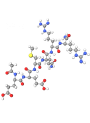
Acetyl Hexapeptide-8 (eq Argireline)
Pal-GHK, Pal-GQPR (eq Matrixyl 3000)