HPMC Gel Formulation Issues and Separation
Question
How to properly hydrate Hydroxypropyl Methylcellulose (HPMC) for a gel formulation to prevent separation and maintain efficacy, based on issues encountered with a specific acne gel formula that failed to thicken and later separated?
Answer
Troubleshooting Your Acne Gel Formulation
It sounds like you're encountering common challenges when working with Hydroxypropyl Methylcellulose (HPMC) for the first time. The issues you're seeing with the gel not thickening properly and separating over time are likely related to how the HPMC was hydrated and the overall stability of the final mixture.
Here's a breakdown of your questions and how to address them:
1. Proper Hydration of Hydroxypropyl Methylcellulose (HPMC)
The key to properly hydrating HPMC, especially the type you are using (5000cP, 68C Gel), is to use a hot dispersion method followed by rapid cooling. The product description recommends:
- Disperse HPMC in Hot Water: Add the HPMC powder to hot water (80-90°C) while stirring until it is fully dispersed. At this stage, the liquid will appear cloudy.
- Dissolve in Cold Water: Take the hot, turbid HPMC dispersion and add it to cold water (below 20°C) with continuous stirring. The sudden drop in temperature helps the HPMC chains dissolve properly and form a clear gel structure.
Your method of dispersing in 70°C water and then letting it cool down gradually while stirring is likely why it didn't thicken effectively. The temperature shock from hot to cold water is crucial for proper gel formation with this type of HPMC.
2. Separated Product and Efficacy
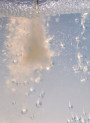
The separation you observed, with oil floating and sedimentation, indicates that the gel structure did not form correctly or has broken down. This instability allows the different components of the formula, which may have varying solubilities or densities (like the Salicylic Acid and Ceramides present in AcnePLEX, or components from Mild Preserved Eco), to separate over time.
- Can it be fixed? Once a gel formulation separates like this, it is generally not possible to fully restore its original stable structure and homogeneity by simply mixing or shaking. The components have likely precipitated or separated in a way that simple agitation cannot correct long-term.
- Is it still effective? The efficacy of the product is compromised because the active ingredients (AcnePLEX, which contains Salicylic Acid and Ceramides) are no longer evenly distributed throughout the gel. Shaking might temporarily mix the layers, but you cannot guarantee a consistent amount of active ingredient in each application. Applying a product with uneven distribution of actives could lead to inconsistent results or even potential irritation from concentrated areas.
Recommendation: It is best to discard the separated product. To achieve a stable and effective gel, you will need to remake the formulation, paying close attention to the HPMC hydration step using the hot dispersion followed by cold water dissolution method as described above.
Make sure to continue stirring until the gel is clear and uniform before adding the remaining ingredients (Mild Preserved Eco, AcnePLEX, X-Foam) at the appropriate temperature (usually once the gel has cooled down significantly, check product descriptions for temperature stability).
It's also worth noting that 1% HPMC provides a specific viscosity range (3,500-5,600 cPs at 2%). At 1%, the viscosity will be lower, which might be the intended texture for a gel serum, but ensuring proper hydration is still key to preventing separation.
Related Products Mentioned
Mild Preserved Eco™ (Preservative-Free)