Hyaluronic Acid Gel Spoilage and Preservation Issues
Question
I am making cosmetics for sale. After mixing the formula, when I take the product out of the refrigerator for about a day, it develops a bad smell like it has spoiled.
My mixing steps are as follows:
1. Mix Hyaluronic Acid in water until a gel forms.
2. Add Vitamin E (Tocopheryl Acetate) 0.2%.
3. Refrigerate for 3 hours.
4. Take out of the refrigerator to add Phenoxyethanol 0.1%.
5. Refrigerate for another day.
I have the following questions:
1. Why does it still smell spoiled even though I added Phenoxyethanol? When should I add it? Or is it not possible to take it out of the refrigerator?
2. Could you please advise if the order of adding ingredients is correct?
3. If the finished formula is good, can I contact the staff directly to order ingredients in large quantities for production?
Answer
Addressing Product Spoilage in Hyaluronic Acid Gel
The bad smell in your Hyaluronic Acid gel formulation, even with the addition of Phenoxyethanol, is likely due to microbial contamination. Let's address your questions:
Why the bad smell with Phenoxyethanol?
- Insufficient Concentration: The primary reason is likely the low concentration of Phenoxyethanol used (0.1%). The recommended usage rate for Phenoxyethanol (Extra Pure) is 0.5-1.0% to be effective as a preservative. A concentration of 0.1% is generally not enough to prevent microbial growth in a water-based product like a gel.
- Preservative Spectrum: Phenoxyethanol is effective against bacteria but less effective against fungi. If the contamination is fungal, Phenoxyethanol alone might not be sufficient. Using a broad-spectrum preservative or a combination of preservatives is often recommended.
- Timing of Addition: Adding the preservative after the product has been refrigerated and potentially exposed to air might mean contamination occurred before the preservative was fully incorporated and effective.
Recommended Mixing Order and Process:
The order of adding ingredients and the process are crucial for stability. Here's a suggested approach:- Prepare Water Phase: Start with your water phase.
- Disperse Hyaluronic Acid: Add Hyaluronic Acid powder to the water phase according to the product's instructions (which typically involves shaking and refrigeration until fully dissolved and a gel is formed). Ensure the powder is completely dissolved with no clumps.
- Cooling: If any heating was involved in dissolving the Hyaluronic Acid (though refrigeration is mentioned, sometimes a warm phase is used first), ensure the gel has cooled down before adding temperature-sensitive ingredients.
- Add Preservative: Add Phenoxyethanol to the water/Hyaluronic Acid gel phase. Mix thoroughly to ensure it is evenly distributed. Use the recommended concentration of 0.5-1.0%. Adding it at this stage, after the gel is formed but before adding other potentially sensitive ingredients or packaging, helps protect the base from contamination early on.
- Incorporate Vitamin E: Vitamin E (Tocopheryl Acetate) is oil-soluble. Adding it directly to a water-based gel might cause separation or not disperse properly, potentially creating pockets where microbes can grow or the Vitamin E can degrade. You may need to pre-disperse the Vitamin E in a small amount of a suitable solubilizer or incorporate it into a small oil phase if your formula includes one, before adding it to the gel. Ensure it is fully and evenly mixed.
- Final Check and Packaging: Check the final product's appearance and consistency. Package in clean containers.
Your current process of adding Vitamin E, refrigerating, then adding Phenoxyethanol is not ideal. The preservative should be added earlier and at the correct concentration.
Regarding Refrigeration:
A properly preserved cosmetic product should be stable at room temperature for its intended shelf life. If your product spoils when taken out of the refrigerator, it strongly indicates that the preservation system is inadequate for room temperature storage. Relying solely on refrigeration is not a substitute for effective preservation, especially for products intended for sale.Bulk Ordering:
For inquiries about ordering ingredients in large quantities for commercial production, please contact our staff directly. They can provide you with information on bulk pricing and availability.
In summary, the key issues are the low concentration and potentially the timing of adding Phenoxyethanol. Increase the Phenoxyethanol concentration to the recommended level (0.5-1.0%) and add it earlier in the process, after the Hyaluronic Acid gel is formed and cooled. Also, ensure all ingredients, especially oil-soluble ones like Vitamin E, are properly incorporated into the water-based gel.
Related Products Mentioned
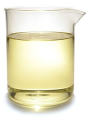
Vitamin E (Tocopheryl Acetate)