Identifying Ingredients Causing Clogging and Keratosis Pilaris
Question
Based on the following ingredient list, which ingredients are causing clogging and have a high clogging level? This product caused acne on my face and keratosis pilaris on my arms and legs. I want to make my own product and avoid the ingredients that cause clogging.
Ingredient List:
- WATER/EAU
- Glycerin
- Dipropylene glycol
- PEG/PPG/POLYButylene Glycol-8/5/3 Glycerin
- Glyceryl Polymethacrylate
- Dimethicone
- LACTOBACILLUS/SOYBEAN FERMENT EXTRACT
- 1,2-Hexanediol
- PEG-150
- Propylene Glycol
- Phenyl Trimethicone
- Panthenol
- METHYL TRIMETHICONE
- C14-22 ALCOHOLS
- Squalane
- MACADAMIA TERNIFOLIA SEED OIL
- CARTHAMUS TINCTORIUS (SAFFLOWER) SEED EXTRACT
- PANAX GINSENG ROOT EXTRACT
- LYCIUM CHINENSE FRUIT EXTRACT
- CARTHAMUS TINCTORIUS (SAFFLOWER) FLOWER EXTRACT
- LONICERA JAPONICA (HONEYSUCKLE) FLOWER EXTRACT
- Triethylhexanoin
- ARACHIDYL GLUCOSIDE
- Butyrospermum Parkii (SHEA) BUTTER
- STEARIC ACID
- PEG-100 Stearate
- Beta-Glucan
- SACCHAROMYCES/POTATO EXTRACT FERMENT FILTRATE
- SACCHAROMYCES/BARLEY SEED FERMENT FILTRATE
- Polymethylsilsesquioxane
- ALGAE EXTRACT
- Butylene Glycol
- Cyclopentasiloxane
- Dimethiconol
- Ceramide NP
- Hydrogenated Lecithin
- PEG-10 RAPESEED STEROL
- Glyceryl Stearate
- GLYCERETH-20
- NELUMBO NUCIFERA FLOWER EXTRACT
- PEG-60 Hydrogenated Castor Oil
- CARBOMER
- ALGIN
- Sodium Polyacrylate
- ACRYLATES/C10-30 ALKYL ACRYLATE CROSSPOLYMER
- Adenosine
- MICA (CI 77019)
- TITANIUM DIOXIDE (CI 77891)
- Iron Oxides (CI 77491)
- TROMETHAMINE
- TRISODIUM EDTA
- PARFUM/Fragrance
Answer
Understanding Ingredients and Potential for Clogging
Based on the ingredient list you provided and your experience with the product causing acne on your face and keratosis pilaris on your body, here is an analysis of potential culprits and information to help you with your own formulation.
Identifying ingredients that cause clogged pores (comedogenicity) can be tricky, as it depends on the concentration of the ingredient in the formula and your individual skin's sensitivity. While there are general comedogenicity ratings available online for many ingredients, these are often based on testing pure ingredients on rabbit ears and don't always translate perfectly to human facial skin or complex formulations.
However, some ingredients are more commonly associated with clogging pores for acne-prone individuals than others. From your list, the ingredients that are generally considered to have a higher potential for comedogenicity include:
- Shea Butter (Butyrospermum Parkii): This is a rich butter known for its moisturizing properties, but it can be comedogenic for some people, often rated as moderately comedogenic.
- Stearic Acid: A fatty acid used as a thickener and emulsifier. It can be potentially comedogenic depending on its concentration and the overall formula.
- PEG-100 Stearate: An emulsifier often used in creams and lotions. It is sometimes listed as potentially comedogenic, especially when used in combination with Glyceryl Stearate.
- Glyceryl Stearate: Another emulsifier and thickener. Like PEG-100 Stearate, its comedogenicity can vary.
Ingredients like Dimethicone and Cyclopentasiloxane are silicones. They are widely used in cosmetics to provide a smooth feel and are generally considered non-comedogenic because their molecular structure is large and doesn't typically penetrate or clog pores.
Ingredients such as Ceramide NP and Hydrogenated Lecithin are beneficial for the skin barrier and moisture and are not typically associated with causing acne.
Regarding the keratosis pilaris on your arms and legs, this condition is caused by a buildup of keratin in the hair follicles. While not directly caused by comedogenic ingredients in the same way as acne, heavy or occlusive ingredients might potentially exacerbate the condition for some individuals by trapping keratin. The ingredients mentioned above (Shea Butter, Stearic Acid, PEG-100 Stearate, Glyceryl Stearate) could potentially fall into this category due to their emollient and thickening properties.
When formulating your own product, if you are prone to acne and keratosis pilaris, you might consider minimizing or avoiding the ingredients listed as potentially comedogenic (Shea Butter, Stearic Acid, PEG-100 Stearate, Glyceryl Stearate) and opt for lighter emollients and emulsifiers. Always test your homemade formulations on a small area of skin first to see how your skin reacts.
Here are some of the ingredients from your list that we have information on:
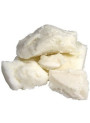
- Shea Butter (Refined, Deodorised): A natural fat used for moisturizing. Can be mixed in the oil phase.
- Stearic Acid: A fatty acid used in creams and lotions. Dissolves in oil.
- PEG-100 Stearate: An oil-in-water emulsifier, often used with Glyceryl Stearate. Dissolves in oil and water with heat.
- Glyceryl Stearate SE: A self-emulsifying thickener. Can be dissolved in water or oil with heat.
- Dimethicone (Light/50, Low-Odor): A silicone oil providing a soft, smooth feel. Mixes in silicone or oil phase. Generally considered non-volatile and non-sticky.
- Cyclopentasiloxane (Low-Odor Cyclomethicone): A lightweight, volatile silicone that evaporates quickly, providing a silky feel. Mixes in silicone or oil phase.
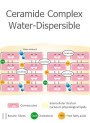
- Ceramide Complex (Water Dispersible Powder): A concentrated ceramide to help restore the skin barrier and moisture. Dispersible in water.
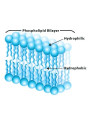
- Phospholipid (Hydrogenated Lecithin): A natural emulsifier and penetration enhancer that helps moisturize and reduce irritation. Dispersible in water and oil at room temperature.
By understanding the properties of these ingredients, you can make more informed choices for your homemade formulations to better suit your skin's needs.
Related Products Mentioned
Shea Butter (Refined , Deodorised)
Dimethicone (Light/50, Low-Odor)
Phospholipid