Improving Body Lotion: Texture, Sun Protection, Whitening, Longevity
Question
How can I modify a Shower Body Tone Up Lotion to reduce stickiness, add sun protection, increase skin whitening, improve long-lasting and waterproof properties, and is a fragrance fixative needed when adding scent?
Answer
Improving Shower Body Tone Up Lotion
Hello! I understand you would like to improve the properties of your existing Shower Body Tone Up Lotion to better meet your needs.
Please note that adding ingredients directly to a finished product can potentially lead to formula instability, changes in texture, or reduced efficacy and safety. This is because each ingredient has different properties, solubility, and compatibility with other components. Formula adjustments are best done during the product development stage.
However, if you would like information about the types of ingredients that can help with each aspect you asked about, I can provide some basic details:
1. Reducing Cream Stickiness
Ingredients that help reduce stickiness and improve the texture to be lighter often include those that provide a smooth feel, such as silicones, or ingredients that help absorb oil.
- Silicone Group: For example, Silicone Gel (Medium Gloss, Natural Olive Oil Base) (ID 7845), which is a silicone gel that enhances spreadability, provides a soft and smooth feel, and is not sticky. It can be mixed into oil or emulsion formulas.
- Lightweight Waxes/Oils: For instance, Glossy Wax (Light, Non-Greasiness) (ID 1234), a liquid oil wax that provides shine without being greasy and helps the product adhere better to the skin.
- Powder/Starch Group: Ingredients like starches, such as Pre-Gelatinized Starch, Waxy Corn Starch, Acetylated Potato Starch, can help absorb oil and reduce stickiness.
2. Adding Sun Protection
Sunscreen agents come in various types, both water-soluble and oil-soluble. The choice depends on the formula type and the desired SPF/PA level.
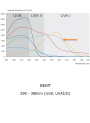
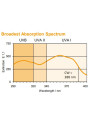
- Chemical/Organic Sunscreens: Such as BEMT (Bis-Ethylhexyloxyphenol Methoxyphenyl Triazine) (ID 772), also known as Tinosorb S, which is a broad-spectrum UVA/UVB filter with high stability, soluble in oil. Or Bisoctrizole (MBBT, e.q. Tinosorb M) (ID 6547), which is dispersible in water and covers UVB, UVA I, and UVA II.
- Blended Sunscreens: Like SPF Protect Ultra™ III (UVA+UVB) (ID 35118), a blended sunscreen base providing high SPF and broad UVA/UVB protection, soluble in oil.
- Ready-to-Use Sunscreen Bases: Such as Light Invisible Sunscreen (ID 127443) or Fluid Extreme Sunscreen (ID 125381), which are ready-to-use bases with high concentrations of sunscreen agents, offering high SPF/PA values, lightweight texture, and are soluble/dispersible in water.
Adding sunscreen agents to a finished product can be challenging to ensure accurate and stable SPF/PA values.
3. Increasing Skin Whitening
Ingredients that help brighten skin tone are typically Whitening Agents that work by inhibiting melanin production.
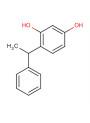
- Resorcinol Derivatives: For example, Activated Resorcinol™ (4-Butyl Resorcinol) (ID 493) and Phenylethyl Resorcinol (e.q. SymWhite 377) (ID 898) are highly effective inhibitors of the enzyme Tyrosinase, which is key in melanin synthesis. Activated Resorcinol is oil-soluble, while Phenylethyl Resorcinol is soluble in oil and can be added in the final step (if the formula contains oil). Hexylresorcinol AF (ID 125958) is a water-soluble version of Hexylresorcinol.
- Other Groups: Such as Tranexamic Acid (Trans-White™) (ID 1140), which helps reduce melanin formation and is suitable for issues like melasma and dark spots, and is water-soluble. Or MSH White™ (Undecylenoyl phenylalanine) (ID 699), which helps reduce Alpha-MSH, a key factor stimulating pigmentation, and is oil-soluble.
When using whitening agents, it is important to carefully study the recommended usage rates and precautions.
4. Making it Long-Lasting and Waterproof
Ingredients that help products last longer and become waterproof are Film Formers, which create a protective film on the skin.
- Water-Based Film Formers: Such as Comfort Film (Water Base) (ID 9095) and Flex Film (Water Base) (ID 7904) are film formers dispersible in water that help the product adhere better to the skin. Comfort Film provides a comfortable, non-sticky feel, while Flex Film creates a flexible and moderately waterproof film.
- Silicone Film Formers: For instance, Silicone Film (Medium-Wear, Soft) (ID 1114), a silicone acrylate that forms a film, providing durability, water resistance, and a soft feel. Or Silicone Film (Very Long-Wear, Hard, Cyclopentasiloxane Base) (ID 11192), which offers very high durability.
- Polymer Film Formers: Such as Allianz OPT (Acrylates/C12-22 Alkyl Methacrylate Copolymer) (ID 126126) is a polymer that forms a film, providing water and wear resistance, and is dispersible in water.
5. If adding fragrance, is a fragrance fixative necessary?
Generally, if you add fragrance oil to a cosmetic product, you do not typically need to add a separate fragrance fixative. Most fragrance oils are designed to be stable within cosmetic formulas. However, if you want the scent to last exceptionally long, or if using a fragrance with very volatile components, you might consider certain ingredients that help slow down the evaporation of the scent, but these are not true fixatives like those used in concentrated perfumes. When adding fragrance oil, it should be done at the appropriate usage rate recommended by the supplier, and compatibility with the formula should be tested before use.
I hope this information helps you understand the types of ingredients involved. However, for a high-quality and safe product, developing a new formula with an expert would be the best approach.
Related Products Mentioned
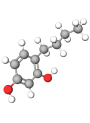
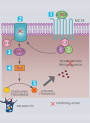
MSH White™ (Undecylenoyl phenylalanine)
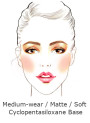
Silicone Film (Medium-Wear, Soft)
Tranexamic Acid (Trans-White™)
Glossy Wax (Light, Non-Greasiness)
Flex Film (Water Base)
Comfort Film (Water Base)

SPF Protect Ultra™ III (UVA+UVB)