Improving Lather and Adjusting pH in Cold Process Soap
Question
Regarding Cold Process (CP) soap making using 40-50% hard oils and the rest soft oils:
- Are there any additives that can help increase the lather in the finished bar soap?
- Are there any additives that can help reduce the alkalinity (pH) of the soap?
Answer
Improving Cold Process Soap Properties
For your cold process (CP) soap making, you're looking for ways to increase lather and potentially reduce alkalinity. Here's some information based on common soap making practices and available ingredients:
Increasing Lather/Foam
The amount and type of lather in CP soap are primarily determined by the oils you use. Since you are using 40-50% hard oils, you likely have a good base for hardness and some lather. To boost foam further:
- Adjust Oil Blend: Oils like Coconut Oil and Castor Oil are known for producing abundant lather. If your hard oil blend doesn't include a high percentage of coconut oil, increasing it (while being mindful that very high percentages can be drying) can help. Adding Castor Oil, even at a small percentage (e.g., 5-10%), is excellent for creating bubbly, stable lather.
- Add Sugar: Dissolving a small amount of sugar (about 1 teaspoon per pound of oils) in the water phase before adding the lye can significantly boost lather.
Reducing Alkalinity (pH)
Cold process soap is naturally alkaline (typically pH 9-11) due to the saponification reaction between oils and lye. This alkalinity is necessary for the soap to cleanse effectively. You cannot significantly lower the pH of a finished CP bar to be neutral or acidic without compromising its structure and properties.
However, certain additives can react with lye during the process to form salts that offer other benefits, sometimes perceived as making the soap milder or improving feel, but they do not make the final bar non-alkaline:
- Citric Acid: Adding Citric Acid to the water phase before the lye solution is a common technique. It reacts with lye to form Sodium Citrate. Sodium Citrate acts as a chelator, helping the soap perform better in hard water and improving lather stability. It consumes some lye, so you must account for this in your lye calculations (typically add about 0.6 oz of extra lye per 1 oz of Citric Acid used, or use an online lye calculator that accounts for Citric Acid). The final soap bar will still be alkaline.
- Relevant Product: Citric Acid (Anhydrous, Natural)
- Lactic Acid: Similar to Citric Acid, Lactic Acid can be added to the water phase to react with lye, forming Sodium Lactate. Sodium Lactate is widely used in CP soap making to help produce a harder bar that unmolds faster. It also requires adjusting your lye amount as it consumes some lye. The final soap bar remains alkaline.
- Relevant Products: Lactic Acid (AHA) Neutralized, Lactic Acid (AHA) 90% (ordinary grade - smells), Lactic Acid (AHA) 90% Deodorized (odorless), Sodium Lactate (60% Liquid, Natural), Sodium Lactate Plus (Sodium Lactate is the resulting salt when Lactic Acid reacts with lye, or can be added directly).
Important Note: Adding acids like Citric Acid or Lactic Acid requires precise lye calculation adjustments. Always use a reliable lye calculator that supports these additives to ensure proper saponification and a safe bar of soap. The final cured soap bar will still have an alkaline pH, which is normal for true soap.
Properly curing your soap for 4-6 weeks also helps improve its mildness by allowing the saponification process to complete and excess water to evaporate, resulting in a harder, longer-lasting bar.
Related Products Mentioned
Sodium Lactate (60% Liquid, Natural)
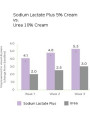
Sodium Lactate Plus
Lactic Acid (AHA) 90%