Short answer
Beta Cyclodextrin (Cyclodextrin) is the selected product in your list that can potentially help with fragrance protection/slow release. But in your current process, it is probably not being used in a way that gives strong fabric deposition after washing.
Your main problem is not just fragrance strength. A main-wash laundry detergent is designed to dissolve, remove oily materials, and rinse them away. Most of your formula is water-soluble salts/builders, so they help water chemistry/cleaning but do not strongly anchor fragrance onto clothes.
Formula check
Your listed batch is:
Total = 120 g.
So 15 g fragrance oil = 12.5% of the formula, not 6%.
If you want a true 6% fragrance formula:
- A 120 g total batch should contain about 7.2 g fragrance oil.
- If you want to use 15 g fragrance oil at 6%, the total batch would need to be 250 g.
Before increasing fragrance, please confirm the fragrance oil is suitable for laundry/fabric contact and within the relevant IFRA/use-limit guidance for that application.
What each selected product is doing in this type of formula
This is the most relevant selected ingredient for fragrance. Cyclodextrin has a hydrophobic cavity that can host some small oily/volatile fragrance molecules and help protect or slowly release them.
However, dry-blending fragrance oil + cyclodextrin + Natrasorb + salts is not the same as true encapsulation. Some fragrance may simply sit on the powder carrier. Also, not every fragrance molecule fits cyclodextrin equally; performance depends on molecule size, polarity, volatility, and the fragrance composition.
This is useful for pH/buffering and water chemistry support. In laundry logic it can help as a builder/chelating-support ingredient, but it is not the main fragrance-locking ingredient.
This supports alkalinity, detergency, and water-softening/builder function. It helps cleaning more than fragrance retention. Also confirm whether your “washing soda” is anhydrous sodium carbonate or sodium carbonate decahydrate, because decahydrate contains water of crystallization and gives less active sodium carbonate per gram.
This is a mild alkaline/buffering powder. It can support pH adjustment/water chemistry, but it is not a fragrance deposition technology.
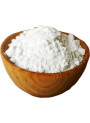
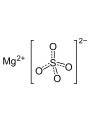
This is not expected to improve fragrance retention. In one trial, I would reduce or remove it and compare cleaning and scent retention, because magnesium salts may add ionic load and are not a primary scent-fixation tool.
Natrasorb in your formula
Natrasorb can help turn fragrance oil into a free-flowing powder, but oil absorption is different from wash-durable fragrance deposition. It may make the jar smell strong without guaranteeing that the scent survives wash/rinse and remains on dry fabric.
How I would test cyclodextrin in your powder
Use this as a bench-trial starting point, not a guaranteed final process:
Correct the fragrance level first.
Run small 100 g trials at controlled fragrance levels, for example 3%, 6%, and your current 12.5%, rather than assuming more fragrance will solve the issue.
Pre-complex or pre-adsorb the fragrance before adding the salts.
Do not just dry-blend everything together. Make a small slurry of Beta Cyclodextrin (Cyclodextrin) with a small amount of water or water/ethanol, then slowly add the fragrance while mixing well. The goal is to wet, disperse, deagglomerate, and allow complex/adsorbed carrier formation—not to “dissolve” the fragrance oil.
Try lower fragrance loading on cyclodextrin.
Your current ratio is 6 g cyclodextrin : 15 g fragrance, which is likely too fragrance-heavy for efficient complexation of all fragrance components. As a screening trial, compare ratios around 1 part cyclodextrin : 0.2–0.5 part fragrance by weight.
Dry gently before adding the soluble salts.
After the cyclodextrin/fragrance carrier is prepared, dry it gently, then blend it with the rest of the powder.
Age the carrier before final evaluation.
As a trial method, hold the pre-complexed fragrance carrier in a closed container for 24–48 hours, then compare scent in the powder, wet laundry, and fully dry fabric.
Run a side-by-side Epsom salt test.
Make one batch with Epsom salt and one without it. If scent or cleaning improves without it, leave it out.
Powder vs liquid
Switching to liquid will not automatically fix scent retention. If you make a liquid, you would need a proper fragrance solubilizing/emulsifying system and preservation system; simply adding this powder blend and fragrance to water is not recommended.
For the strongest scent on dry laundry, the more effective route is usually to move the fragrance delivery to a final-rinse, dryer, or leave-on fabric treatment format. The main wash is the hardest place to make fragrance last because the system is designed to remove oils and then rinse them away.
Key checks before your next trial
- How much powder are you dosing per laundry load?
- Is the washer HE/front-loader or high-water/top-loader?
- How many rinse cycles are used?
- Are you using oxygen bleach, vinegar, fabric softener, or extra rinse?
- Is the fragrance oil designed and cleared for laundry/fabric contact?
- Is the fragrance mostly volatile top notes, or does it contain more substantive laundry-suitable notes?
In short: Beta Cyclodextrin can help, but only if you pre-complex/pre-disperse the fragrance properly and test it at realistic ratios. The salts in the detergent are mainly for cleaning/water chemistry, not scent anchoring. For a very heavy scent throw after drying, a final-rinse or leave-on/dryer route will usually outperform a main-wash powder.