Incorporating Pure TECA and Matrixyl 3000 into Sensitive Skin Face Cream
Question
Light Face Cream for Sensitive Skin
I currently make a face cream with the following formula which works well on my sensitive skin (I have Rosacea).
Original Formula: Ultra-Light Summer Face Cream
| Phase | Ingredient | % |
|---|---|---|
| Heated Water | Distilled water | 58.60% |
| Chamomile Water | 10.00% | |
| Glycerine | 2.00% | |
| Hyaluronic acid 1% solution | 3.00% | |
| Pentylene glycol (Oil and Water Soluble) | 2.00% | |
| Propanediol 1,3 | 2.00% | |
| EDTA | 0.30% | |
| Niacinamide (Vitamin B3) | 3.00% | |
| Heated Oil | Lipomulse Emulsifying Wax (Non-Ionic) | 3.60% |
| Cetyl Alcohol | 3.00% | |
| Coco-Caprylate | 6.00% | |
| Isoamyl Laurate | 2.00% | |
| Sepimax Zen - Thickener | 0.30% | |
| Dimethicone 350 | 1.00% | |
| Cooldown | Preservative | 0.50% |
| Vit E (70% tocopherols) + Rosemary Antioxidant | 0.10% | |
| Chamomile Extract | 1.50% | |
| Calendula extract | 1.00% | |
| Bisabolol | 0.10% | |
| Total | 100.00% |
I am looking to incorporate Pure TECA Centella Asiatica Extract (TECA 95%) and Matrixyl 3000 as per the new formulation below:
New Formulation: Ultra-Light Summer Face Cream
| Phase | Ingredient | % | Notes |
|---|---|---|---|
| Heated Water | Distilled water | 54.10% | Reduced water for Matrixyl 3000 |
| Chamomile Water | 10.00% | ||
| Glycerine | 0.00% | Original used 2% | |
| Double Hyaluron Liquid | 4.00% | For normal but sensitive skin | |
| Pentylene glycol (Oil and Water Soluble) | 2.00% | ||
| Propanediol 1,3 | 0.00% | Original used 2% | |
| EDTA | 0.30% | ||
| Niacinamide (Vitamin B3) | 3.00% | Original version used at 4% | |
| N-acetyl-D Glucosamine (GlucoBright™) | 4.00% | New addition | |
| Heated Oil | Lipomulse Emulsifying Wax (Non-Ionic) | 3.60% | |
| Cetyl Alcohol | 3.00% | ||
| Coco-Caprylate | 6.00% | ||
| Isoamyl Laurate | 2.00% | ||
| Sepimax Zen - Thickener | 0.30% | ||
| Dimethicone 350 | 1.00% | ||
| Cooldown | Preservative | 0.50% | |
| Vit E (70% tocopherols) + Rosemary Antioxidant | 0.10% | ||
| Chamomile Extract | 1.00% | ||
| Calendula extract | 1.00% | ||
| Bisabolol | 0.10% | ||
| Matrixyl™ 3000 | 3.00% | New addition | |
| Pure-TECA™ (TECA 95%, CICA) | 1.00% | New addition | |
| Total | 100.00% |
To include TECA 95%, I am confused with information I have read in some discussions here as it's not soluble in oil or water.
- Can I add it to the heated water phase and perhaps dissolve in Pentylene Glycol (I also have Propylene Glycol) in the heated phase?
- I am confused as instructions conflict: some say it should not be heated, but others suggest heating with Propylene Glycol to 85 degrees and then adding to the cream.
- Or should I just add the powder with my other cooldown ingredients once the cream has been emulsified?
- If so, does the TECA dissolve in the cream below 40 degrees?
Thanks for your help with my new formula.
Answer
Your updated formulation for the Ultra-Light Summer Face Cream is well-structured for sensitive and rosacea-prone skin. The combination of Vitamin B3 and GlucoBright™ is particularly effective, as these two ingredients work synergistically to improve skin barrier function and brighten the complexion.
Regarding your questions about Pure-TECA™ and the incorporation of your new actives, here are the technical recommendations based on the product specifications:
1. Incorporating Pure-TECA™ (TECA 95%)
The confusion regarding Pure-TECA™ solubility is common because it is a highly concentrated extract that is difficult to dissolve.
- Solubility Reality: Pure-TECA™ does not dissolve in water or oil. It can only be fully dissolved in certain glycols (like Propylene Glycol or Butylene Glycol) at a very low concentration (approximately 1% TECA to 99% Glycol) using high heat (70-80°C).
- The "Dispersion" Method (Recommended): Since your formula calls for 1.00% TECA, you would need a very large amount of glycol to fully dissolve it, which is not practical for a cream. Therefore, TECA at this percentage is typically dispersed rather than dissolved.
- How to add it:
- Option A (Cooldown): Add the Pure-TECA™ powder during the cooldown phase (below 40°C). You must use a high-shear mixer (like a stick blender or homogenizer) to ensure the powder is micro-dispersed evenly throughout the cream to avoid a gritty texture.
- Option B (Pre-slurry): Mix the TECA powder with your Glycol at room temperature to create a "slurry" before adding it to the emulsion. This helps prevent clumping.
- Heating: Do not heat the entire batch to 85°C just for the TECA. High heat for extended periods can degrade other sensitive components.
2. Matrixyl™ 3000 and GlucoBright™
- Matrixyl™ 3000: This peptide is heat-sensitive. It must be added during the cooldown phase when the temperature of the emulsion is below 40°C. Your planned usage of 3% is the ideal recommended rate.
- GlucoBright™ (N-Acetyl-D Glucosamine): This is water-soluble and heat-stable. You can add it directly to the Heated Water Phase. It works best in a pH range of 3.0–7.0.
3. Formulation Adjustments & Tips
- Synergy: The combination of Vitamin B3 and GlucoBright™ is a "gold standard" for sensitive skin. It helps stimulate natural Hyaluronic Acid production and reduces redness.
- Sepimax Zen: At 0.3%, it acts as an excellent stabilizer for this formula. Since you are adding electrolytes and various actives, Sepimax Zen will prevent the cream from thinning out or separating.
- Double Hyaluron Liquid: This can be added to the water phase or cooldown phase. It provides deep hydration which is beneficial for Rosacea.
Revised Mixing Procedure
- Heated Water Phase: Combine Distilled Water, Floral Water, Chelating Agent, Vitamin B3, and GlucoBright™. Heat to 70-75°C. Sprinkle Sepimax Zen on top and blend until a smooth thin gel forms.
- Heated Oil Phase: Combine Emulsifying Wax, Thickener/Stabilizer, Emollients, and Silicone. Heat to 70-75°C.
- Emulsification: Add the Oil Phase to the Water Phase while mixing with high shear.
- Cooldown Phase (Below 40°C):
- Add Double Hyaluron Liquid, Matrixyl™ 3000, and your Preservative.
- Add Pure-TECA™ (ideally pre-mixed into a slurry with your Glycols).
- Add Antioxidants, Soothing Agents, and Botanical Extracts.
- Homogenize well for 2-3 minutes to ensure the TECA is perfectly dispersed.
Related Products Mentioned
Pal-GHK, Pal-GQPR (eq Matrixyl 3000)
Safe-B3™ (Vitamin B3, Niacinamide)

Natural Bisabolol (Brazil Chamomile)
GlucoBright™ (Acetyl Glucosamine)

Calendula Extract (Water Soluble)
Propylene Glycol (USP)
Glycerin (USP/Food Grade)
Dimethicone (Medium/350, Low-Odor)
Cetyl Alcohol
Disodium EDTA
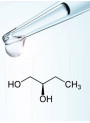
Butylene Glycol
Double Hyaluron Liquid

Chamomile Water (Anthemis Nobilis)

Pentylene Glycol (Low-Odor)

LipidSoft™ Silk (Isoamyl Laurate)

CocoSilk™ (Coco-Caprylate/Caprate)
Sepimax Zen