Ingredient Compatibility and Formulation Challenges
Question
I have several questions regarding ingredient compatibility and formulation, especially for a mineral oil-free formula containing sensitive active ingredients:
Electrolyte Sensitivity of Actives:
- If a formula contains active ingredients sensitive to electrolytes, such as
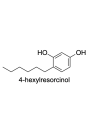
Bakuchiol-Eco™andHR-White™ (4-Hexylresorcinol), how significantly will small amounts of electrolytes (around 1-1.5%) from ingredients likeLecithinGel™(an emulsifier) orGlobal Guard™(a preservative) affect these sensitive actives? - Is this something that cannot be definitively stated and requires self-testing, including monitoring the remaining active ingredient content after the specified shelf life?
- If a formula contains active ingredients sensitive to electrolytes, such as
Electrolyte-Free pH Buffer:
- Given that some active ingredients and emulsifiers in my formula are sensitive to electrolytes, is it possible to create a pH buffer that is entirely free of electrolytes?
- If so, what specific ingredients should be used? If not, I will need to adjust my formula accordingly.
Mixing Bakuchiol-Eco™ with DMI and Protect UV in Mineral Oil-Free Formulas:
- Are there any special procedures for mixing
DMI (Dimethyl Isosorbide)andProtect UVwithBakuchiol-Eco™in a formula that does not contain mineral oil? - The
DMIproduct information does not specify its solubility with other oils. Can it be used with triglycerides (e.g.,Caprylic/Capric Triglyceride),LipidSoft Lite, squalane, and various organic oils? - Should
Protect UV(assumingSPF Protect Ultra™ III) not be added directly toDMI?
- Are there any special procedures for mixing
Effect of Glycols on Water Solubility:
- Does the addition of glycols, such as glycerine, propanediol, butylene glycol, or propylene glycol, decrease the water solubility of other water-soluble ingredients in a formula? Or is this a complex interaction that is difficult to explain generally?
Formula Review Request:
- If I post my formula here, can you provide an initial review regarding the basic chemical compatibility of the ingredients, without performing a full stability check (as that would require further testing on my part)?
Answer
Compatibility and Formulation Guidance
Here are the answers to your questions regarding ingredient compatibility and formulation:
1. Compatibility with Electrolytes
For sensitive active ingredients like Bakuchiol-Eco™ and HR-White™ when exposed to small amounts of electrolytes from ingredients such as LecithinGel™ or preservatives like Global Guard™ (at approximately 1-1.5%):
- Bakuchiol-Eco™ is known to be sensitive to metal ions. Our product information recommends adding a chelating agent like 0.1% Disodium EDTA or Phytic Acid to help capture any ions in the formula and ensure its maximum stability.
- HR-White™ also benefits from the inclusion of 0.1% Disodium EDTA to prevent discoloration, indicating its sensitivity to certain ions.
- LecithinGel™ contains Sodium Acrylates Copolymer, which can be sensitive to electrolytes, and Global Guard™ contains Sodium Benzoate and Potassium Sorbate, which are electrolytes.
Therefore, even small amounts of electrolytes from these ingredients can potentially affect the stability and efficacy of sensitive actives. It is highly recommended to perform comprehensive stability testing and assay the active ingredient content after the designated shelf life to confirm compatibility and performance in your specific formulation.
2. Electrolyte-Free pH Buffer
Creating a pH buffer entirely without electrolytes is challenging because most traditional buffering agents are salts, which are by definition electrolytes. If your formula is highly sensitive to electrolytes, you might consider using non-ionic pH adjusters or exploring alternative formulation strategies that inherently maintain a stable pH without relying on conventional buffer systems. However, achieving precise and long-term pH stability without any electrolytes can be very difficult. It often involves trade-offs, and you might need to adjust your formula or accept a certain level of compromise.
3. Mixing Bakuchiol-Eco™ with DMI and Protect UV
3.1 Mixing Bakuchiol-Eco™ with DMI in Mineral Oil-Free Formulas
For mixing Bakuchiol-Eco™ with Dimethyl Isosorbide (DMI) in a formula that does not contain mineral oil:
- Bakuchiol-Eco™ dissolves well in various types of oil. Our product information recommends mixing it into the oil phase and blending until combined, avoiding excessive heat (if heat is necessary, use it for the shortest possible time and do not exceed 75°C). It is also highly recommended to use DMI at 2-3% to enhance its penetration and efficiency.
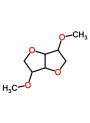
- Dimethyl Isosorbide (DMI) is a versatile solvent. While its description explicitly lists mineral oil, it also states it can dissolve in various types of glycol, alcohol, polysorbates, lanolin, and silicone oil. Based on its general solvent properties and its recommendation for use with Bakuchiol (which dissolves in various oils), DMI is generally compatible with and can help dissolve other common cosmetic oils like Caprylic/Capric Triglyceride, LipidSoft Lite, squalane, and other organic oils.
- Mixing Steps: We recommend first dissolving Bakuchiol-Eco™ in DMI, then incorporating this mixture into your formula's oil phase (e.g., Caprylic/Capric Triglyceride, squalane).
3.2 Adding Protect UV to DMI
Regarding SPF Protect Ultra™ III (which we assume is the 'Protect UV' you are referring to), its mixing instruction states to 'Mix in the oil.' It is generally best to dissolve oil-soluble UV filters directly into the main oil phase of your formula, rather than adding them directly to DMI, unless DMI is specifically intended as the primary solvent for that particular UV filter in your formulation. This ensures proper dispersion and efficacy.
4. Glycol's Effect on Water Solubility
The addition of glycols such as glycerine, propanediol, butylene glycol, or propylene glycol to a water-based solution can have a complex effect on the solubility of other water-soluble ingredients. Glycols are excellent humectants and solvents themselves. While they generally increase the overall solvent capacity of the system, they can also alter the polarity of the solvent mixture. This change in polarity might either increase or decrease the solubility of specific water-soluble ingredients, depending on the chemical nature of those ingredients and the concentration of the glycol. It is not a straightforward 'always decreases' or 'always increases' situation; it is highly dependent on the specific components and their interactions within the formula.
5. Formula Review
Yes, you can share your formula here. We can provide a preliminary review regarding the basic chemical compatibility of the ingredients based on our expertise and product information. However, please note that this will be a preliminary assessment and will not replace full stability testing, which is crucial for confirming the long-term performance and safety of your final product.
Follow-up Replies
Question:
I have two questions regarding formulation ingredients:
- On the Bakuchiol-Eco™ product page, Protec™ UV (Tinogard TL) is linked. I understand it's related to UV protection, but can other UV protection ingredients be used interchangeably with it in formulations?
- Regarding penetration enhancers like Dimethyl Isosorbide (DMI), I recall that they should generally not be used with organic sunscreens (UV filters) intended for skin protection. Is this understanding correct, or am I mistaken? I am specifically asking about their compatibility when formulating products containing organic sunscreens like
SPF Protect Ultra™ III.
Answer:
Compatibility and Formulation Guidance
Here are the answers to your questions regarding ingredient compatibility and formulation:
1. Protec™ UV and Other UV Protection Agents for Formulations
Protec™ UV (Benzotriazolyl Dodecyl p-Cresol), which is linked on the Bakuchiol-Eco™ product page, is an ingredient specifically designed to protect the formulation itself from degradation caused by UV light. It is not a sunscreen active intended to protect the skin from sun exposure.
The primary role of Protec™ UV is to help stabilize UV-sensitive ingredients within your product, such as Vitamin C or Vitamin A, ensuring they maintain their efficacy over time.
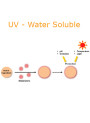
In addition to Protec™ UV, we offer other agents that can protect your formulation from UV degradation, depending on your formula's solubility requirements. For example, ActiveProtec™ UV is water-soluble, making it easy to incorporate into aqueous formulations.
2. Using Penetration Enhancers (DMI) with Organic Sunscreens
You are correct in your understanding that, generally, Penetration Enhancers like Dimethyl Isosorbide (DMI) should not be used with organic sunscreens that are intended to protect the skin.
Here's why:
- DMI functions as a penetration enhancer, helping active ingredients such as Bakuchiol-Eco™ to penetrate the skin more effectively, thereby boosting their performance within the skin layers.
- Conversely, organic sunscreens (UV filters) work by absorbing UV radiation on the outermost layer of the skin. If sunscreens penetrate too deeply into the skin, their efficacy in forming a protective barrier on the surface can be reduced.
Therefore, if you are referring to organic sunscreens used for skin protection (like SPF Protect Ultra™ III), using DMI with them might not be advisable as it could lead to reduced sun protection efficacy.
However, in the context of Protec™ UV (which is a formulation protector, not a skin sunscreen), DMI is not used to help Protec™ UV penetrate the skin. Instead, DMI is recommended for use with Bakuchiol-Eco™ to ensure the latter's optimal penetration and efficacy, as per the usage guidelines for Bakuchiol-Eco™.
We hope this clarifies your concerns. Please feel free to ask if you have any further questions.
Question:
The user is seeking clarification regarding the function of different UV-related ingredients in cosmetic formulations. Specifically, they want to understand if a UV filter like SPF Protect Ultra™ III can be used to protect other UV-sensitive ingredients within a formula from UV degradation, or if only specialized ingredients such as Protec™ UV or ActiveProtec™ UV are suitable for this purpose.
Answer:
It seems there might be a misunderstanding regarding the function of different UV-related ingredients. Let me clarify:
SPF Protect Ultra™ III is an organic sunscreen (UV filter) primarily designed to protect the skin from UV radiation. While it does absorb UV light, its main purpose is to provide SPF protection when applied to the skin. It is not specifically formulated or recommended for use as an ingredient to protect other sensitive ingredients within your cosmetic formula from UV degradation. Its presence in a formula is for its sun-protective benefits on the skin.
Protec™ UV (Tinogard TL) and ActiveProtec™ UV are specifically designed as formulation stabilizers or UV absorbers for the product itself. Their role is to absorb UV light that might penetrate the product packaging and cause degradation of sensitive ingredients (like vitamins, certain actives, or colors) within the formula, thereby extending the product's shelf life and maintaining its integrity.
Therefore, if your goal is to protect other sensitive ingredients within your formula from UV degradation, you should use ingredients specifically designed for that purpose, such as Protec™ UV (oil-soluble) or ActiveProtec™ UV (water-soluble), depending on your formula's phase. Using SPF Protect Ultra™ III for this purpose is not its intended use and may not be effective for formulation stability. Its primary function remains skin protection.
I hope this clarifies the distinction!
Related Products Mentioned

Global Guard™ K712
Dimethyl Isosorbide (DMI)

Bakuchiol-Eco ™ (Natural Retinol)

LecithinGel™

SPF Protect Ultra™ III (UVA+UVB)