Ingredient Compatibility & Stability for Serum and Night Cream
Question
I have two formulations, a serum and a night cream, and would like to know about the compatibility and stability of the ingredients and how to formulate them correctly.
Serum Formulation:
- Alpha Arbutin 2%
- Vitamin B3 (Niacinamide) 5%
- Aloe Vera 3%
- Licorice 2%
- Camomile 1%
- Witch Hazel 10%
Night Cream Formulation:
- 4-Butyl Resorcinol 1%
- Vitamin B3 4%
- Allantoin 0.8%
- Licorice 2%
- Camomile 1%
- Rice Vitamin 2%
What are the compatibility and stability considerations for these ingredients in each formulation, and what are the key steps or additives needed for successful formulation?
Answer
Serum and Night Cream Formulation Compatibility
Thank you for providing the ingredient lists for your serum and night cream formulations. Understanding ingredient compatibility and stability is essential for creating effective and safe products. As previously noted, the base formulation you choose will significantly impact the stability and texture of both the serum and the cream.
Here is an assessment of the compatibility and stability of the ingredients you've listed:
Serum Formulation
Your proposed serum contains:
- Alpha Arbutin 2%
- Vitamin B3 (Niacinamide) 5%
- Aloe Vera 3%
- Licorice 2%
- Camomile 1%
- Witch Hazel 10%
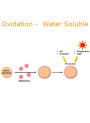
Most of these ingredients are water-soluble and generally compatible.
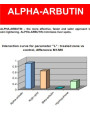
- Alpha Arbutin (such as Alpha Arbutin (Switzerland)) is effective for skin brightening. It is stable within a pH range of 3.5-6.5. At a pH higher than 8, it can break down into hydroquinone, which is undesirable. To help prevent discoloration of the formula, especially with Alpha Arbutin, it is recommended to include an antioxidant like ActiveProtec™ OX at 0.6%.
- Vitamin B3 (Niacinamide) (such as Safe-B3™) is a versatile ingredient that helps reduce wrinkles, hyperpigmentation, and oiliness, while also strengthening the skin barrier. It is stable in a pH range of 3-8, with an optimal range of 4.0-7.0. Niacinamide is generally compatible with Alpha Arbutin.
- Aloe Vera Extract is known for its moisturizing and soothing properties. It is water-soluble and typically stable in a pH range of 3.5-7. Note that Aloe Vera Extract can sometimes affect the viscosity of gel or cream bases.
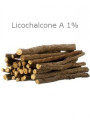
- Licorice Extract (specifically the Licochalcone A type you linked, such as Licorice Extract (Licochalcone A 1%, Water-Soluble)) is primarily used for its anti-inflammatory, anti-irritant, and oil-controlling properties. It is water-soluble and stable in a pH range of 3.5-6.5. If your primary goal is skin whitening, you might consider using a Licorice Extract rich in Glabridin (such as Licorice Extract (Glabridin 4.5%, Water-Soluble)) instead, as Licochalcone A does not have significant whitening effects.
- Chamomile (assuming a water-soluble form like Chamomile Water) provides soothing benefits. Chamomile Water typically has a pH between 3-5 and is water-soluble.
- Witch Hazel (such as Witch Hazel (Distillate - Alcohol Free, Paraben Free)) is often used as an astringent to help tighten pores. It is water-soluble with a pH typically between 3-5.
Compatibility Summary for Serum:
The ingredients in your serum formulation are generally compatible in a water-based system. The key is to ensure the final pH of the serum is maintained within the optimal range for Alpha Arbutin (3.5-6.5), ideally between 4.0 and 5.5, which also suits the other ingredients like Vitamin B3, Aloe Vera, Licorice (Licochalcone A), Chamomile Water, and Witch Hazel. Using ActiveProtec™ OX can help maintain the stability and color of Alpha Arbutin.
Night Cream Formulation
Your proposed night cream contains:
- 4-Butyl Resorcinol 1%
- Vitamin B3 4%
- Allantoin 0.8%
- Licorice 2%
- camomile 1%
- Rice Vitamin 2%
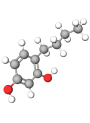
- 4-Butyl Resorcinol is a potent skin brightening agent. There are different forms available, such as Activated Resorcinol™ (4-Butyl Resorcinol) which is oil-soluble and requires a pH of 4.5-5.5 for stability, and NanoRes™ (Liposome 4-Butyl Resorcinol, Nano Size) which is water-soluble and developed for better stability and ease of use. Given that many of your other night cream ingredients are water-soluble, using NanoRes™ might be simpler for formulation.
- If you use Activated Resorcinol (oil-soluble), it must be incorporated into the oil phase of your cream base. It is light-sensitive, so opaque packaging is essential. It is recommended to use Disodium EDTA (0.2%) and ActiveProtec™ OX (0.6%) to help prevent discoloration. Activated Resorcinol should not be used with Alpha Arbutin (not in this formula) or AHA, but it is compatible with Vitamin B3.
- If you use NanoRes™ (water-soluble), it can be dissolved directly in water and is generally compatible with Vitamin B3. It is also light-sensitive and requires opaque packaging.
- Vitamin B3 (Niacinamide) (such as Safe-B3™) is compatible with 4-Butyl Resorcinol and the other ingredients listed.
- Allantoin is a soothing and skin-repairing ingredient. It has limited solubility in water at room temperature (around 0.5%) but is more soluble with heat. It is stable in a pH range of 3-8, ideally 4-8. Your proposed 0.8% usage rate might require heating or using a solubilizer to fully incorporate it, depending on your base.
- Licorice Extract (Licochalcone A type) is compatible within a pH range of 3.5-6.5. Again, consider the Glabridin-rich type (Licorice Extract (Glabridin 4.5%, Water-Soluble)) if whitening is a key goal.
- Chamomile (assuming water-soluble like Chamomile Water) is compatible within a pH of 3-5.
- Rice Vitamin (Inositol) is a water-soluble ingredient that helps balance skin moisture. It is stable in a pH range of 4-7.
Compatibility Summary for Night Cream:
The compatibility depends largely on the type of 4-Butyl Resorcinol used and the chosen base.
- If using NanoRes™ (water-soluble 4-Butyl Resorcinol), the ingredients are generally compatible in a water-based or emulsion system with a pH in the range of approximately 4.0-6.0.
- If using Activated Resorcinol (oil-soluble 4-Butyl Resorcinol), you will need an emulsion base with an oil phase. The pH must be carefully controlled at 4.5-5.5. You should also include Disodium EDTA and ActiveProtec™ OX.
Regardless of the type of 4-Butyl Resorcinol, opaque packaging is necessary due to its light sensitivity. Ensure Allantoin is fully dissolved in your chosen base. Consider the Glabridin-rich Licorice Extract for enhanced whitening.
General Recommendations
- Choose Your Base Wisely: The base formulation (serum base, cream base) is critical. It will determine the final texture, stability, and how easily the ingredients can be incorporated. Ensure the base is compatible with the solubility of your chosen ingredients (water-soluble vs. oil-soluble).
- Control the pH: The final pH of both formulations is extremely important for the stability and effectiveness of ingredients like Alpha Arbutin and 4-Butyl Resorcinol. You will need to measure and adjust the pH of your final product to be within the recommended ranges (ideally 4.0-5.5 for the serum and 4.0-6.0, or specifically 4.5-5.5 if using oil-soluble Activated Resorcinol, for the night cream).
- Consider Antioxidants/Chelating Agents: For the serum, adding ActiveProtec™ OX (0.6%) is recommended for Alpha Arbutin stability. For the night cream, if using Activated Resorcinol, adding Disodium EDTA (0.2%) and ActiveProtec™ OX (0.6%) is recommended.
- Use Opaque Packaging: For the night cream containing 4-Butyl Resorcinol, use opaque packaging to protect the ingredient from light degradation.
- Perform Stability Testing: After creating your formulations with the chosen bases and adjusted pH, it is highly recommended to perform stability testing (e.g., observing changes in color, texture, and odor over time and under different temperature conditions) to ensure the ingredients remain stable and effective.
By carefully selecting your base, controlling the pH, and considering the recommended additives, you can create stable and effective serum and night cream formulations.
Related Products Mentioned
Alpha Arbutin (Switzerland)
Safe-B3™ (Vitamin B3, Niacinamide)
Allantoin
Disodium EDTA
Rice Vitamin (Inositol, Vitamin B8)
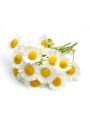
Chamomile Water (Anthemis Nobilis)