Ingredient Stability, Solubility, Storage, and Preservative Irritation
Asked by: donotgiveup12345601
On: December 13, 2015
Product Type:
Cosmetics
Answered
Question
I have several questions regarding ingredient stability, solubility, storage, preservatives, and other ingredients:
- If oil-soluble substances are dissolved in a pure oil base and stored under recommended conditions, will they still gradually degrade?
- Similarly, if water-soluble substances are dissolved in Distilled Water and stored under recommended conditions, will they gradually degrade?
- I don't fully understand why active ingredients in formulas degrade, as I've read. How is this different from incorrect storage of active ingredients? If a formula contains multiple active ingredients requiring different temperatures, how should it be stored?
- I want to dissolve powder ingredients in water or solvents like Glycerin or Butylene Glycol before mixing into a formula to make it easier and prevent dusting. Am I risking the active ingredients losing quality?
- Can water-soluble ingredients be dissolved in Glycerin or Butylene Glycol?
- Does "room temperature" on the website refer to 25°C or typical Thai room temperature?
- I experienced irritation using Phenoxyethanol at 0.7%. My skin itched, and scratching caused raised bumps like hives or rash, but it subsided if I didn't scratch. Using it around the eyes caused burning. I also used Phenoxyethanol 1% in a face wash formula (AminoWash 15%, rest water) and it caused irritation even after rinsing quickly. Is this an allergic reaction?
- Mild Preserved caused a worse burning sensation than Phenoxyethanol at the same 0.7% concentration, regardless of the application area. What should I do?
- I bought 65g of Phenoxyethanol. Should I discard it?
- Can I use Eye Preserved 1% instead in a face wash formula? Is this sufficient for preservation, given the website states it's less effective than other preservatives?
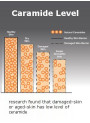
- The Ceramide sold on the website didn't dissolve directly in water when I tried last year; it remained as particles. Should I make the cream base first and then add the Ceramide, as shown in the formula video?
- What is the difference between SKIN-DEFENSE and Ceramide?
Answer
Hello,
Thank you for your questions and additional information. The team has compiled the answers to all your queries as follows:
Ingredient Degradation and Solubility
- Degradation of substances dissolved in oil: The degradation of substances dissolved in oil or base oil depends on the specific type of substance. Some substances may degrade faster when dissolved into a liquid, while others are not affected.
- Degradation of substances dissolved in distilled water: Similar to question 1, it depends on the specific substance. Generally, if stored under recommended conditions, even when dissolved, they should retain at least 80% efficacy throughout the shelf life of the ingredient. This is why finished formulas, when properly stored, can maintain efficacy for 1-2 years.
- Why active ingredients in formulas degrade and storage: All substances in the world degrade over time. For cosmetic ingredients, we are concerned about degradation that leads to loss of efficacy. Many active ingredients, especially expensive ones, are sensitive to temperature, light, or air. Incorrect storage accelerates degradation. If a formula contains multiple active ingredients requiring different temperatures, the best storage method for the finished formula is to store it at approximately 10-15°C, away from air and light. This method maximizes the lifespan of most ingredients.
- Pre-dissolving powder ingredients in solvents: This can be done. Dissolving powder ingredients in water, glycerin, or butylene glycol beforehand makes mixing easier and prevents dusting. However, the resulting solution must still be stored under conditions appropriate for that specific ingredient.
- Dissolving water-soluble ingredients in glycerin or butylene glycol: It depends on the type of substance. Generally, water-soluble substances may have much lower solubility in glycerin or butylene glycol, or some may not dissolve at all.
- "Room temperature" on the website: The room temperature specified on the website refers to typical Thai room temperature, which is approximately 25-35°C.
Questions about Preservatives and Other Ingredients
- Irritation from Phenoxyethanol: Symptoms like itching, hive-like rash, and burning around the eyes when using Phenoxyethanol indicate that you are definitely allergic or sensitive to this substance. You should avoid using Phenoxyethanol in all formulas, including finished products containing this ingredient. There is no need to test for a lower concentration that causes less reaction. You should choose other types of preservatives instead.
- Burning sensation from Mild Preserved: If Mild Preserved causes a burning sensation at a concentration of 0.7%, it is recommended to consider other types of preservatives. There are many other preservatives available.
- Handling purchased Phenoxyethanol: The Phenoxyethanol you purchased can be used by individuals who are not allergic to this substance.
- Using Eye Preserved 1% in a face wash formula: Whether preservation is sufficient depends on several factors, such as airtight packaging, cleanliness during the mixing process, and using heat sterilization if the formula is not heat-sensitive. Although Eye Preserved may be less potent at killing microorganisms than some other preservatives, it can be sufficient in certain cases where other factors are well-controlled. Preservatives like Phenonip have high efficacy against a broad spectrum of microorganisms, ensuring preservation regardless of other factors, but they can cause sensitivity as experienced by you and another user, and they contain parabens.
- Ceramide solubility: The issue with Ceramide not dissolving directly in water and forming particles was due to insufficient mixing force. A strong mixer is needed to properly disperse the particles in water. However, if you don't have a strong mixer, mixing Ceramide into the cream base in the final step is much easier.
- Difference between SKIN-DEFENSE and Ceramide: They have different mechanisms of action. The team recommends using a small amount of both for better efficacy than using a large amount of just one.
We hope these answers are helpful. If you have any further questions, please feel free to ask.
Related Products Mentioned
Ceramide Complex (CeraTouch™, Cream)
Cosmetics

Glycerin (USP/Food Grade)
Cosmetics
Phenoxyethanol (Extra Pure)
Cosmetics

Ethylhexylglycerin
Cosmetics

SKIN-DEFENSE® V ลดระคายเคืองจากธรรมชาติ
Cosmetics

Purified Water, TDS Limit 1PPM)
Cosmetics

Para-Preserve (eq. Phenonip P4)
Cosmetics