Inquiry about DIY Cosmetic Formulas and Mixing Tools
Question
I would like to purchase ingredients from Myskinrecipes but am new to formulating. I need advice on the following DIY formulas and the necessary mixing tools.
Formula 1: For wrinkle reduction, lifting, and pore tightening.
- Galactomyces Ferment Filtrate (Pitera) 55%
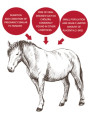
- Horse Placenta 3%
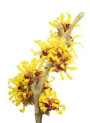
- Witch Hazel 40%
- PaeoniaPreserve™ 2%
Questions for this formula:
- Can this formula be made and used effectively?
- Are there any recommended adjustments for this formula?
- What are the main skin benefits of this formula?
Formula 2: For skin brightening.
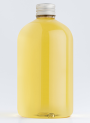
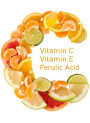
- Vitamin C E Ferulic (Lite) 85%
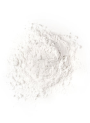
- Vitamin C (L-ascorbic acid) (Ultra-Fine) 15%
Questions for this formula:
- Can this formula be made and used effectively?
- Are there any recommended adjustments for this formula?
- Does this formula require a preservative? If so, what percentage should be used, and which preservative is recommended?
Formula 3: For wrinkle reduction, dark circles, and lifting around the eye area.
- Glycosaminoglycans Complex 97%
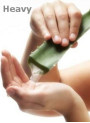
- Aloe Vera Gel (Heavy) 3%
Questions for this formula:
- Can this formula be made and used effectively?
- Are there any recommended adjustments for this formula?
- Does this formula require a preservative? If so, what percentage should be used, and which preservative is recommended?
Finally, if the Staff - MySkinRecipes team answers, please also recommend the tools needed to mix these formulas so I can order the correct equipment.
Thank you very much.
Answer
Feedback on Your Cosmetic Formulas
Thank you for reaching out and sharing your cosmetic formulations! It's great that you are interested in creating your own skincare products. Here is some feedback on your proposed formulas and answers to your questions.
Formula 1: Anti-Aging, Lifting, Pore Tightening
- Ingredients: Galactomyces Ferment Filtrate (Pitera) 55%, Horse Placenta 3%, Witch Hazel 40%, PaeoniaPreserve™ 2%
- Total: 100%
- Can this formula be made and used? Yes, this formula can generally be made and used as the percentages add up to 100% and the ingredients are compatible. The inclusion of PaeoniaPreserve™ at 2% is appropriate for a single natural preservative. However, the high concentration of Galactomyces Ferment Filtrate (Pitera) at 55% might result in a texture that feels a bit greasy or heavy on the skin, as this ingredient can feel greasy at high doses according to its description.
- Should this formula be adjusted? The percentages are within the recommended usage ranges for each ingredient. The main consideration for adjustment would be the texture due to the high Pitera concentration. If you find the texture too heavy, you could try reducing the Pitera percentage and increasing the Witch Hazel, or adding a lightweight base ingredient, while keeping the Horse Placenta and PaeoniaPreserve™ at their current percentages or adjusting them proportionally.
- What are the skin benefits? This formula is designed to provide anti-aging benefits from Galactomyces Ferment Filtrate (Pitera) and Horse Placenta, which help revitalize and nourish the skin. Witch Hazel is known for its astringent properties, helping to tighten pores. Overall, this formula targets reducing wrinkles, improving skin firmness, and minimizing the appearance of pores.
Formula 2: Skin Brightening
- Ingredients: Vitamin C E Ferulic (Lite) 85%, Vitamin C (L-ascorbic acid) (Ultra-Fine) 15%
- Total: 100%
- Can this formula be made and used? While you can physically mix these ingredients, this formula is not recommended as is due to potential stability issues and high concentration.
- Should this formula be adjusted? Yes, significant adjustment is highly recommended. Both Vitamin C E Ferulic and Vitamin C (L-ascorbic acid) contain L-Ascorbic Acid, which is potent but unstable, especially in water-based formulas and at high concentrations. Combining 85% of a base containing L-Ascorbic Acid with an additional 15% pure L-Ascorbic Acid powder will likely result in a very high total concentration of L-Ascorbic Acid and a very low pH. This can lead to rapid oxidation (the product turning brown and losing effectiveness) and significant skin irritation.
- Recommendation: Instead of combining these two at such high percentages, it would be better to choose one form of Vitamin C and formulate it correctly. For beginners, using a stable Vitamin C derivative or a pre-made stable Vitamin C base might be easier. If you want to use L-Ascorbic Acid powder, it typically requires formulating in an anhydrous (water-free) base or carefully adjusting the pH to a stable range (usually between 2.0-4.0, but note that the FDA requires cosmetics applied to the skin to have a pH of at least 3.5) and incorporating stabilizers.
- Does this formula need a preservative? Yes, absolutely. Vitamin C E Ferulic is likely a water-based ingredient. Any cosmetic product containing water requires a preservative to prevent microbial growth, which can spoil the product and be harmful to the skin. Given the likely low pH of this formula, you would need a preservative effective in acidic conditions.
- Recommended Preservatives: Suitable preservatives for low pH Vitamin C formulas include Mild Preserved™ COS or Global Guard™ 221. PaeoniaPreserve™ could also be an option, typically used at 2% as a single preservative. The exact usage rate for any preservative depends on the specific product and formulation and should be determined through challenge testing.
Formula 3: Anti-Aging, Dark Circles, Lifting (Eye Area)
- Ingredients: Glycosaminoglycans Complex 97%, Aloe Vera Gel (Heavy) 3%
- Total: 100%
- Can this formula be made and used? While you can mix these, the concentration of Glycosaminoglycans Complex is far too high and not recommended.
- Should this formula be adjusted? Yes, significant adjustment is necessary. The recommended usage rate for Glycosaminoglycans Complex is 1-5%, with clinical studies for dark circles using 5%. Using 97% is extremely high and will not provide additional benefits beyond the recommended rate; it might even cause issues or simply be wasteful. Aloe Vera Gel (Heavy) is a suitable base for the eye area.
- Recommendation: Adjust the formula to use Aloe Vera Gel (Heavy) as the primary base (e.g., 95-97%) and add Glycosaminoglycans Complex at its recommended usage rate (e.g., 3-5%).
- Does this formula need a preservative? Aloe Vera Gel (Heavy) already contains Phenoxyethanol as a preservative. If you adjust the formula to use Aloe Vera Gel as the main ingredient (95-97%) and Glycosaminoglycans Complex at 3-5%, the preservative in the Aloe Vera Gel should be sufficient. However, if you were to use a different base without a preservative or significantly dilute the Aloe Vera Gel, you would need to add a preservative.
Tools for Mixing Formulas
To accurately create cosmetic formulas, especially when working with percentages, you will need a few basic tools:
- Accurate Scale: Essential for measuring ingredients by weight, which is the standard for cosmetic formulation.
- Beakers or Mixing Containers: Glass or plastic containers to hold and mix your ingredients.
- Stirring Tools: Glass rods, small spatulas, or a magnetic stirrer for larger batches to ensure ingredients are well combined.
- pH Testing: pH strips or a pH meter are crucial for formulas where pH is important for stability and skin compatibility, such as those containing L-Ascorbic Acid.
Starting with simpler formulas and understanding the properties and recommended usage rates of each ingredient will help you succeed in your DIY cosmetic journey. Always research each ingredient thoroughly before combining them.
Related Products Mentioned
Vitamin C E Ferulic
Vitamin C (L-ascorbic acid) (Ultra-Fine)
Aloe Vera Gel (Heavy)

Glycosaminoglycans Complex

PaeoniaPreserve™ (Natural Preservative)
Horse Placenta