L-ascorbic acid Formulation for Skin Brightening Cream
Question
I am making a night body cream for personal use, focusing on skin whitening. I mix the ingredients fresh each time for the stability of L-ascorbic acid. The formula I'm considering has:
- Squalane 75%
- L-ascorbic acid 25% (Ultra fine)
My questions are:
- Will Vitamin C (L-ascorbic acid) be effective for skin care when it is in Squalane?
- Or should I make a cream base with DI Water and Emulsifier and add L-ascorbic acid 25% just before use? Could you please recommend a formula for this base?
- Does L-ascorbic acid Ultra fine penetrate the skin better and deeper than the regular type?
Thank you very much.
Answer
Subject: Squalane + L-ascorbic acid 25% Formulation
Hello,
Thank you for your question regarding your night body cream formulation for skin whitening using Squalane and L-ascorbic acid 25%. Let's address your points:
Will Vitamin C (L-ascorbic acid) be effective when dissolved in Squalane?
L-ascorbic acid is a water-soluble ingredient. It does not dissolve in oil like Squalane. Therefore, simply mixing L-ascorbic acid powder with Squalane oil will result in the powder being suspended in the oil, not dissolved. In this state, the L-ascorbic acid will not be able to effectively penetrate the skin or exert its whitening effects. For L-ascorbic acid to be active and penetrate the skin, it needs to be dissolved in a water-based vehicle, typically at a low pH.Should you make a cream base with DI Water and Emulsifier and add L-ascorbic acid 25% just before use?
Yes, this approach is much better for the stability and effectiveness of L-ascorbic acid compared to mixing it with Squalane alone. L-ascorbic acid is highly unstable, especially in water and when exposed to light and air. Dissolving it in the water phase of a cream base just before application helps minimize the time it is in a state where it can degrade, thus preserving its potency.
A suitable base would be a cream or lotion (an emulsion of water and oil, stabilized by an emulsifier). You would dissolve the L-ascorbic acid powder in the water phase of the base right before you apply it.
Regarding a formula recommendation for the base, a simple cream base typically consists of:- Water phase (e.g., DI Water)
- Oil phase (e.g., Squalane, other oils, fatty alcohols)
- Emulsifier (to mix the water and oil phases)
- Optional: Thickeners, humectants, preservatives (preservatives are needed for storing the base).
You would prepare this base and store it. When you want to use it, take a small amount of the base, add the L-ascorbic acid powder (at your desired concentration, e.g., 25% of the final mixture), mix thoroughly until dissolved, and apply immediately.
Important Note: A 25% concentration of L-ascorbic acid is very high and may cause significant skin irritation, redness, or peeling, especially for body skin which can be more sensitive than facial skin. It is generally recommended to start with lower concentrations (e.g., 5-10%) and gradually increase if your skin tolerates it. Concentrations up to 20% are sometimes used, but 25% is on the very high end and should be used with extreme caution, if at all.
Does L-ascorbic acid Ultra fine penetrate the skin better/deeper than regular L-ascorbic acid?
The term "Ultra fine" typically refers to the particle size of the powder. Ultra-fine particles are smaller than regular particles. While smaller particle size can sometimes help with dispersion and potentially slightly faster dissolution, the primary factors influencing L-ascorbic acid penetration into the skin are its solubility in the vehicle (it needs to be dissolved in a water phase) and the pH of the formulation (optimal penetration occurs at a low pH, around 3.5). The vehicle itself also plays a significant role in delivering the active ingredient.
Therefore, while the ultra-fine form might be easier to dissolve or result in a smoother texture if not fully dissolved, it is unlikely to provide significantly better or deeper skin penetration compared to standard L-ascorbic acid when both are properly formulated in a suitable vehicle at the correct pH. The main benefit might be related to ease of formulation or texture.
I hope this helps with your formulation! Please be cautious with the high concentration of L-ascorbic acid.
Related Products Mentioned
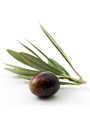
Squalane (Olive)
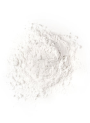
Vitamin C (L-ascorbic acid) (Ultra-Fine)
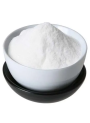
Vitamin C (L-ascorbic acid) (Fine)