L-Ascorbic Acid Stability in Cold Press Serum and Usage Recommendations
Asked by: shieu.pooh
On: August 24, 2025
Product Type:
Cosmetics
Answered
Question
I have a question regarding the use of Vitamin C (L-ascorbic acid) (Fine).
- Would it be stable if incorporated into a cold press serum base?
- Could you please provide recommendations for the appropriate usage of this ingredient?
Answer
Regarding the use of Vitamin C (L-ascorbic acid) (Fine) in a cold press serum base:
- Stability: L-ascorbic acid, including the Fine grade, is generally not stable when dissolved directly in water, as oxidation will occur, leading to degradation. Therefore, using it in a water-based cold press serum without proper stabilization techniques will likely result in poor stability and reduced efficacy.
- Optimal Usage for L-Ascorbic Acid (Fine):
- Mixing Method: It should be mixed in the final step of your formulation.
- Temperature: The cosmetic product's temperature must be kept below 30°C.
- pH Level: The ideal pH range for L-ascorbic acid is between 2.0-4.0. However, for cosmetics applied to the skin, the FDA requires a pH of at least 3.5.
- Chelating Agent: Always include 0.2% Disodium EDTA in water-based formulas to bind metal ions (like iron, copper, nickel salts) that can destroy L-ascorbic acid.
- Antioxidant Protection: We recommend using Protec™ OX and Protec™ UV in the formula to help protect Vitamin C from deterioration.
- Storage: For long-term storage, keep the product in the refrigerator at 6-8°C, away from sunlight and heat, with the lid tightly sealed.
- Alternative Stable Vitamin C Derivatives: If you are looking for a more stable Vitamin C for water-based serum formulations, we recommend considering derivatives that offer better stability and easier formulation:
- Ethyl Ascorbic Acid (3-O-ethyl ascorbic acid, Vitamin C Ethyl Ether): This is a highly stable, water-soluble Vitamin C derivative that can withstand high temperatures and is easy to mix. It is effective for brightening and reducing dark spots.
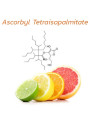
- Perfect-C™ (Ascorbyl Tetraisopalmitate): An oil-soluble Vitamin C derivative with moderate stability and high efficiency for anti-aging, brightening, and collagen stimulation.
- Ascorbyl Glucoside (AA-2G Stabilized Vitamin C): A water-soluble, moderately stable Vitamin C with high efficacy for brightening and anti-aging, though it requires appropriate pH adjustment during mixing.
- Magnesium Ascorbyl Phosphate (MAP) and Sodium Ascorbyl Phosphate (SAP): Both are water-soluble, highly stable, and easy-to-mix Vitamin C derivatives, moderately effective for skin brightening.
For optimal results and stability in a serum, especially if it's water-based, using a stabilized derivative might be a more suitable choice than L-ascorbic acid (Fine) due to its inherent instability in aqueous solutions. If you choose to use L-ascorbic acid, strict adherence to the recommended pH, temperature, and the inclusion of protective agents is crucial.
Related Products Mentioned
Vitamin C (L-ascorbic acid) (Ultra-Fine)
Cosmetics
Vitamin C (L-ascorbic acid) (Fine)
Cosmetics
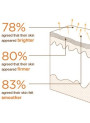

Vitamin C (L-ascorbic acid) (Standard)
Cosmetics

Magnesium Ascorbyl Phosphate
Cosmetics