Lightweight Sunscreen Spray Formulation with Chemical Filters
Question
I would like to know how to formulate a lightweight, fast-drying sunscreen spray similar to the provided Soltan example, focusing on suitable chemical sunscreen filters and the formulation approach to achieve this texture.
Answer
Lightweight Sunscreen Ingredients for Spray Formulation
To create a lightweight sunscreen formulation suitable for a spray, similar to the Soltan example you provided which uses an alcohol base, chemical sunscreen filters are generally the most suitable choice. This is because they are typically soluble in organic solvents like alcohol, allowing for a very light, non-greasy texture that dries quickly upon application.
Based on your inquiry and the ingredients found in the Soltan product, the following chemical sunscreen ingredients are available and can be considered for a lightweight spray formulation:
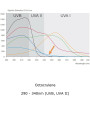
Octocrylene: This is a liquid chemical filter that protects against UVB and UVA II rays. It is soluble in oil and silicone and is often used in combination with other UV filters, particularly Avobenzone, to enhance stability.
Avobenzone (Butyl Methoxydibenzoylmethane): This is a powder chemical filter that provides excellent protection against UVA I and UVA II rays. It needs to be dissolved in suitable solvents (like Octocrylene or other emollients) and often requires heating to incorporate into a formula. Note that Avobenzone is less stable on its own and should be used with a stabilizer like Octocrylene. It is also incompatible with certain ingredients like Zinc Oxide and Titanium Dioxide.
DHHB (Diethylamino Hydroxybenzoyl Hexyl Benzoate, equivalent to Uvinul A Plus): This is a powder chemical filter that offers strong protection against UVA rays. It is known for its high photostability, meaning it does not degrade quickly when exposed to sunlight, unlike Avobenzone. DHHB is soluble in various solvents and can be used with a wider range of ingredients, including physical sunscreens.
For a lightweight spray, you would typically dissolve these chemical filters in a base containing a significant amount of a volatile solvent, such as alcohol, similar to the Soltan example. This allows the formulation to spray finely and dry rapidly on the skin, providing that desired lightweight feel.
When formulating, consider the solubility limits of each filter in your chosen solvent system and ensure proper stabilization, especially if using Avobenzone. Combining different filters can help achieve broad-spectrum protection (covering both UVA and UVB) and optimize the SPF and PA values of your final product.
Related Products Mentioned