Lip Balm Formulation: Preventing Separation, Adjusting Texture, and Preservation
Question
I am making a lip balm using butters, beeswax, and natural oils. I read about using Soy Lecithin (Powder) to prevent separation and am using it at a similar ratio as suggested in topic 918.
I have a few questions:
- Can I omit the preservative Phenoxyethanol?
- If I use Soy Lecithin, is a preservative necessary?
I have tried different approaches:
- When I tried making it without food flavor (which I assume is water-soluble), there was minimal separation, only in some containers, and the texture was nice.
- When I used an oil-soluble flavor, the texture was nicer and smoother with no separation, but the balm was too soft. Should I reduce the amount of oil in this case?
Generally, when using butters that are processed with heat, do I need to add a preservative? Is it dangerous if I don't add one?
Thank you for your advice. I am currently experimenting with different methods.
Answer
Using Soy Lecithin in Lip Balm
You're looking to prevent separation in your lip balm made with butters, beeswax, and natural oils, and you're considering using Soy Lecithin. Here's some guidance based on your formula and questions:
Using Soy Lecithin
Soy Lecithin (Product ID: 6980) is a water-in-oil emulsifier. Its primary function is to help blend water into oil-based formulas. For your lip balm, which is mainly oils, butters, and waxes, Soy Lecithin might help to a limited extent with overall texture, but it is not specifically designed to prevent the separation of oil and butter/wax phases in an anhydrous (water-free) system.
If you want to try using Soy Lecithin, a typical usage rate is 3-10% of the total formula. For your approximately 100g batch, you could start with around 3-5g (3-5%). You would need to heat it with your oil phase to incorporate it properly.
Preventing Separation
The separation you're experiencing might be due to the different melting points and crystallization behaviors of the butters and waxes. Soy Lecithin might not fully address this type of separation.
As suggested by the staff, Oil Blender (Product ID: 1004) is often a more effective ingredient for improving the texture and preventing the separation of butters and oils in anhydrous balm formulas. It helps create a smoother, more uniform texture.
If you are adding a water-soluble flavor, this could be a significant cause of separation in an oil-based balm, as oil and water naturally separate. Soy Lecithin is a W/O emulsifier, meaning it helps disperse water droplets within an oil phase. If you are adding a water-based flavor, Soy Lecithin might help incorporate a small amount of water, but it's challenging to create a stable balm with a significant water phase using just Soy Lecithin and a high percentage of waxes/butters. If you intend to include a substantial water phase, a product like Water Balm (Product ID: 963) is specifically designed to help incorporate water into oil/wax balm bases.
Inconsistent separation could also be related to your cooling process. Rapid or uneven cooling can sometimes cause butters and waxes to crystallize in a way that leads to graininess or separation. Try pouring your balm when it is just melted and allowing it to cool slowly at room temperature.
Preservatives
Your lip balm formula, consisting of natural oil, Cocoa Butter, Shea Butter, Mango Butter, and Beeswax, is primarily anhydrous (contains no water). Anhydrous products generally do not require a preservative like Phenoxyethanol (Product ID: 155) to protect against microbial growth (bacteria, mold, yeast) because these microorganisms need water to survive and multiply.
However, natural oils and butters can be prone to oxidation, which leads to rancidity (unpleasant smell and degraded quality). Preservatives like Phenoxyethanol do not prevent oxidation. To protect against oxidation, you would need to add an antioxidant.
If you add a water-soluble flavor that contains water, or if there's a risk of water contamination during use, then adding a broad-spectrum preservative like Phenoxyethanol would be necessary to prevent microbial growth.
If your formula remains anhydrous (no added water), you do not need Phenoxyethanol. You might consider an antioxidant to extend the shelf life of the oils and butters.
Texture with Oil-Soluble Flavors
If using oil-soluble flavors results in a texture that is too soft, you are correct that you should adjust the ratio of your ingredients. To achieve a firmer balm texture, you can either reduce the amount of liquid oil or increase the proportion of solid ingredients like butters and beeswax.
In summary, while you can try using Soy Lecithin, Oil Blender might be more effective for preventing separation of butters/waxes in your oil-based balm. If you are adding a water-soluble flavor (and thus water), this is likely causing separation, and Water Balm would be a more suitable ingredient to help incorporate the water phase. An anhydrous balm does not typically need a preservative like Phenoxyethanol, but antioxidants can help prevent rancidity. Adjusting the oil/wax ratio is the right approach for controlling balm firmness.
Related Products Mentioned
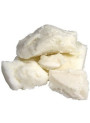
Shea Butter (Refined , Deodorised)
Phenoxyethanol (Extra Pure)
Mango Butter (Deodorized)
Water Balm™