Lip Balm Formulation: Softness, Clarity, and Coloring
Question
I am formulating a lip balm and have the following questions regarding adjustments:
1. How can I adjust the formula to make the lip balm softer so that it can be easily dispensed from a tube?
2. How can I achieve a clear/shiny texture? Is this possible with a formula containing wax, or would I need to use a different type of base like an oil gel (e.g., using products like `Oil Thick` or `Sugar Gel`)?
3. I want to add a pink color to the lip balm to make it look appealing, but I want the color to stay primarily in the balm and not stain the lips significantly. Which type of colorant (e.g., `pigment group`, `Ultramarine Pink`, `D&C Red 27 Color Changing Pigment`, `Purple Sweet Potato Pigment`) should I use, and how can I minimize color transfer?
Answer
Lip Balm Formula Adjustments
Softness for Tube Packaging
To make the lip balm softer so it can be easily dispensed from a squeeze tube, you need to reduce the amount of solidifying agents. Based on the previous advice, the key ingredient to adjust is Beeswax. Reduce the Beeswax concentration significantly, aiming for a range of 1-3% of the total formula. This will result in a much softer texture compared to using 10% Beeswax.
Clear/Shiny Texture
As mentioned previously, achieving a completely clear or shiny texture is not possible with a formula that contains wax like Beeswax or Shea Butter. These ingredients naturally create an opaque or cloudy appearance. If a clear texture is a priority, you would need to formulate an oil gel using specific gelling agents for oils, but this would result in a different feel and consistency than a traditional lip balm. Given your goal of a soft balm in a tube, the current ingredient approach is more suitable, even if it means the texture is not clear.
Adding Pink Color
You want to add a pink color to the lip balm itself for visual appeal, with minimal transfer to the lips. While any added color will transfer to some extent, using a pigment at a low concentration will color the balm and provide only a subtle tint on the lips.
Based on the search results for pink pigments:
- Ultramarine Pink: This is a standard pink pigment powder (CI 77007) that can be dispersed in oil. It is commonly used in makeup products. Using a small amount (e.g., 0.1-1%) should color the balm nicely.
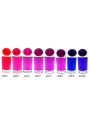
- D&C Red 27 Color Changing Pigment: This pigment changes color based on pH, typically turning pink when it comes into contact with the skin. It dissolves in oil. This would give a color-changing effect on the lips rather than just coloring the balm.
- Purple Sweet Potato Pigment: This is a natural pigment powder that is mixed into the water phase. Its color is highly dependent on the pH of the formula (pink/red at low pH, blue at higher pH). You would need to ensure your balm's water phase pH is suitable for a pink color.
For simply coloring the balm pink with the least amount of staining, Ultramarine Pink is likely the most suitable option. Start with a very low percentage (e.g., 0.1%) and increase gradually until you achieve the desired color intensity in the balm. Remember that some color transfer to the lips is unavoidable when using pigments.
Related Products Mentioned
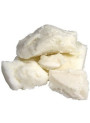
Shea Butter (Refined , Deodorised)