Liquid Soap Formulation and Whitening Additives
Question
I want to make liquid soap for personal use. I found a rough formula online with the following ingredients:
1. Sodium lauryl ether sulfate
2. Sodium methyl cocoyl taurate
3. Coca amino propyl Betaine
4. Ammonium lauryl sulfate
5. Cocamide diethanolamide (D E A)
6. Lamisoft65
7. Phenoxyethanol p10
8. Fragrance
9. Color
What percentage should I use for each ingredient? Should I remove any of them?
Also, are there any ingredients that can be added to make the skin quickly whiter? Please recommend some.
Answer
Liquid Soap Formulation Guidance
You've provided a list of ingredients for a liquid soap formulation. Here's a breakdown of each ingredient's function and typical usage ranges, along with suggestions for potential whitening additives.
Please note that providing exact percentages for a complete formula is challenging without specific performance goals and extensive testing. The percentages below are general guidelines.
Original Ingredients and Usage Ranges
- Sodium Lauryl Ether Sulfate (SLES): A primary anionic surfactant for cleansing and foaming. Typical Usage: 10-25%
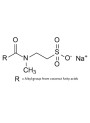
- Sodium Methyl Cocoyl Taurate: A gentle anionic surfactant that provides good foam (Product ID 31563). Typical Usage: 5-20% (Based on product ID 31563, usage rate 5-30% is listed, but a lower amount might be used in combination with other surfactants).
- Cocamidopropyl Betaine: An amphoteric surfactant that boosts foam, adds mildness, and can help thicken the formula when combined with anionic surfactants like Sodium Methyl Cocoyl Taurate (Product ID 160). Typical Usage: 5-15% (Based on product ID 160, usage rate 4-40% is listed, but 5-15% is common in combination formulas).
- Ammonium Lauryl Sulfate (ALS): Another primary anionic surfactant for cleansing and foaming. Typical Usage: 10-25%
- Cocamide Diethanolamide (DEA): A nonionic surfactant often used as a foam booster and thickener. Some formulators avoid DEA due to concerns about nitrosamine formation. Alternatives like Cocamide MIPA or MEA are sometimes preferred. Typical Usage: 1-5%
- Lamisoft 65 (Ecosoft™ PO65): This ingredient (Product ID 127563) is a blend of Coco-Glucoside and Glyceryl Oleate. It acts as a gentle co-surfactant and provides conditioning benefits, contributing to a mild formula and improved foam quality. Typical Usage: 1-5% (Based on product ID 127563 description).
- Phenoxyethanol p10 (Phenoxyethanol): A broad-spectrum preservative (Product ID 155). Essential for preventing microbial growth. Typical Usage: 0.5-1.0% (Based on product ID 155 description).
- Fragrance: Added for scent. Typical Usage: 0.1-1.0% (Adjust to desired intensity).
- Color: Added for visual appeal. Typical Usage: 0.001-0.1% (Use sparingly to achieve desired color).
Regarding removing ingredients, it depends on your goals. Using multiple primary surfactants (SLES, ALS, Sodium Methyl Cocoyl Taurate) can provide robust cleansing and foaming. Cocamidopropyl Betaine and Ecosoft™ PO65 add mildness and improve foam quality. Cocamide DEA can be removed if you prefer to avoid it, but you might need to adjust other ingredients to maintain viscosity and foam. Phenoxyethanol is necessary for preservation. Fragrance and color are optional for aesthetics.
Adding Skin Whitening Ingredients
Adding ingredients for skin whitening to a wash-off product like liquid soap has limited effectiveness compared to leave-on products because the contact time with the skin is short. However, some water-soluble options can be considered:
- Vitamin B3 (Niacinamide): (Product ID 74) Can help reduce hyperpigmentation and improve skin tone. It is water-soluble and generally stable in a wide pH range (optimal 4.0-7.0). Typical Usage in Cleansers: 1-5% (Higher percentages are more common in leave-on products).
- Ethyl Ascorbic Acid: (Product ID 833) A stable, water-soluble Vitamin C derivative that can help brighten skin. Requires a pH range of 3.5-6.0 and often benefits from the addition of a chelating agent like Disodium EDTA. Typical Usage in Cleansers: 1-3% (Higher percentages are more common in leave-on products).
- Alpha Arbutin: (Product ID 68) Known for its skin brightening properties. It is water-soluble but requires a pH between 3.5-6.5 for stability. Typical Usage in Cleansers: 0.2-2% (2% recommended for brightening, but stability in a soap base needs careful testing).
- Kojic Acid Dipalmitate: (Product ID 147) While effective for whitening, it is oil-soluble and less suitable for a clear, water-based liquid soap unless incorporated into an emulsified system, which is more complex.
If you choose to add a whitening ingredient, start with a lower percentage and test the stability and effectiveness of your final formulation.
Important Considerations
- pH Adjustment: The pH of your final liquid soap is crucial for ingredient stability, effectiveness, and skin compatibility. You will likely need to adjust the pH using an acid (like Citric Acid) or a base (like Sodium Hydroxide) to the desired range (typically slightly acidic to neutral for skin, around pH 5.5-7.0). Note the specific pH requirements for ingredients like Phenoxyethanol, Alpha Arbutin, and Ethyl Ascorbic Acid.
- Compatibility: Ensure all ingredients are compatible with each other and stable in the final formulation over time.
- Testing: Always perform small-batch testing for stability (clarity, color, viscosity, scent over time) and safety before making larger quantities.
Formulating requires experimentation to achieve the desired feel, foam, and performance.
Related Products Mentioned
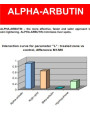
Alpha Arbutin (Switzerland)
Safe-B3™ (Vitamin B3, Niacinamide)
Kojic Acid Dipalmitate
Phenoxyethanol (Extra Pure)