Lotion Emulsification Issue with Soy Lecithin and Naturalness of Oil Gel
Question
I am trying to create a lotion with the following formula:
- Water: 85%
- Oil: 10%
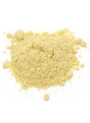
- Soy Lecithin: 3%
However, I am having trouble getting the formula to emulsify properly. I understand that Soy Lecithin is primarily a water-in-oil (W/O) emulsifier, while my formula is an oil-in-water (O/W) system. Could this be the reason for the emulsification issue, especially with the high water content and low Soy Lecithin percentage?
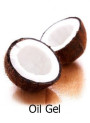
Additionally, I am considering using Fractionated Coconut Oil Gel as an alternative base, perhaps for an anhydrous formula like an oil gel or balm for children. However, I noticed it contains a preservative. Does the presence of a preservative mean that Fractionated Coconut Oil Gel is not considered a natural product?
Answer
It sounds like you're having trouble getting your lotion formula to emulsify properly using Soy Lecithin. This is a common issue because Soy Lecithin is primarily a water-in-oil (W/O) emulsifier, meaning it helps disperse water droplets within an oil phase, rather than dispersing oil in a water phase, which is typical for a lotion.
Your formula has a high percentage of water (85%) and a low percentage of oil (10%), which is characteristic of an oil-in-water (O/W) emulsion (oil dispersed in water). Soy Lecithin is not the most effective emulsifier for this type of system, especially at a low concentration relative to the water phase.
To use Soy Lecithin effectively, you generally need a higher concentration, particularly when the water phase is large. The product description mentions a usage rate of 3-10% depending on the amount of water, and that more water requires more lecithin. It also suggests dissolving it in the oil phase with heat (around 80°C) before mixing with the water phase.
Given your formula's composition, Soy Lecithin at 3% is likely insufficient to create a stable oil-in-water emulsion with 85% water.
Here are a couple of approaches you could consider:
- Adjust your current formula: You would need to significantly increase the percentage of Soy Lecithin to potentially handle the high water content, although achieving a stable lotion texture might still be challenging as Soy Lecithin is often used as a co-emulsifier. You would also need to ensure proper mixing technique, dissolving the Soy Lecithin in the heated oil phase first, then gradually adding the heated water phase while mixing continuously.
- Change your formula type: Since Soy Lecithin is better suited for W/O emulsions or oil-dominant systems, you could consider formulating an oil-based product instead of a lotion. As suggested in the conversation, an anhydrous (water-free) formula like an oil gel or balm might be easier to achieve a stable, natural product for children. An example provided was using Fractionated Coconut Oil Gel as a base with other oils like Shea Butter, Jojoba Oil, and Apricot Kernel Oil.
Regarding your question about the "naturalness" of Fractionated Coconut Oil Gel because it contains a preservative: The term "natural" in cosmetics can be interpreted differently. Many products marketed as natural contain preservatives to ensure safety and prevent microbial growth, which is crucial, especially in products that may come into contact with water. Whether a product with a preservative aligns with your personal definition of "100% natural" is up to your discretion. Safety and stability are important considerations for products, particularly for sensitive users like children.
To summarize, the difficulty in emulsifying your lotion formula is likely due to using Soy Lecithin (a W/O emulsifier) in a high-water, low-oil (O/W) system at a concentration that is too low for the water content. Adjusting the formula or considering an oil-based alternative might yield better results.
Related Products Mentioned
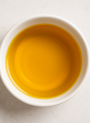
Jojoba Oil (Golden - Deodorized)
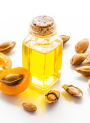
Apricot Kernel Oil (Refined)
Shea Butter (Refined , Deodorised)