Lotion Formula Turns Watery: Need Help with Emulsifier and Thickener
Question
Hello,
I tried making a lotion according to the following formula, but the texture is watery.
Initially, I wasn't sure what caused it to be watery, but after several attempts, I found that it becomes watery in two stages:
- It becomes slightly watery after adding Sodium Lactate Plus. However, it's not completely liquid yet; the texture is still somewhat acceptable.
- When LipidSoft Lite is added, it immediately becomes watery. This happens whether I add it directly to the lotion or dissolve it with Horse Oil using heat first. I also tried adding it to other lotion bases, and it still turned watery.
Is there a way to prevent it from becoming watery?
Thank you.
Here is the lotion formula:
- Water 84.6%
- Aquamax 3%
- Sodium Lactate Plus 2%
- Water 5%
- Arbutin 0.1%
- Allantoin 0.3%
- Horse Oil 1.5% (60°)
- Pure Baicalin 0.2% (60°)
- Hya matrix 0.1%
- Phenoxy 0.7%
- LipidSoft Lite 1%
- Perfume 1.5%
Answer
Understanding Your Watery Lotion Formula
Based on the formula you provided and the issues you're experiencing, the primary reason your lotion is turning watery is the absence of key ingredients needed to form and stabilize an emulsion: emulsifiers and thickeners.
A lotion is an emulsion, a stable blend of oil and water that requires specific ingredients to stay mixed. Emulsifiers bind the oil and water phases together, while thickeners increase viscosity and help maintain the emulsion's structure.
Let's look at the ingredients in your formula:
- Water: The base of your water phase.
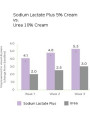
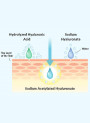
- Aquamax, Sodium Lactate Plus, Hya matrix (Super-HYA): These are humectants that provide skin moisture. Sodium Lactate Plus (Sodium Lactate/Sodium Gluconate) is water-soluble and helps with hydration and pH. Super-HYA (Sodium Acetylated Hyaluronate) is a modified hyaluronic acid for better skin absorption and moisture. While beneficial, they do not act as primary thickeners or emulsifiers. Sodium Lactate Plus can sometimes slightly reduce viscosity depending on the thickener used.
- Horse Oil, LipidSoft Lite (Isononyl Isononanoate): These are emollients, part of the oil phase, providing skin feel. Horse Oil is a natural oil/cream, and LipidSoft Lite is a light synthetic ester. Neither are emulsifiers or thickeners. Their presence requires an emulsifier to integrate them into the water phase.
- Arbutin (Alpha Arbutin), Allantoin, Pure Baicalin (Scutellaria Baicalensis Root Extract): These are water-soluble active ingredients with skin benefits. They do not contribute to thickening or emulsification.
- Phenoxyethanol: A necessary preservative that dissolves in water but does not thicken or emulsify.
- Perfume: Adds fragrance but does not affect texture or stability.
Your observation that adding LipidSoft Lite makes the mixture watery is expected. As an oil-phase ingredient, adding it without an emulsifier to an unstable water mixture will cause separation and thinning.
To create a stable lotion, you must add an appropriate emulsifier and thickener.
Here is a general process for making a stable lotion:
- Prepare Phases: Heat your water phase ingredients (Water, Aquamax, Sodium Lactate Plus, Alpha Arbutin, Allantoin, Pure Baicalin, Super-HYA) and your oil phase ingredients (Horse Oil, LipidSoft Lite, and your chosen emulsifier) separately to the recommended temperature (usually around 70-75°C, but check your emulsifier's instructions).
- Emulsify: Slowly add the hot oil phase to the hot water phase while mixing continuously with high shear (e.g., a stick blender) to form the emulsion.
- Thicken & Cool: Continue mixing as the emulsion cools. Add your thickener according to its instructions (some are added hot, some during cooling). Continued mixing during cooling helps the emulsion stabilize and thicken.
- Add Heat-Sensitive Ingredients: Once the emulsion has cooled below the maximum temperature for ingredients like Phenoxyethanol and Perfume, add them and mix well.
- Adjust pH: Check and adjust the pH to the desired range, considering the stability requirements of your active ingredients (e.g., Alpha Arbutin needs pH 3.5-6.5).
By incorporating a suitable emulsifier and thickener into your formulation and following proper lotion-making techniques, you can achieve a stable, non-watery texture that effectively incorporates your chosen emollients and actives.
Related Products Mentioned
Alpha Arbutin (Switzerland)

Allantoin
Phenoxyethanol (Extra Pure)

Purified Water, TDS Limit 1PPM)