Lotion Formulation for Exfoliation and Whitening: Ingredient Review and Troubleshooting
Question
I have formulated a lotion with the goal of focusing on exfoliation for brighter skin. Below is the formula and mixing method I used:
Ingredients:
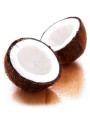
- Fractionated Coconut Oil: 30 %
- Distilled Water: 25 %
- Vitamin C (L-ascorbic acid) (Standard): 20 %
- Polysorbate 20 (Tween 20): 10 %
- Vitamin E (Tocopheryl Acetate): 5 %
- Glycerin: 5 %
- Synthetic White Beeswax: 5 %
Mixing Method:
- Part A: Mix Distilled Water + Glycerin + Vitamin C (L-ascorbic acid) (Standard) until combined. Set aside.
- Part B: Mix Fractionated Coconut Oil + Vitamin E (Tocopheryl Acetate) + Polysorbate 20 (Tween 20) until combined. Set aside.
- Part C: Double-boiler Synthetic White Beeswax until melted. Then, add Part A and stir until combined, followed by Part B and stir until combined. Remove from heat and measure the pH to be 3-4.
I would like to ask the following:
- Based on this formula, are there any ingredient percentages that need adjusting (increasing or decreasing)?
- Are there any other ingredients that should be added to help with skin brightening?
- The resulting lotion texture is not very smooth, it seems like it's not well-combined. I'm not sure if there was an error in the mixing procedure.
- Without adding a preservative, would this formula last up to 1 year? If not, which preservative should be added that will not affect the other ingredients?
- If I want to add fragrance, can I just add Essential Oil together with the oil phase?
Answer
Review of Lotion Formula for Exfoliation and Whitening
Thank you for sharing your lotion formula and questions. It's a good goal to create a lotion focused on exfoliation and whitening. Let's review your formula and mixing method to help you achieve a stable and effective product.
Here are the answers to your questions:
1) Ingredient Percentage Adjustments
Yes, several percentages and the overall composition need adjustment for better stability and efficacy:
- Total Percentage: Your current percentages add up to 90%. Assuming the missing 10% is water, the total water phase is relatively low compared to the oil/wax phase. A typical lotion often has a higher water phase for a lighter feel and better stability with common emulsifiers.
- Vitamin C (L-ascorbic acid) (20%): 20% L-ascorbic acid is a very high concentration. While potent for whitening and exfoliation, it can cause significant skin irritation, especially at the low pH (3-4) required for its effectiveness. For a body lotion, a lower concentration (e.g., 5-15%) might be more suitable to balance efficacy and reduce irritation.
- Polysorbate 20 (Tween 20) (10%): Polysorbate 20 is primarily a solubilizer or co-emulsifier. Using it as the sole emulsifier for a formula with a 30% oil phase, plus beeswax and Vitamin E, is likely insufficient to create a stable emulsion. This is the main reason your lotion is not smooth and well-mixed. You need a more robust emulsifier system.
- Fractionated Coconut Oil (30%): This contributes to a significant oil phase. While a good emollient, a high oil phase requires a strong emulsifier system. The total oil/wax phase (30% Fractionated Coconut Oil + 5% Vitamin E + 5% Synthetic White Beeswax) is 40%, which is challenging to emulsify with just Polysorbate 20.
- Vitamin E (Tocopheryl Acetate) (5%): 5% is a relatively high concentration. While beneficial, it adds to the oil phase and potential greasiness. 0.5-2% is a more typical usage rate.
2) Other Whitening Ingredients
Your formula already uses a high concentration of Vitamin C, a powerful whitening agent. Adding more strong whitening actives might increase the risk of irritation. However, if you adjust the Vitamin C concentration or want to explore other mechanisms, consider:
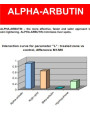
- Alpha Arbutin: Inhibits tyrosinase, generally well-tolerated.
- Tranexamic Acid: Helps reduce melanin production.
Remember that combining multiple strong actives increases the potential for irritation. Focusing on optimizing the Vitamin C delivery and adding soothing ingredients might be more beneficial.
3) Mixing Procedure and Texture Issues
The mixing procedure you described is the primary reason for the poor texture and separation. It is not a standard method for creating a stable emulsion (lotion).
Creating a stable lotion requires a proper emulsifier system and a specific process, usually involving heating the oil and water phases separately and then combining them with continuous mixing as they cool to form a stable emulsion. Melting beeswax and adding phases sequentially without a primary emulsifier and proper mixing will not create a smooth, stable lotion.
To achieve a smooth texture, you need to:
- Use a suitable emulsifier system designed for lotions (e.g., a combination of oil-in-water emulsifiers).
- Follow a standard hot or cold process emulsification method, ensuring adequate mixing (like using a stick blender) during the emulsification and cool-down phases.
Consider using a dedicated "Lotion Maker" ingredient which acts as a primary emulsifier and often provides thickening.
4) Shelf Life Without Preservative
A lotion containing water will not last up to 1 year without a preservative. It will quickly become contaminated with bacteria, mold, or yeast, making it unsafe to use. A preservative system is essential for any water-containing cosmetic product.
The challenge is finding a preservative effective at the low pH (3-4) required for L-ascorbic acid stability. Many common preservatives are not effective at such low pH levels.
Look for broad-spectrum preservative systems specifically designed to work in low pH formulations. Examples include certain blends containing organic acids or other components effective in acidic environments. Always check the supplier's recommended usage rate and pH range for the preservative.
5) Adding Essential Oils
Yes, you can add essential oils to the oil phase or during the cool-down phase of the emulsion (below 40°C is best to preserve the fragrance). Adding to the oil phase before emulsification is common.
However, be cautious with essential oils, as they can cause skin irritation or allergic reactions, especially in a formula with high Vitamin C and low pH, which can already be irritating. Use essential oils at a very low concentration (typically 0.1-0.5% in a body lotion) and always perform a patch test.
In summary: To create a stable, effective, and safe exfoliating and whitening lotion, you need to revise your formula by adjusting percentages, selecting a suitable emulsifier system, adding a proper preservative effective at low pH, and adopting a standard emulsification mixing method.
Related Products Mentioned
Vitamin E (Tocopheryl Acetate)
Alpha Arbutin (Switzerland)
Glycerin (USP/Food Grade)
Fractionated Coconut Oil
Polysorbate 20 (Tween 20)

Vitamin C (L-ascorbic acid) (Standard)

Milk Lotion Maker™
Tranexamic Acid (Trans-White™)

Holy Basil Oil
Global Guard™ 221 (pH 2-7, Natural)