Lotion Formulation: Mixing Steps, Solubility, and Texture
Asked by: junthima.phan
On: August 24, 2020
Product Type:
Cosmetics
Answered
Question
I need a lotion for skin nourishment and would like to inquire about the mixing steps before placing an order.
Ingredients:
Water Phase
- Purified Water 74.3%
- Safe-B3™ (Vitamin B3, Niacinamide) 5%
- CosmoWhite™ (1-Methylhydantoin-2-Imide) 1%
- Grape Seed Extract (Proanthocyanidins) 0.5%
- Panthenol (Vitamin B5) ExtraLite™ 2%
- DMAE (SkinTight MD™) Liquid 1%
- HydroAlgae™ 1%
Oil Phase
- Butylene Glycol 1%
- Soft Cream Maker™ 2%
- WhiteCumin™ (Tetrahydrodiferuloylmethane) 0.2%
- Gamma Oryzanol (Rice Bran Extract) 0.5%
- Vitamin E (Tocopheryl Acetate) 0.5%
- Argan Oil 5%
- Jojoba Oil 5%
- Mild Preserved Eco™ (Preservative-Free) 1%
Proposed Mixing Steps:
- Oil Phase: Combine 8+10+12+15 (no heat).
- Oil Phase: Combine 9+11+13+14, heat to dissolve, not exceeding 70°C.
- Wait for step (2) to cool below 40°C, then combine (1)+(2) and stir well.
- Water Phase: Combine all ingredients and stir well.
- Combine step (3) + (4) and blend well.
Questions:
- Are the mixing steps correct?
- Does the formula require adding Tween 20 for dissolving WhiteCumin™? (The recommendation says WhiteCumin™ dissolves in glycol or Tween 20 helps dissolve it).
- Is 1% Butylene Glycol sufficient? What percentage is needed for dissolution?
- What is the expected texture of this formula? I want a non-greasy nourishing lotion (for normal to dry skin) with a slightly fluid texture. Do I need to adjust the texture, and how?
Thank you.
Answer
Lotion Formulation Review
Thank you for providing your lotion formula and mixing steps. Here is a review based on the ingredients and typical formulation practices:
Mixing Steps Review
Your proposed mixing steps have a few points that can be improved for better emulsification and stability, especially with Soft Cream Maker™. Soft Cream Maker™ requires heating in the oil phase and combining the hot oil phase with the hot water phase, followed by continuous stirring while cooling.
Here is a suggested revised mixing procedure:
- Prepare WhiteCumin™ Solution: In a small separate container, dissolve WhiteCumin™ (0.2%) in Butylene Glycol (1%). Stir until fully dissolved.
- Prepare Water Phase: Combine Purified Water (74.3%), Safe-B3™ (5%), CosmoWhite™ (1%), Grape Seed Extract (0.5%), Panthenol ExtraLite™ (2%), DMAE Liquid (1%), HydroAlgae™ (1%), and the WhiteCumin™/Butylene Glycol solution from step 1. Heat the Water Phase to 70°C.
- Prepare Oil Phase: Combine Soft Cream Maker™ (2%), Gamma Oryzanol (0.5%), Vitamin E (0.5%), Argan Oil (5%), and Jojoba Oil (5%). Heat the Oil Phase to 70°C, stirring until Soft Cream Maker™ and Gamma Oryzanol are melted/dissolved.
- Emulsification: Slowly add the hot Oil Phase (from step 3) to the hot Water Phase (from step 2) while stirring continuously with a mixer (e.g., stick blender or overhead stirrer). Maintain continuous stirring as the mixture cools down.
- Add Heat-Sensitive Ingredient: When the mixture has cooled below 40°C, add Mild Preserved Eco™ (1%).
- Final Mixing: Continue stirring until the lotion is fully cooled and uniform. The texture will continue to develop over the next 48 hours.
Specific Questions
- Question 1: Mixing steps correctness. As reviewed above, the proposed steps need adjustment to properly incorporate Soft Cream Maker™ and ensure stable emulsification. The revised steps are provided above.
- Question 2: Need for Tween 20. WhiteCumin™ can be dissolved in glycol or Polysorbate 20 (Tween 20). Since your formula already includes Butylene Glycol, which is a glycol, Polysorbate 20 is not strictly necessary for dissolving WhiteCumin™ if 1% Butylene Glycol is sufficient. However, adding a small amount of Polysorbate 20 could help ensure complete dissolution and dispersion of WhiteCumin™, although it would slightly alter the formula.
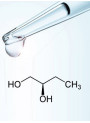
- Question 3: Sufficiency of Butylene Glycol 1%. While Butylene Glycol can dissolve WhiteCumin™, 1% might be on the lower side to ensure complete dissolution of 0.2% WhiteCumin™, especially in a complex formula. To improve solubility assurance, you could consider increasing the Butylene Glycol percentage (e.g., to 2-5%) or using a small amount of Polysorbate 20 as mentioned in the previous point.
- Question 4: Expected texture and adjustment. With 2% Soft Cream Maker™ and approximately 15.2% total oil phase, the resulting texture is likely to be a light lotion or even a serum-like consistency initially. Soft Cream Maker™ at 2% is below its recommended usage range (3-10%) for achieving significant viscosity. The texture will thicken over about 48 hours, but it may remain quite fluid. If you desire a slightly more viscous lotion texture, you could increase the Soft Cream Maker™ percentage (e.g., to 3-5%) or add a co-emulsifier/thickener like Cetyl Alcohol (1-3%). The oils used (Argan Oil, Jojoba Oil) are generally non-greasy and should contribute to a pleasant skin feel.
Hope this helps with your formulation!
Related Products Mentioned
Vitamin E (Tocopheryl Acetate)
Cosmetics
Safe-B3™ (Vitamin B3, Niacinamide)
Cosmetics
Jojoba Oil (Golden - Deodorized)
Cosmetics
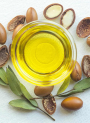
Argan Oil (Virgin - Deodorized)
Cosmetics
Polysorbate 20 (Tween 20)
Cosmetics
Butylene Glycol
Cosmetics
Panthenol (Vitamin B5) ExtraLite™
Cosmetics
DMAE (SkinTight MD™) Liquid
Cosmetics
Soft Cream Maker™
Cosmetics
Mild Preserved Eco™ (Preservative-Free)
Cosmetics
Grape Seed Extract (Proanthocyanidins)
Cosmetics
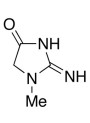
CosmoWhite™ (1-Methylhydantoin-2-Imide)
Cosmetics

HydroAlgae™
Cosmetics