Making an L-Ascorbic Acid Vitamin C Gel Serum
Question
I want to make a Vitamin C serum using L-Ascorbic Acid (Fine) powder. I am aiming for a gel texture.
- Can I use Light Cream Maker™ (as suggested by staff for a cream formula with Perfect-C™)? Will it create a gel texture, or is it only for creams/lotions?
- What are suitable gelling agents for a water-based L-Ascorbic Acid serum, considering the required low pH (ideally 2.0-4.0, but at least 3.5 for cosmetic use)?
- What is the general process for making such a serum, including the order of adding ingredients like Vitamin C (L-ascorbic acid) (Fine), Disodium EDTA, the gelling agent (e.g., Sepimax Zen or Aristoflex AVC), and adjusting the pH?
Answer
Making a Vitamin C Serum with Gel Texture
You are interested in making a serum with L-Ascorbic Acid. This type of Vitamin C is water-soluble but requires a low pH (ideally 2.0-4.0, with cosmetic formulas typically needing pH 3.5 or higher) to remain stable and effective.
Can Light Cream Maker™ Be Used for a Gel?
No, Light Cream Maker™ is designed as an emulsifier and thickener primarily for creating cream or lotion textures (oil-in-water emulsions). While it can thicken the water phase, it results in a creamy consistency, not a clear gel. It is not a suitable substitute for a gel-forming agent if you specifically want a gel texture.
The staff's suggestion to use Light Cream Maker™ with Perfect-C™ (Ascorbyl Tetraisopalmitate) is for creating a cream formula, as Perfect-C™ is an oil-soluble Vitamin C derivative. This is a different type of formula than a water-based L-Ascorbic Acid gel serum.
Achieving a Gel Texture with L-Ascorbic Acid
To create a gel texture for a water-based L-Ascorbic Acid serum, you need a gelling agent that is compatible with the required low pH (2.0-4.0). Many common gelling agents do not perform well or are unstable in highly acidic conditions.
Based on available information, Sepimax Zen appears to be a suitable option as it is described as a thickener/emulsion stabilizer with high salt and pH tolerance, capable of creating a gel texture in the water phase. Aristoflex AVC is another gel-forming agent for water formulas, but its specific tolerance to the low pH required for L-Ascorbic Acid is less explicitly stated compared to Sepimax Zen.
General Steps for an L-Ascorbic Acid Gel Serum (Requires Low pH Compatible Gelling Agent)
If you wish to proceed with a gel texture using L-Ascorbic Acid and a low-pH compatible gelling agent like Sepimax Zen, the general process would involve:
- Dissolve the Vitamin C (L-ascorbic acid) (Fine) powder in the water phase.
- Include Disodium EDTA in the water phase as recommended to help stabilize the L-Ascorbic Acid by binding metal ions.
- Carefully adjust the pH of the water phase to the desired range (2.0-4.0, ensuring it is at least 3.5 for cosmetic application).
- Add the chosen low-pH compatible gelling agent (e.g., Sepimax Zen) to the water phase and mix until the desired gel consistency is achieved.
- Incorporate any other water-soluble ingredients.
- Add a preservative suitable for the low pH environment.
This process requires careful pH adjustment and selection of compatible ingredients and gelling agents to ensure the stability and efficacy of the L-Ascorbic Acid.
In summary, Light Cream Maker™ is for creams, not gels. To make an L-Ascorbic Acid gel serum, you need a gelling agent compatible with low pH, such as Sepimax Zen. The staff's suggested formula using Light Cream Maker™ and Perfect-C™ is an alternative for a cream texture using a different type of Vitamin C.
Related Products Mentioned
Vitamin C (L-ascorbic acid) (Fine)
Light Cream Maker™
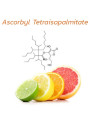
Silky Serum Base Plus (Face/Eye, Oil)
Aristoflex AVC