Making EDP Perfume: Ingredients and Quantities
Question
I want to make 100 ml of EDP perfume. Can I mix the following ingredients, and what quantities should I use?
- Fragrance Oil / Essential Oil
- fixtative
- Is Flora Fix sufficient, or do I need Last Fix? What quantity should I use for the fixative?
- DPG
- Can DPG be used, and what quantity?
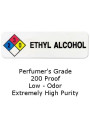
- alcohol 99.9% purfume grade (PG Alcohol)
- Purified Water
Answer
Making EDP Perfume (100ml)
Creating a perfume involves mixing fragrance concentrate with a solvent, typically alcohol. Eau de Parfum (EDP) usually contains 15-20% fragrance concentrate.
Here's a breakdown of the ingredients you mentioned and how they fit into an EDP formulation:
Fragrance Oil / Essential Oil:
- Suitability: Yes, this is the core component that provides the scent. You will use either a fragrance oil blend or an essential oil blend as your fragrance concentrate.
- Quantity: For 100ml of EDP, the fragrance concentrate (your fragrance/essential oil blend) should typically be 15-20% of the total volume, which is 15-20 ml.
Fixative (Flora Fix / Last Fix):
- Suitability: Fixatives are used to help the fragrance last longer. While I couldn't find specific product details for "Flora Fix" or "Last Fix" in the database, the concept of using a fixative is correct for perfumery.
- Alternative/Note: Dipropylene Glycol (DPG), which you also listed, acts as a solvent and also functions as a fixative, helping to slow down the evaporation of the fragrance. You may find that using DPG is sufficient for your needs without needing an additional dedicated fixative, depending on the specific fragrance oil/essential oil you use. If you do use a separate fixative, the amount is usually small, often a few percent of the fragrance concentrate volume, but follow the supplier's recommendations for that specific fixative.
DPG (Dipropylene Glycol):
- Suitability: Yes, Dipropylene Glycol is suitable and commonly used in perfumery.
- Role: Based on the product description, DPG is excellent for dissolving fragrance oils and essential oils and acts as a fixative to improve longevity.
- Quantity: DPG can be used to pre-dissolve the fragrance concentrate before adding alcohol, or it can be included in the alcohol mixture. A typical range when used in conjunction with alcohol might be 0-5% of the total formula, but it can be used at higher percentages depending on the desired effect and the solubility of the fragrance. If you use it to pre-dissolve, you might use DPG equal to or slightly more than the volume of your fragrance concentrate.
Alcohol 99.9% Perfume Grade (PG Alcohol):
- Suitability: Yes, high-purity perfume-grade alcohol is the primary solvent for EDP and is essential for diffusion and evaporation.
- Role: It dissolves the fragrance concentrate and allows the scent to project.
- Quantity: This will make up the majority of your perfume. For a 15-20% EDP, the alcohol will be approximately 75-85% of the total volume.
Purified Water:
- Suitability: Yes, purified water can be used in small amounts in perfume.
- Role: It is sometimes added in small quantities (typically 0-5%) to slightly dilute the mixture or reduce the harshness of the alcohol.
- Quantity: For EDP, if used, the amount is usually small, around 0-5% of the total volume. It is often optional.
Sample 100ml EDP Formulation (using 15% fragrance concentrate):
- Fragrance Oil / Essential Oil Blend: 15 ml (15%)
- DPG: 5 ml (5%) - Used here to help dissolve the fragrance and act as a fixative.
- Alcohol 99.9% Perfume Grade: 75 ml (75%)
- Purified Water: 5 ml (5%) - Optional, adjust alcohol if omitted.
Total: 100 ml
Mixing Steps:
- In a glass container, mix the Fragrance Oil/Essential Oil blend with the DPG. Stir gently until fully dissolved.
- Slowly add the Perfume Grade Alcohol to the mixture while stirring gently.
- If using, add the Purified Water and stir gently.
- Pour the mixture into your perfume bottle.
- It is highly recommended to let the perfume "age" or "macerate" in a cool, dark place for at least a few weeks (4-6 weeks is common) to allow the ingredients to meld together and the scent to fully develop.
Remember that these percentages are typical ranges, and you may need to adjust slightly based on the specific fragrance materials you are using and your desired strength.
Updated Review: May 2026
This section was added after reviewing the original answer against current product availability and formulation knowledge at the stated point in time.
Update as of 2026-05-24: The original EDP starting framework is still reasonable: for 100ml, fragrance/essential oil concentrate about 15–20%, alcohol about 75–85%, DPG about 0–5%, and purified water 0–5% or omitted. Flora Fix™ is now listed in the catalog as a fragrance fixative option; for perfume/fragrance use, follow its current usage guidance of about 0.20–2.00%. DPG can help dissolve fragrance materials and slow evaporation, but it should not be treated as a guaranteed fixative for every scent.
If stronger fixation is needed, alternatives such as Sugar Fix™, Musk Fix™, 12H Fix™, or DEP can be considered, but each has different odor impact, usage level, and processing requirements, so follow the current product page and run a small clarity/odor test first. Water is optional in EDP; keep it very low or omit it if the perfume becomes cloudy, separates, or if preservation robustness cannot be verified. Before finalizing or selling the perfume, check the IFRA limit and allergen requirements for the exact fragrance oil, essential oil, and fixative used. After mixing, macerate about 4–6 weeks, then recheck clarity, sediment, scent balance, and spray performance.
Related Products Mentioned

Dipropylene glycol
Purified Water, TDS Limit 1PPM)
Flora Fix ™ (long lasting fragrance)
Sugar Fix ™ (long lasting fragrance)
Diethyl Phthalate (DEP)
Musk Fix ™ (long lasting fragrance)