Making Glycerin Soap for Whitening and Exfoliation
Question
I'm interested in making a glycerin soap that provides genuine exfoliation and skin whitening. I've seen some products claim to make "dead skin" peel off easily without scrubbing, but I understand this might be a misleading effect from certain ingredients like silicone. How can I formulate a glycerin soap using effective and safe ingredients to achieve true exfoliation and brightening? Which ingredients are suitable for a high-pH soap base, and how should they be incorporated?
Answer
Glycerin Soap for Whitening and Exfoliation
Based on the information provided by cosmeceutical7 regarding soaps that cause "dead skin" to peel off easily without scrubbing, this effect is often due to certain ingredients that create a physical appearance of peeling, rather than true exfoliation. It is generally not recommended to aim for this specific effect as it can be misleading.
However, if you wish to make a glycerin soap that genuinely helps to gently exfoliate dead skin cells and brighten the skin, you can choose effective and safe active ingredients.
Active Ingredients for Exfoliation
Exfoliation is the process of removing dead skin cells to reveal brighter, smoother skin. This can be achieved through various methods. In glycerin soap, enzyme-based ingredients or PHAs can be used as they are generally gentler than AHAs in the high pH environment of soap.
- Bio-S Protease™ (Natural Enzymes For Exfoliation, Stabilized): This is a natural enzyme that helps break down proteins in dead skin cells, making them easier to shed. It is gentle and stable over a wide pH range (pH 4-12), making it suitable for use in soap. The recommended usage rate is 0.1-5%. It should be added in the final step when the soap temperature is below 40°C.
Malt-Exfo™ (Maltobionic acid, Polyhydroxy acid): This is a PHA with a larger molecular size than AHAs, resulting in slower penetration and less irritation. It also helps to moisturize the skin. It can provide gentle exfoliation. The recommended usage rate is 1-5%. It should be dissolved in water and kept away from heat above 50°C.
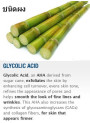
Note:* AHAs like Glycopure™ (Glycolic Acid) are highly effective exfoliants but work best at acidic pH levels (pH not exceeding 4.0). Most glycerin soaps have a high pH (above 8), which significantly reduces the effectiveness of AHAs and can easily cause irritation in an unsuitable pH environment. Therefore, using Glycolic Acid in glycerin soap is not ideal.
Active Ingredients for Skin Whitening/Brightening
These ingredients help reduce melanin production, fading dark spots and promoting a more even skin tone.
- Safe-B3™ (Vitamin B3, Niacinamide): Vitamin B3 helps reduce redness and hyperpigmentation, improves skin hydration, strengthens the skin barrier, and controls oiliness. It is stable within a pH range of 3-8, which is relatively wide and can be used in glycerin soap, although its optimal efficacy is within pH 4.0-7.0. The recommended usage rate is 1-10% (Safe-B3™ type can be used up to 10% with less risk of flushing/irritation). It is a water-soluble powder and should be dissolved in water.
Kojic Acid Dipalmitate: This is a more stable derivative of Kojic Acid with better skin absorption. It helps reduce pigment production. It is stable within a pH range of 3-9, making it suitable for use in glycerin soap. However, it is a powder that dissolves better in oil than water and requires heating to around 80°C to dissolve and incorporate into the oil phase. The recommended usage rate is 1-5%.
Note:* Alpha Arbutin is a potent whitening agent but is unstable at pH levels higher than 8, where it breaks down into Hydroquinone. Therefore, it is not suitable for use in glycerin soap.
Tips for Making Glycerin Soap
- Choose a good quality glycerin soap base.
- Melt the soap base as usual.
- When the melted soap base has cooled down (according to the recommended temperature for each ingredient), add the chosen active ingredients.
- For water-soluble ingredients (e.g., Bio-S Protease™, Malt-Exfo™, Safe-B3™), dissolve the ingredient in a small amount of water first, then gradually add it to the melted soap base and stir to combine.
- For oil-soluble ingredients (e.g., Kojic Acid Dipalmitate), it needs to be dissolved in a small amount of oil with heat as recommended before adding it to the melted soap base and stirring to combine.
- You may adjust the pH of the final soap to be within the optimal range for the active ingredients (if aiming for maximum efficacy), but be aware that pH adjustment can affect the stability of the soap.
- Pour the soap into molds and let it harden.
Purchasing Products
If you wish to purchase these products, you can find details and place orders on the MySkinRecipes website.
Related Products Mentioned
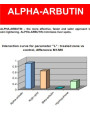
Alpha Arbutin (Switzerland)
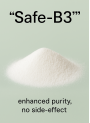
Safe-B3™ (Vitamin B3, Niacinamide)
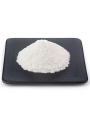
Kojic Acid Dipalmitate