Making Incense Cones and Fragrance Ratio
Question
When making incense cones, what ingredients should fragrance be mixed with, and what is the recommended ratio?
Answer
Making Incense Cones
To make incense cones, you typically need to mix a few key components:
- Combustible Material: This is the main bulk of the cone that burns. Common materials include charcoal powder, wood powder (like sandalwood or cedar), or makko powder (which also acts as a binder).
- Binder: This holds the powder together when mixed with water and allows it to form a cone shape that stays intact when dry. Makko powder is a traditional binder, but others like gum arabic or tragacanth gum can also be used.
- Water: Used to hydrate the mix and activate the binder.
- Fragrance: This is where your fragrance oil comes in. You can use essential oils or fragrance oils.
General Process:
- Mix the dry ingredients (combustible material and binder) thoroughly.
- Gradually add water while mixing until you get a thick, moldable paste.
- Knead the paste well.
- Add your fragrance oil and knead again to distribute it evenly.
- Shape the paste into cones.
- Let the cones dry completely for several days before burning.
Ratio:
The exact ratio of ingredients, especially the binder and water, depends heavily on the specific materials you use. However, a common starting point for the fragrance oil is typically around 10-20% of the total dry weight of the combustible material and binder combined. You may need to experiment to find the desired scent strength and burning characteristics.
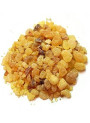
Olibanum (Frankincense) Oil is a traditional and popular fragrance used in incense making.
Updated Review: May 2026
This section was added after reviewing the original answer against current product availability and formulation knowledge at the stated point in time.
Update as of 2026-05-24
The basic incense-cone structure above is still appropriate, but the fragrance-oil ratio should be adjusted. For a first trial, start fragrance or essential oil at about 3–8% of the total dry powder + binder weight, then increase gradually only after confirming the cone dries fully, lights properly, burns from tip to base, and does not create excessive smoke, oil leakage, or flare-up. The older 10–20% level should be treated only as a high experimental range for some bases, not as the default starting point.
Fragrance oil should be dispersed by kneading it evenly through the damp paste; it does not simply dissolve into the dry incense powder. Dry the cones completely before burning, and always test small batches for ignition, complete burn, smoke odor/density, and safety. Use only on a heat-resistant holder, away from flammable materials, with good ventilation.
Olibanum (Frankincense) Oil remains a suitable natural-style fragrance option for an incense concept because of its classic incense-like balsamic profile, but its catalog information should not be taken as a validated incense-combustion dosage or safety certification.
References: Mannix et al., Science of the Total Environment 2006, 359, 186–197; Bauer, Garbe & Surburg, Common Fragrance and Flavor Materials, Wiley-VCH, 2001.
Related Products Mentioned