Making Liquid Lipstick Transfer-Proof and Long-Lasting
Question
I currently have a standard liquid lipstick formula. If I want to make it kiss-proof and mask-proof (transfer-proof), which ingredients should I add and in what quantity/percentage?
Answer
How to Make Liquid Lipstick Transfer-Proof and Mask-Proof
To make your liquid lipstick formula transfer-proof and mask-proof, you need to incorporate film-forming agents. These ingredients create a durable layer on the lips that helps the color stay put and prevents transfer.
Based on your needs, the following film-forming ingredients are suitable for liquid lipstick formulas:
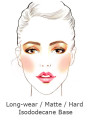
Silicone Film (Very Long-Wear, Hard, Isododecane Base): This liquid silicone film is dissolved in Isododecane, which helps it dry quickly. It provides an extremely long-lasting, hard film suitable for lip products. Recommended usage rate is 5-30%.
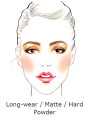
Silicone Film (Powder, Hard Film, Very Long-Wear) (Trimethylsiloxysilicate): This is a powder form of a very long-lasting silicone film. It is suitable for kiss-proof lip products. It needs to be mixed into silicone or Isododecane/Isohexadecane. Recommended usage rate is 1-30%.
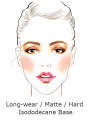
Silicone Film (Smart-Wear, Hard, Isododecane Base): Another Isododecane-based silicone film that offers a balance of comfort and longevity, suitable for lip formulas. Recommended usage rate is 5-30%.
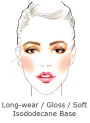
Hydrogenated Polycyclopentadiene (Isododecane Base): This oil film provides long-lasting, waterproof, and transfer-proof properties ("doesn't fall off when rubbed / it doesn't fall off when kissed"). It is suitable for lip formulas and gives a glossy finish. Recommended usage rate is 5-20%.
The exact percentage to use depends on the desired level of transfer resistance and the overall composition of your existing formula. You may need to experiment within the recommended range to achieve the desired performance without making the lipstick feel too dry or uncomfortable.
Remember to properly incorporate these ingredients into the correct phase of your formula, typically the oil or silicone phase, as indicated in their descriptions.