Making Sunscreen for a School Project: Ingredients, Methods, Equipment, and Cost
Question
I am working on a school project about making sunscreen. I have questions regarding:
- What are the key ingredients needed for sunscreen, particularly UV filters (Physical vs. Chemical)?
- Can I use Aloe Vera Extract as the main ingredient for sun protection?
- What is the process for making sunscreen from scratch, and what equipment is required?
- Are there simpler methods for a school project, such as using a pre-made base or specific ingredient grades?
- What is the approximate cost of equipment and ingredients for making a small batch of sunscreen?
Answer
Making Sunscreen for a School Project
Hello! I understand you're working on a school project about making sunscreen and have several questions about the process. Making sunscreen requires key ingredients called UV filters, which can be either physical or chemical.
Key Sunscreen Ingredients
Commonly used UV filters include:
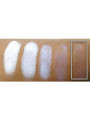
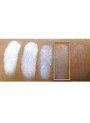
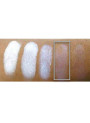
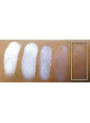
- Physical Sunscreens: These work by reflecting or scattering UV rays. They are typically white powders like Titanium Dioxide and Zinc Oxide. These two ingredients are often used together to provide broader protection against both UVA and UVB rays. Various grades are available, such as grades that disperse easily in oil or silicone (EasyDisperse™) or ready-to-use liquid dispersions (Transparent Dispersion) to help reduce the white cast on the skin.
- Chemical Sunscreens: These absorb UV rays and convert them into heat, such as Enzacamene, Homosalate, Bisoctrizole, etc.
In addition to UV filters, other ingredients are needed, such as a cream base (emulsifiers, oils, water), stabilizers, preservatives, and other skin-benefiting additives.
Aloe Vera in Sunscreen
Aloe Vera Extract has properties that help soothe the skin, reduce irritation, and provide moisture. It can be included as an ingredient in sunscreen for its skin benefits, but aloe vera alone does not provide sufficient sun protection. Therefore, you cannot use only aloe vera instead of the main UV filters. If you want to substitute aloe vera with other natural extracts that have similar properties, such as moisturizing or soothing, that is possible.
How to Make Sunscreen
Making sunscreen from scratch (mixing everything yourself) is quite complex and requires precision in weighing and mixing, especially ensuring the even dispersion of physical sunscreens for effective sun protection. This may require special equipment like a homogenizer.
For a school project, you might consider simpler methods:
- Using physical sunscreens that are EasyDisperse™ grades or Dispersion types that are easier to mix.
- Using a pre-made sunscreen base like Clear Sprayable Sunscreen (Super Light, SPF40), which already contains UV filters. You can simply add other beneficial ingredients like Aloe Vera Extract to this base. This method is easier and ensures the presence of the main sun protection ingredients.
Equipment and Cost
The equipment needed for making a small amount of sunscreen (2-3 bottles) from scratch would include a digital scale, beakers, stirring rods, heating equipment (for melting some ingredients), and containers. If you need very good dispersion of UV filters, you might need a small homogenizer, which can be quite expensive.
However, if you choose to use a pre-made sunscreen base or dispersion-type UV filters, the equipment needed is much less. A digital scale, mixing container, and a spatula or stirring rod would be sufficient.
The cost of basic equipment is not very high, but the cost of ingredients, especially the UV filters, can be the main expense. Using a pre-made base might help control costs and simplify the process.
For more information and sample formulas, you can explore various resources or the formula collection section of the MySkinRecipes webboard.
Updated Review: May 2026
This section was added after reviewing the original answer against current product availability and formulation knowledge at the stated point in time.
Update 2026-05-24: The original guidance remains valid: Aloe Vera Extract can be used for moisturizing or soothing support, but it is not a UV filter and cannot replace real sunscreen actives. Sun protection must come from suitable UV filters such as Zinc Oxide, Titanium Dioxide, or approved organic/chemical UV filters in a properly designed formula.
For physical UV filters such as Zinc Oxide and Titanium Dioxide, the particles do not truly “dissolve” in the formula; they must be properly wet, dispersed, and deagglomerated so the filter is distributed evenly and forms a consistent film on skin. For a school project, the safer and simpler route is still to use a finished sunscreen base such as Clear Sprayable Sunscreen, or pre-dispersed/EasyDisperse physical-filter materials, and study texture/dispersion/formulation concepts rather than trying to prove SPF by calculation.
If a finished sunscreen base is used, avoid diluting it or adding large amounts of extracts, water, oils, fragrance, color, or other materials, because changes to film formation, viscosity, emulsion structure, pH, or UV-filter distribution can reduce the real SPF/UVA protection. Any SPF, PA, UVA, broad-spectrum, or water-resistance claim for sale or real consumer use must be supported by appropriate testing and local regulatory compliance. Current catalog options still include finished sunscreen bases, Zinc Oxide/Titanium Dioxide materials and dispersions, and Aloe Vera products for moisturizing/soothing support.
References: ISO 24444:2019 for in vivo SPF testing; ISO 24443:2021 for in vitro UVA protection testing; ASEAN Cosmetic Documents, Annex I Part 9(i), Guideline for Sunscreen Product.
Related Products Mentioned
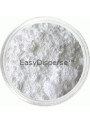
Zinc Oxide 200nm EasyDisperse™
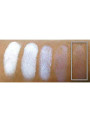
Zinc Oxide 40nm Dispersion (Water Base)
Zinc Oxide 35nm Liquid