Mixing MSH White Powder into Cream: Calculating Volume Needed
Question
I have 5g of MSH White powder and an existing cream (which contains oil).
I want to mix the 5g of MSH White powder into the cream to achieve a concentration of approximately 2% in the final product.
Since I cannot weigh the existing cream, how can I calculate the required volume (in ml) of the cream needed to mix with the 5g of powder to reach this target concentration?
Answer
Cosmetic Formulation Questions
Here are the answers to your questions regarding cosmetic ingredients and formulations:
Ingredient Percentages in a Formulation
It is not possible to provide exact percentages for a formulation based solely on a list of ingredients, as the optimal concentration of each component depends on the desired product type (e.g., serum, cream), texture, stability requirements, and the specific function of each ingredient. However, I can provide the typical recommended usage rates for the ingredients you listed based on the product information available:
- Propylene Glycol: Typically used at 1-20%, but can be used up to 50%.
- Cyclopentasiloxane: Recommended for creams/lotions at 1-20%, but can be used up to 99%.
- Glycerin: Can be used from 1% up to 100% (though not suitable for direct skin application at high concentrations).
- Cetyl Peg / Ppg-10/1 Dimethicone (PEG/PPG-20/15 Dimethicone): Typically used at 0.1-3%.
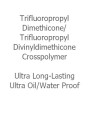
- Dimethicone Crosspolymer (Trifluoropropyl Dimethicone/Trifluoropropyl Divinyldimethicone Crosspolymer): Can be used at 1-50%.
- Lauroyl lysine (AminoSilk™): Recommended at 3%, with a usage range of 1-5%.
- Acrylates Copolymer (Ammonium Acrylates Copolymer): Typically used at 0.1-3%.
- ascorbic acid (Vitamin C L-ascorbic acid Ultra-Fine): Used at 3-15% for wrinkle reduction or whitening.
- Adenosine (Pure-Adenosine™): Recommended at 0.5-1.0%, with a usage range of 0.1-1.0%.
Ingredients like ascorbic acid and Adenosine are typically considered active ingredients, while others like glycols, silicones, and polymers often function as base components, solvents, texture enhancers, or emulsifiers. The exact ratio of these ingredients would need to be determined through formulation development and testing.
Water-Free Formula with Emulsifier, Vitamin E, and Glutathione
Regarding adding Vitamin E and Glutathione to a water-free formula with an emulsifier:
- Vitamin E: Oil-soluble forms of Vitamin E, such as Vitamin E (Tocopheryl Acetate), can be incorporated into anhydrous (water-free) formulations. There are also water-soluble forms like Vitamin E (Tocopheryl Acetate) Water-Soluble, which would not be suitable for a truly water-free system.
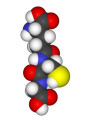
- Glutathione: The forms of Glutathione available, such as Glutathione (L-Glutathione) (Extrasol), L-Glutathione Liquid, and Glutathione (L-Glutathione Reduced), are water-soluble. Incorporating water-soluble ingredients into a truly anhydrous formula, even with an emulsifier, is generally challenging unless the emulsifier is specifically designed for dispersing solids in an anhydrous base or the formula is actually an emulsion (which contains water). If the formula is an emulsion, Glutathione could potentially be added to the water phase.
It's also important to consider the stability of these ingredients, especially when combined with L-ascorbic acid. L-ascorbic acid requires a low pH (2.0-4.0) for stability, while Glutathione is more stable in a pH range of 3-6 and is sensitive to heat. Combining them in a water-based system at the optimal pH for L-ascorbic acid might compromise the stability of Glutathione.
Aneenoat™ in Liquid Form
Information regarding "Aneenoat™" was not found in the product database.
MSH White™ Percentage and Effectiveness
You asked about the percentage of MSH White™ in liquid form compared to powder (2%) and the effectiveness of using 2-3% if 4-6% is recommended.
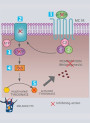
Based on the product description available, MSH White™ (Undecylenoyl phenylalanine) is a powder with a recommended usage rate of 0.5-2%. It needs to be dissolved in oil or the oil phase with heat (80°C).
If there is a liquid form of MSH White™ available on the website, its recommended usage percentage (4-6%) would depend on the concentration of the active ingredient (Undecylenoyl phenylalanine) in that liquid. For example, if the liquid is a 50% solution of MSH White™ powder, then using 4% of the liquid would provide 2% of the active ingredient in your final product (4% * 50% = 2%). You would need to know the concentration of the liquid product to compare it to the powder form.
Regarding the effectiveness of using 2-3% of the liquid form when 4-6% is recommended, using an ingredient below its recommended usage range may result in reduced efficacy. The recommended range is typically provided to achieve the desired results based on testing.
Mixing 5g of MSH White™ Powder into Existing Cream
To mix 5g of MSH White™ powder into an existing cream without weighing the cream, you can estimate the volume needed based on a desired concentration. The recommended usage rate for MSH White™ powder is 0.5-2%. Let's aim for the maximum recommended concentration of 2% in the final cream.
To achieve a 2% concentration, the 5g of MSH White™ powder should constitute 2% of the total weight of the final cream.
Total weight of cream = (Weight of MSH White powder / Desired percentage) * 100
Total weight of cream = (5g / 2) * 100 = 250g
This means you need a total of 250g of the final cream mixture. Since you are adding 5g of powder, you would need 250g - 5g = 245g of your existing cream.
To convert this to milliliters, we need the density of your cream. Assuming the density of the cream is close to that of water (approximately 1 g/ml), 245g of cream is roughly equivalent to 245ml.
Therefore, to achieve approximately 2% MSH White™ in your existing cream, add the 5g of powder to about 245ml of cream. Keep in mind that this is an approximation, and the exact volume may vary slightly depending on the specific density of your cream. Remember that MSH White™ powder needs to be dissolved in the oil phase with heat before mixing into the cream.
Related Products Mentioned
Vitamin E (Tocopheryl Acetate)
Vitamin C (L-ascorbic acid) (Ultra-Fine)
Propylene Glycol (USP)
Glycerin (USP/Food Grade)
Glutathione (L-Glutathione) (Extrasol)
AminoSilk™ (Lauroyl lysine)
MSH White™ (Undecylenoyl phenylalanine)
Pure-Adenosine™


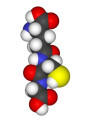
Glutathione (L-Glutathione Reduced)