Mixing Oil-Based Ingredients for Skincare: Feasibility, Quantities, and Storage
Question
I recently ordered the following ingredients but have no knowledge of mixing creams, only reading about ingredient functions. I want to mix everything together. Is this possible?
Here are the ingredients I purchased:
- Capryloyl Salicylic Acid (LHA) EZ™ 10 grams (Syringe)
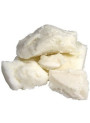
- Shea Butter (Organic - Refined) 85 grams (Sealed Bottle)
- Vitamin E (Tocopheryl Acetate) 10 grams (Syringe)
- Avocado Oil (Refined) 120 milliliters (Flip Bottle)
Specifically, I plan to melt the Shea Butter until liquid, then add Avocado Oil, Vitamin E, and LHA.
- Can I just mix these ingredients together like this?
- I'm unsure about the required quantities.
- How should I store the resulting mixture?
Please advise. Thank you.
Answer
Cosmetic Formulation Advice
Hello! It's great that you're exploring making your own skincare. You've purchased some excellent ingredients: Capryloyl Salicylic Acid (LHA) EZ™, Shea Butter, Vitamin E (Tocopheryl Acetate), and Avocado Oil. You're asking if you can mix them all together, in what quantities, and how to store the result.
Let's break this down:
Can you just mix these ingredients together?
Yes, you can physically mix these ingredients, but the result will likely be an oily balm or salve, not a cream or lotion. A cream or lotion is typically an emulsion, meaning it contains both oil and water phases blended together with an emulsifier. All the ingredients you have are oil-soluble or oil-dispersible.
To mix them:
- You would need to gently heat the Shea Butter until it melts into a liquid.
- Capryloyl Salicylic Acid (LHA) Powder needs to be heated to 70-80°C to dissolve in oil.
- Avocado Oil and Vitamin E can then be mixed into the melted butter/dissolved LHA blend.
Simply mixing them this way without a proper formulation might lead to:
- An oily texture that might feel heavy on the skin.
- Potential separation of ingredients over time if not mixed thoroughly or if the LHA doesn't stay dissolved.
- Uneven distribution of the active ingredient (LHA), which could affect efficacy or cause localized irritation.
What quantities should you use?
This is where formulation expertise is crucial. Each ingredient has recommended usage rates for safety and effectiveness:
- Shea Butter: Can be used from 1% up to 100%.
- Avocado Oil: Can be used from 1% up to 100%.
- Vitamin E (Tocopheryl Acetate): Recommended usage is 0.1-1%. Using more than 0.5% can cause a sticky feeling. It also acts as an antioxidant for the oils at rates as low as 0.01%.
- Capryloyl Salicylic Acid (LHA): Recommended usage is 0.5-5%, but it is strongly recommended not to exceed 2% due to the potential for significant skin irritation at higher concentrations.
If you were to mix all the quantities you purchased (10g LHA, 85g Shea Butter, 10g Vitamin E, 120ml Avocado Oil, assuming 1ml ≈ 1g for estimation), the approximate percentages in the final blend would be:
- LHA: ~4.4%
- Shea Butter: ~37.8%
- Vitamin E: ~4.4%
- Avocado Oil: ~53.3%
Looking at these percentages compared to the recommendations:
- The LHA concentration (~4.4%) is higher than the recommended maximum of 2% to avoid irritation.
- The Vitamin E concentration (~4.4%) is significantly higher than the recommended 0.1-1% and will likely cause a sticky feeling.
Therefore, simply mixing all the purchased amounts together is not recommended due to the potentially irritating level of LHA and the stickiness from Vitamin E.
It is best to start with a small test batch using lower concentrations, especially for LHA (staying at or below 2%) and Vitamin E (staying at or below 0.5% to avoid stickiness, or 0.01% if just for oil preservation). Determining the exact ideal quantities requires careful formulation and testing based on your desired outcome and skin sensitivity.
How should you store the mixture?
Since this is an oil-based mixture, it is less prone to bacterial growth than a water-based product, but oils can still go rancid. To maximize the shelf life and maintain the quality of the ingredients:
- Store the mixture in a clean, airtight container.
- Keep it in a cool, dark place, away from direct sunlight and heat.
- Refrigeration (4-8°C) is ideal for long-term storage, especially for Vitamin E, which benefits from cooler temperatures.
In Summary
While you can create an anhydrous balm by melting and mixing your ingredients, it won't be a lotion. Be cautious with the quantities, as mixing all you have will result in concentrations of LHA and Vitamin E that are likely too high and could cause irritation or stickiness. Start with small test batches using lower, recommended percentages, especially for active ingredients like LHA. Store the final product properly in a cool, dark place, ideally refrigerated.
For making a proper lotion, you would need additional ingredients like water and an emulsifier, and follow a tested lotion recipe.
Related Products Mentioned
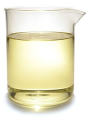
Vitamin E (Tocopheryl Acetate)
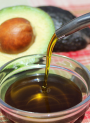
Avocado Oil (Refined)