Mixing Ratios for Vitamin C and Alpha Arbutin for Body Skin Brightening & Kombuchka Info
Question
I would like to inquire about the mixing details for skincare.
What is the required ratio for mixing Vit C with distilled water? For example, for 100g of distilled water, how many grams of Vit C should be added? My body skin is quite rough, unlike my facial skin. I want the maximum amount that my skin can tolerate, as I want to brighten my skin quickly. I plan to mix a new batch every 3 days so that the Vit C doesn't lose effectiveness.
I would also like to know the mixing ratio for arbutin with distilled water (mixing a new batch every 3 days, similar to Vit C).
Do you sell kombuchka at your store? And do you know its properties, what it helps with? I'm interested in it because I heard it helps make the skin look pinkish-white.
Thank you very much for your assistance.
Answer
Skincare Formulation Details: Vitamin C, Alpha Arbutin, and Kombuchka
Here are details on mixing Vitamin C and Alpha Arbutin with distilled water for body skin, along with information regarding Kombuchka.
Vitamin C Mixing Ratio
For mixing Vitamin C with distilled water, there are a few forms you can use, each with different properties and recommended usage rates:
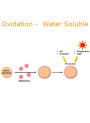
- L-Ascorbic Acid (Fine): This is a potent form of Vitamin C. It is water-soluble but less stable in water compared to other forms. For best stability and effectiveness, the final mixture should have a low pH, ideally between 2.0-4.0 (though cosmetic products applied to skin must have a pH of at least 3.5 according to FDA). The recommended usage rate is 3-15%. For 100g of distilled water, you can add up to 15g of L-Ascorbic Acid for maximum concentration. To improve stability, it is highly recommended to include:
- Disodium EDTA at 0.1-0.2%
- ActiveProtec™ OX at 0.1-1.0% to help prevent oxidation.
- Magnesium Ascorbyl Phosphate (MAP) or Sodium Ascorbyl Phosphate (SAP): These are more stable, water-soluble forms of Vitamin C and are generally easier to work with. They require a higher pH for stability, ideally between 7-9. The recommended usage rate is 0.5-10% (3% is recommended, and concentrations above 8% may have dissolution issues). For 100g of distilled water, you can add up to 10g of MAP or SAP. These forms also benefit from:
- Disodium EDTA at 0.05%
- ActiveProtec™ OX at 0.1-1.0%
Mixing every 3 days is a good practice to ensure freshness and potency, especially with L-Ascorbic Acid.
For body skin, you can start with a lower concentration (e.g., 5-10% for L-Ascorbic Acid or 3% for MAP/SAP) and gradually increase to assess your skin's tolerance, as high concentrations can cause irritation.
Alpha Arbutin Mixing Ratio
Alpha Arbutin is a water-soluble skin brightening ingredient. The recommended usage rate is 0.2-2%. For 100g of distilled water, you can add up to 2g of Alpha Arbutin. The optimal pH for Alpha Arbutin stability is between 3.5-6.5. To help prevent discoloration of the formula, it is recommended to add ActiveProtec™ OX at 0.6%.
Similar to Vitamin C, mixing every 3 days will help maintain the freshness of your Alpha Arbutin solution.
Kombuchka Availability and Properties
Based on our product database search, information regarding Kombuchka is not available. Therefore, we cannot confirm its availability or provide details on its properties or benefits for the skin from our current data.
Related Products Mentioned
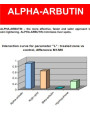
Alpha Arbutin (Switzerland)
Vitamin C (L-ascorbic acid) (Fine)
Disodium EDTA

Magnesium Ascorbyl Phosphate