Mixing Skin Brightening Ingredients: Compatibility and Formulation
Question
I want to create a skin brightening formula using the following ingredients:
- NAG (GlucoBright™)
- Vitamin B3 (Safe-B3™)
- Cyclomethicone (Cyclopentasiloxane)
- Silicone gel
- Allantoin
- Vitamin C (AA2G - Ascorbyl Glucoside)
Could you please advise on the correct mixing procedure to combine these ingredients, considering they include both water-soluble and silicone-based components? Also, are there any compatibility issues I should be aware of when using these ingredients together in a single formula?
Answer
Mixing Ingredients for Bright and Clear Skin
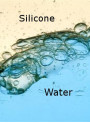
The ingredients you asked about, including NAG, Vitamin B3, Cyclomethicone, Silicone gel, Allantoin, and Vitamin C (AA2G), have various properties. Some are water-soluble, while others are silicone-based. To combine them in a single formula, you will need an "emulsifier" to help bind the water phase and the silicone/oil phase together into a homogeneous texture, such as a cream or emulsion serum.
Important Note: Vitamin C AA2G and Vitamin B3
Based on the product information for Ascorbyl Glucoside (AA-2G Stabilized Vitamin C), it is stated that it should not be used together with Safe-B3™ (Vitamin B3, Niacinamide) in the same formula because they affect the stability of Vitamin C AA2G. Therefore, if you wish to use these ingredients, you should choose another form of Vitamin C that is compatible with Vitamin B3 or separate these two ingredients into different products.
General Ingredient Preparation and Mixing
Generally, when mixing ingredients that include both a water phase and a silicone/oil phase, the steps are as follows:
- Prepare the Water Phase: Combine the water-soluble ingredients such as NAG (GlucoBright™), Vitamin B3 (Safe-B3™), Allantoin, and water. Stir or blend until dissolved.
- Caution for Allantoin: Allantoin has limited solubility in water at room temperature (around 0.5%). If you use more than this, it will not dissolve. It should be dissolved in warm water (not exceeding 75°C) or used with Glycerin to help increase solubility, or used at the recommended amount (not exceeding 0.5% at room temperature).
- Caution for Vitamin C AA2G: If you choose to use Vitamin C AA2G (which is not recommended for use with Vitamin B3 in the same formula), you must adjust the pH of the water phase to the range of 6.5-6.8 for maximum stability. You may also need to use Citrate Buffer or L-Arginine to aid dissolution and pH control according to the product instructions.
- Prepare the Silicone/Oil Phase: Combine the silicone ingredients such as Cyclomethicone (Cyclopentasiloxane) and Silicone Gel. Stir or blend until homogeneous.
- Emulsification: Add the chosen "emulsifier" to the appropriate phase (depending on whether it is a Water-in-Silicone or Oil-in-Water emulsifier). Then, slowly pour the other phase into it while continuously and steadily blending or stirring until the entire mixture is homogeneous.
- Water-in-Silicone Emulsifier (e.g., SiliSolve™, Warp Cream Maker™): Typically, the emulsifier is mixed with the silicone/oil phase first, and then the water phase is gradually added.
- Oil-in-Water Emulsifier (e.g., Light Cream Maker™): Typically, the emulsifier is mixed with the water phase first (or some types can be mixed in both phases), and then the silicone/oil phase is gradually added.
- Caution: Blending or stirring should be done at an appropriate speed, not too high, as this can damage the emulsion structure (e.g., Pro Polymer should not be blended above 2500 rpm).
- Add Other Ingredients (if any): After obtaining the cream/serum emulsion, add any other ingredients that may not be heat-stable or should be added later, such as preservatives. Adjust the final pH (if necessary and compatible with all ingredients).
Related Emulsifiers
- SiliSolve™ and Warp Cream Maker™: These are emulsifiers for Water-in-Silicone formulas, which provide a dry, smooth, light feel, suitable for formulas with a high percentage of silicones. Warp Cream Maker may require longer blending time.
- Light Cream Maker™: This is an easy-to-use Oil-in-Water emulsifier that does not require heat. It can emulsify silicones up to 10% of the formula, suitable for formulas with a low percentage of silicones.
- Pro Polymer™: This is a gel-forming agent for the water phase but can also help create a creamy texture in water + oil/silicone formulas. It has good electrolyte resistance.
Conclusion
The mixing order depends on the type of emulsifier chosen and the desired emulsion type. However, the principle is to separate the water-soluble ingredients from the silicone/oil ingredients first and then use an emulsifier to help combine the two phases. The most important thing is to check the compatibility of the ingredients, especially Vitamin C AA2G and Vitamin B3, which should not be used together in the same formula. You should study the information for each emulsifier and ingredient thoroughly before mixing.
Related Products Mentioned
Safe-B3™ (Vitamin B3, Niacinamide)

Allantoin
GlucoBright™ (Acetyl Glucosamine)
Light Cream Maker™
Silicone Gel (Ultra Clear, Super Silky)
Pro Polymer™ (Gel Maker)