Mixing Steps for Pure Aloe Vera Gel Base and Lactic Acid Percentage
Question
## Please advise the mixing steps for Pure Aloe Vera Gel
I want to make Pure Aloe Vera Gel myself, like the Tester sold by the company, to use as a Base for mixing with Essential Oil.
I have already ordered the ingredients and intend to make Pure Aloe Vera Gel 100 g.
1. What should be mixed first/after, and how?
2. I previously ordered the pure Tester without adding any other actives at all. I would like to know: for Pure Aloe Vera Gel on its own, how many % of Lactic Acid should be added? (Please provide the formula amount as an exact percentage number.)
Answer
Making Your Own Aloe Vera Gel Base
You're looking to create your own Aloe Vera Gel base similar to our tester product to mix with essential oils. Our "Pure Aloe Vera Gel" testers, such as the Aloe Vera Gel (Heavy) and Aloe Vera Gel (Lite), are pre-formulated bases designed for this purpose.
Here are the typical components of these base gels:
- Purified Water
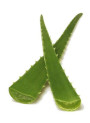
- Aloe Vera Extract (equivalent to 30% Aloe Vera)
- Vitamin B5 (Panthenol)
- Pro Polymer (in Heavy) or Pro Polymer Silk (in Lite)
- Allantoin
- Phenoxyethanol (Preservative)
The exact percentages vary slightly between the Heavy and Lite versions, but these are the main ingredients.
Regarding your question about Lactic Acid, the standard "Pure Aloe Vera Gel" base itself does not contain Lactic Acid. The tester you received without additional actives would be this base formulation.
If you wish to add Lactic Acid to your homemade Aloe Vera Gel base (for its peeling or moisturizing benefits), you can do so. For consumer use, the recommended usage rate for Lactic Acid (88%) is typically 1-10%. It is crucial to ensure the final pH of your product is not lower than 3.5 when using it at concentrations up to 10%. Remember that Lactic Acid 88% is not 100% pure, so you need to adjust the amount slightly (1.136g of 88% Lactic Acid is equivalent to 1.00g of 100% Lactic Acid).
General Mixing Instructions for Adding Ingredients to the Base Gel:
- For powdered substances: Add the powder to the base gel at room temperature. Stir for 3-5 minutes, let sit for 15-30 minutes, and stir again until fully dissolved.
- For liquid substances: Add the liquid to the gel and stir for 1-3 minutes until homogeneous.
Remember that when adding other active ingredients, especially essential oils, you should follow recommended usage rates and ensure compatibility with the base gel.
Updated Review: May 2026
This section was added after reviewing the original answer against current product availability and formulation knowledge at the stated point in time.
As of May 17, 2026, we have updated the guidance for creating an Aloe Vera Gel base and incorporating active ingredients like Lactic Acid and essential oils.
Updated Formulation Guidance (May 17, 2026)
1. Lactic Acid Usage and Safety
- Purpose of Addition: If your goal is to recreate a pure, soothing Aloe Vera Gel base similar to the original testers, it is not necessary to add Lactic Acid at 1–10%. At those levels, the product becomes an AHA exfoliating treatment rather than a simple soothing gel.
- Concentration Adjustment: The current Lactic Acid available is Lactic Acid (AHA) 90%. This is more concentrated than the 88% version mentioned in older guides. For a 100g batch, adding 1.0g of Lactic Acid 90% results in approximately 0.9% active lactic acid.
- pH and Regulatory Limits: For general-use leave-on skin products, the total concentration of AHAs (such as lactic or glycolic acid) should not exceed 10%, and the final pH of the formulation must be 3.5 or higher.
- Sun Sensitivity: Products containing AHAs increase skin sensitivity to the sun. You must advise users to use sunscreen, wear protective clothing, and limit sun exposure while using the product and for one week afterwards.
2. Incorporating Essential Oils
- Solubilization Required: Essential oils are not water-soluble and will not mix directly into a water-based gel. Do not drop them directly into the finished gel, as this can lead to separation, cloudiness, or uneven dosing on the skin. You must first blend the essential oil with a suitable solubilizer before adding the mixture to the gel.
3. Mixing Process and Viscosity
- Pro Polymer Handling: To avoid clumps ("fish-eyes"), sprinkle Pro Polymer™ (Gel Maker) slowly into the water phase while stirring. Allow sufficient time for the polymer to fully hydrate before adjusting the pH or adding acids.
- Viscosity Changes: Be aware that adding acids (like Lactic Acid), salts, electrolytes, or essential oils can significantly reduce the viscosity of the gel. Always perform a small-scale trial before making a full 100g batch to ensure the texture remains acceptable.
- Measurement: For a 100g batch, all ingredients—including Lactic Acid and essential oils—should be weighed in grams for precision, rather than measured in drops. Always verify the final pH using a calibrated pH meter or reliable low-range pH strips.
References:
- FDA Guidance on AHA in Cosmetics: Sunburn Alert Statement.
- ASEAN Cosmetic Directive Annex III: Limits for Glycolic and Lactic Acid (Max 10%, pH >= 3.5).
Related Products Mentioned
Aloe Vera Gel (Heavy)
Pro Polymer™ (Gel Maker)
Aloe Vera Gel (Lite)
Lactic Acid (AHA) 90%

Allantoin