Mixing Vitamin C (L-Ascorbic Acid) Powder into Silky Serum Base
Question
Can Vitamin C (L-ascorbic acid) powder (Ultra-Fine) be mixed directly into Silky Serum Base using the following formulation?
- Silky Serum Base: 85%
- Vitamin C (L-ascorbic acid) (Ultra-Fine): 15%
Answer
Anti-Cellulite & Skin Tightening Cream Formulation
Let's review the formulation you've provided for an anti-cellulite and skin tightening cream.
Formula Review
The ingredients you've chosen are generally suitable for this type of product. However, based on the recommended usage rates for optimal efficacy and stability, some adjustments to the percentages could be beneficial:
- Slim-Coffee™ (Coffee Extract): You are using this at 10%. The recommended usage rate for anti-cellulite body formulas is 5%. Using a higher percentage might not significantly increase efficacy and could potentially affect the stability of the cream, as Coffee Extract is an electrolyte and can soften formulas using emulsifiers like Satin Cream Maker™. Consider reducing this to 5%.
- Chili Hot™: You are using this at 1%. The recommended usage rate is 0.2-1.0%, with 0.5% recommended. While 1% is within the allowed range, it is the maximum and might cause a strong warming sensation. Since you are including FastRelief™ to reduce irritation, 1% might be acceptable, but reducing it slightly (e.g., to 0.5-0.8%) could still provide a noticeable warming effect with less potential for discomfort.
- The total oil phase (Ginger Oil, Chili Hot, FastRelief, Fractionated Coconut Oil) is 9%, which is well within the capacity of Satin Cream Maker™ (up to 25% oil).
Overall, the formula is a good starting point, but adjusting Slim-Coffee™ to the recommended 5% is advisable for stability and optimal performance.
Mixing Method Review (Anti-Cellulite Cream)
Your proposed mixing method is largely correct for using Satin Cream Maker™:
- Step 1: Mixing Satin Cream Maker™, Slim-Coffee™, and NaturePreserve™ in Purified Water at room temperature is correct. These are all water-soluble or dispersible components that go into the water phase.
- Step 2: Mixing Ginger Oil, Chili Hot™, FastRelief™, and Fractionated Coconut Oil together is correct. These are all oil-soluble components that form the oil phase.
- Step 3: Adding the oil phase (Step 2) to the water phase containing the emulsifier (Step 1) and mixing until combined is the standard procedure for forming an emulsion with Satin Cream Maker™.
So, your proposed mixing steps are appropriate for this formulation.
Vitamin C Serum Mixing
You also asked about mixing Vitamin C (L-ascorbic acid) (Ultra-Fine) powder directly into Silky Serum Base.
While Silky Serum Base can be mixed with water-soluble ingredients, directly adding the Vitamin C powder might not be the best approach for stability and proper dispersion. L-Ascorbic Acid is most stable at a low pH (2.0-4.0) and should be mixed in the final step at temperatures below 30°C.
The recommended method for using Silky Serum Base involves gradually adding the water/water-soluble ingredients to the base while stirring. For Vitamin C (L-Ascorbic Acid), it's best to:
- Prepare the Silky Serum Base by gradually adding the required amount of Purified Water (or other water-soluble liquids) to the base while stirring until a serum texture is formed.
- Separately, dissolve the Vitamin C (L-ascorbic acid) (Ultra-Fine) powder in a small amount of Purified Water. Ensure the temperature is below 30°C. You may need to adjust the pH of this solution or the final serum to be within the optimal range (3.5-4.0 is often recommended for skin application and L-AA stability).
- Add the dissolved Vitamin C solution to the prepared Silky Serum Base in the final step and mix gently until homogeneous.
Additionally, the description for Silky Serum Base recommends adding 1% Sodium Chloride (pure salt) or Magnesium Sulfate to help increase formula stability, which is particularly important when incorporating potentially unstable ingredients like L-Ascorbic Acid.
Related Products Mentioned
Vitamin C (L-ascorbic acid) (Ultra-Fine)
Fractionated Coconut Oil

Satin Cream Maker™
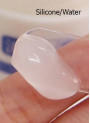
Silky Serum Base (Face/Eye)


FastRelief™ 1609 (4-t-Butylcyclohexanol)

Purified Water, TDS Limit 1PPM)
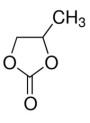
Propylene Carbonate
Sodium Chloride (High Purity, 99.9%)