Modifying Vitamin C Serum Formula for Light, Clear Texture and Stability
Question
I want to modify the Vitamin C E Ferulic serum formula with the following desired properties:
- Light, liquid, clear texture
- pH 3.5
- Good electrolyte tolerance (because the formula contains Calcium Pantothenate)
- Fast absorption, non-sticky (for use before makeup in the morning)
I have some questions:
Can the following five solvents be used together? Are they sufficient to completely dissolve Vitamin C 15%?
- Isopentyldiol 12%
- Dimethyl Isosorbide (DMI) 5%
- Ethoxydiglycol 3% (used to dissolve Ferulic Acid 1%)
- Butylene Glycol 3% (used to dissolve Licorice Extract (Glabridin 90%))
- Glycerin 2% (I'd prefer not to use this as Isopentyldiol is used instead. Can I remove it?)
The formula contains about 9% oil-soluble ingredients, but I do not want to use Laureth-23 as it makes the cream thick and sticky. Which of the following options should I choose to achieve a light, liquid, clear texture?
- Silk Lotion Maker + Polysorbate 80 (Tween 80)
- Silky Serum Base Plus (Face/Eye, Oil) (The less water, the more liquid the texture)
- Poloxamer 407 (if I want to add fragrance to mask DMI odor)
- Flora Solve™ Clear (if I want to add fragrance to mask DMI odor)
- Steareth-21
- PEG-20 Methyl Glucose Sesquistearate + Methyl Glucose Sesquistearate
***I am unsure which one to choose. If the staff knows of any other more suitable Emulsifier, please recommend.
What is HLB? I see this property listed for almost every Emulsifier.
I am confused about using Laurocapram.
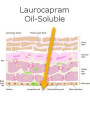
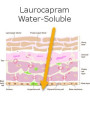
- Laurocapram water states: Suitable only for formulas containing water-soluble active substances.
- Laurocapram oil states: Suitable only for formulas containing oil-soluble active substances.
***Does this mean that if a formula contains active substances soluble in both water and oil, and requires cream emulsification, neither type of Laurocapram should be used because it affects another carrier?
I want to try using the carrier Nano Gold (Nanocarrier, Colloidal Gold 1-50nm). Is it suitable for a liquid cream texture? Will it precipitate? Is it difficult to dissolve? Does this carrier have any restrictions on use with other substances? I want to use it, but it is very expensive, so I am asking in detail. I am afraid of buying it and not being able to use it effectively.
Answer
Modifying a Vitamin C Serum Formula
Here is a detailed response to your questions regarding modifying your Vitamin C E Ferulic serum formula to achieve a light, liquid, clear, fast-absorbing, non-sticky texture with pH 3.5 and good electrolyte tolerance.
1. Solvent System for 15% Vitamin C
The combination of five solvents you proposed (Isopentyldiol 12%, Dimethyl Isosorbide (DMI) 5%, Ethoxydiglycol 3%, Butylene Glycol 3%, Glycerin 2%) totaling 25% should be sufficient to dissolve 15% L-Ascorbic Acid, especially at a pH of 3.5. L-Ascorbic Acid requires a strong solvent system for high concentrations at this pH.
- Isopentyldiol is a good solvent and humectant, known for being less irritating and providing a non-greasy feel.
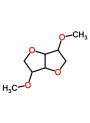
- Dimethyl Isosorbide (DMI) is an excellent solvent and penetration enhancer for water-soluble actives like L-Ascorbic Acid. It is highly effective but has a characteristic odor that needs to be masked.
- Ethoxydiglycol is another effective solvent and carrier, also helping to dissolve ingredients like Ferulic Acid.
- Butylene Glycol is a common solvent and humectant, milder than Propylene Glycol.
- Glycerin is a humectant and solvent but can contribute to stickiness, especially in higher amounts.
You can likely omit Glycerin (2%) if you are concerned about stickiness, as Isopentyldiol provides humectancy and a pleasant feel. The remaining solvent blend (Isopentyldiol 12%, DMI 5%, Ethoxydiglycol 3%, Butylene Glycol 3% - totaling 23%) should still be capable of dissolving 15% L-Ascorbic Acid, particularly with the help of DMI and Ethoxydiglycol. You may need to adjust the water phase accordingly.
2. Emulsifier Selection for Light, Clear Serum
Achieving a clear, liquid serum with a 9% oil phase at pH 3.5 with electrolytes is challenging, as many traditional emulsifiers create opaque emulsions. Based on your requirements:
- Laureth-23 and Steareth-21 are solid emulsifiers typically used for creams and lotions, not suitable for a clear liquid serum, although Steareth-21 is noted for electrolyte tolerance.
- Silk Lotion Maker (containing PEG/PPG-18/18 Dimethicone) is a W/O or W/Silicone emulsifier, not suitable for dispersing oil in a water/solvent base (O/W).
- Silky Serum Base Plus is a pre-made O/W base that can incorporate oil, but it may not result in a perfectly clear serum and contains silicones.
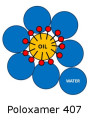
- Polysorbate 80 and Poloxamer 407 can act as solubilizers/emulsifiers, but solubilizing 9% oil might require high concentrations, potentially affecting clarity, viscosity, or stability at low pH and with electrolytes.
- Flora Solve™ Clear is specifically designed for creating clear microemulsions of oils/fragrances in water. This is the most promising option for achieving clarity with your oil phase. However, you would need a significant amount (typically 2-5 times the amount of the oil phase) to solubilize 9% oil, which could impact the texture and cost. You would need to test the required ratio for your specific oil blend.
- The combination of PEG-20 Methyl Glucose Sesquistearate and Methyl Glucose Sesquistearate is a stable emulsifier pair with good electrolyte tolerance, but they typically form opaque O/W emulsions, not clear serums.
For a clear, liquid serum, Flora Solve™ Clear is the most suitable option among those listed for solubilizing the oil phase. You will need to determine the exact ratio through testing to ensure clarity and stability with your specific oil blend and the presence of electrolytes and low pH. If a perfectly clear serum is not achievable or the required amount of Flora Solve™ Clear is too high, a translucent or light emulsion might be the best outcome with other emulsifiers that offer electrolyte tolerance.
3. Understanding HLB
HLB stands for Hydrophilic-Lipophilic Balance. It is a numerical scale used to describe the balance between the water-loving (hydrophilic) and oil-loving (lipophilic) parts of an emulsifier molecule. The scale typically ranges from 0 to 20.
- Low HLB values (e.g., 1-10) indicate that the emulsifier is more oil-loving (lipophilic) and is generally used for Water-in-Oil (W/O) emulsions, where water droplets are dispersed in a continuous oil phase.
- High HLB values (e.g., 10-20) indicate that the emulsifier is more water-loving (hydrophilic) and is generally used for Oil-in-Water (O/W) emulsions, where oil droplets are dispersed in a continuous water phase.
Emulsifiers work by positioning themselves at the interface between oil and water phases, reducing the surface tension and creating a stable mixture. The required HLB of the oil phase (a value representing how hydrophilic or lipophilic the oil blend is) helps determine the optimal HLB value or range needed from the emulsifier or blend of emulsifiers to create a stable emulsion.
4. Using Laurocapram
Based on the product descriptions:
- Laurocapram (Water Soluble) is suitable only for formulas containing water-soluble active substances.
- Laurocapram (Oil Soluble) is suitable only for formulas containing oil-soluble active substances.
Both descriptions advise avoiding the use of Laurocapram with other carriers except 1,2-Hexanediol, as it may reduce overall effectiveness. Therefore, if your formula contains both water-soluble and oil-soluble active ingredients and requires emulsification to combine these phases, neither the water-soluble nor the oil-soluble Laurocapram is recommended according to these guidelines. Using them in a formula with both types of actives and emulsifiers could compromise their function as penetration enhancers.
5. Using Nano Gold
Nano Gold (Colloidal Gold 1-50nm) is a nanocarrier designed to enhance the delivery of active ingredients into the skin. It is a translucent red-pink-purple liquid and is soluble in water, making it suitable for incorporation into a liquid serum.
- Precipitation: Nano Gold can potentially agglomerate (particles getting bigger) if exposed to heat or if the formula lacks sufficient stabilization, such as from an emulsifier. While it can withstand heat up to 80°C for 30 minutes during mixing, proper storage (refrigeration 2-5°C) and the presence of an emulsifier in the final formula are recommended for long-term stability and to prevent precipitation.
- Ease of Dissolution: It is soluble in water and can be incorporated by blending with active substances before adding to the main water phase.
- Compatibility: It can bind to various ingredients. However, compatibility with the specific ingredients in your complex formula (low pH, electrolytes, other carriers, emulsifiers) should be carefully tested to ensure stability and efficacy.
- Cost-Effectiveness: As you noted, Nano Gold is expensive. Its value lies in its potential for enhanced delivery and possible anti-acne/sterilization benefits. Whether it is cost-effective for your formula depends on the desired performance enhancement and whether these benefits are critical to your product goals. Given the cost and potential formulation challenges in a low-pH, electrolyte-rich, emulsified system, thorough testing is essential to confirm its benefits and stability before committing to its use.
In summary, while Nano Gold can be used in liquid serums and offers potential benefits, its cost, storage requirements, and compatibility considerations in your specific formula warrant careful evaluation and testing.
Related Products Mentioned
Vitamin C (L-ascorbic acid) (Ultra-Fine)
Ethoxydiglycol (e.q. Transcutol)
Laureth-23
Glycerin (USP/Food Grade)
Polysorbate 80 (Tween 80)
Butylene Glycol
Silky Serum Base Plus (Face/Eye, Oil)
Laurocapram (Oil Soluble)
Laurocapram (Water Soluble)
Isopentyldiol
Calcium Pantothenate
Steareth-21
Dimethyl Isosorbide (DMI)

PEG-20 Methyl Glucose Sesquistearate
Methyl Glucose Sesquistearate