Mouthwash causing black debris after rinsing
Question
I want to ask about RM mouthwash like Bamboo mouthwash, Charming mouthwash, what ingredient reacts with saliva that causes black debris to come out when rinsing?
Answer
Based on the search results, direct information for products named "Bamboo mouthwash" or "Charming mouthwash" was not found in the database. However, some ingredients related to oral care products and colors were found.
The phenomenon where mouthwash reacts with saliva and produces black debris is observed in some types of mouthwash. Generally, it is not harmful and often occurs when certain ingredients in the mouthwash, such as surfactants or natural extracts, interact and bind with proteins, bacteria, or food particles in the mouth. This causes these substances to coagulate and become more visible.
In some cases, mouthwashes containing enzymes (such as the Enzyme Mouthwash found in the search results) are designed to help break down protein stains and food debris in the mouth. When expelled, these broken-down substances may be visible as debris.
Furthermore, colors in mouthwash, especially dark colors (such as Caramel Color or Black Color found in the search results), can also contribute to the debris appearing darker.
Therefore, without the exact ingredient list of the mouthwash you are using, it is difficult to pinpoint the specific substance causing this reaction. However, it is generally caused by the interaction of certain ingredients with debris and proteins in the mouth, which is a mechanism that aids in cleaning the oral cavity.
Updated Review: May 2026
This section was added after reviewing the original answer against current product availability and formulation knowledge at the stated point in time.
Update 2026-05-24: The original conclusion still applies: without the full ingredient list of the Bamboo mouthwash or Charming mouthwash, one exact raw material cannot be confirmed as the cause of the black debris.
Current catalog information makes the explanation more specific. Enzyme Mouthwash (e.q. Propolinse, 1:4 Concentrate) is described as a brown mouthwash base that can form brown to black-brown stains after contact with saliva/proteins in the mouth after 1:4 dilution. If the formula contains this type of enzyme/brown-stain system, the visible residue can be expected from interaction with oral proteins, biofilm, bacteria, mucin, or food debris.
If the formula contains Bamboo Charcoal Powder or activated charcoal, the black material may simply be insoluble dispersed charcoal particles carried out with saliva and oral debris. Charcoal powder should be treated as a dispersion/suspension issue, not as something dissolved in water. Caramel Color EasyWash or other dark/brown colorants can also make saliva debris look darker. Cetylpyridinium chloride (CPC) may help bind/aggregate bacteria or biofilm components, but CPC itself is a white water-soluble powder and should not be considered the direct source of black color unless a dark colorant or dark particulate is also present.
Do not describe the black debris as proof of “detox.” For troubleshooting, check whether dark particles are already present before use or after dilution/standing, and compare samples without charcoal/colorant, without enzyme system, and without CPC/cationic antimicrobial if present. Avoid gritty charcoal granules or abrasive scrub-like particles in mouthwash unless the finished product has passed oral-use safety, particle-size, abrasion, stability, and microbiology testing. Stop use and consult a dentist/physician if there is burning, pain, bleeding, ulcers, persistent abnormal debris, strong staining, swelling, or irritation.
Related Products Mentioned

Black Color EasyWash™

Caramel Color EasyWash™
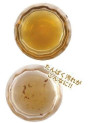

PlaqueCare™ (alpha-1,3-Glucanase)
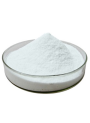
Cetylpyridinium chloride (CPC)
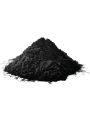
Bamboo Charcoal Powder (4-9micron, Eco)
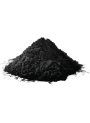
Bamboo Charcoal Powder (1-2micron)
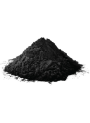
Bamboo Charcoal Powder (3-5micron)
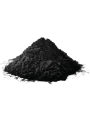
Bamboo Charcoal Granule (0.3-0.7mm)