Night Cream Formula Review for Combination Skin
Question
Could you please review my proposed Night Cream formula? I intend it to be an all-in-one product addressing various concerns.
Skin Information:
- Combination skin: dry and dehydrated with occasional oiliness in the T-zone throughout the day.
- Currently using Rose Hip Oil followed by moisturizer.
Skin Problems:
- Beginning to show wrinkles.
- Large pores.
- Slight acne marks.
- Quite a lot of faint freckles.
Expectations:
- Want a single product solution.
- Want skin to be plump and hydrated.
- Want skin to be brighter.
- Want anti-aging benefits (preventing wrinkles).
- Want some help in preventing acne.
Ingredients:
Part A (Water Phase - Dissolve in Water):
- Witch Hazel (Alcohol Free) Plus Allantoin: 30%
- Can I use this as part of the water phase, roughly half water?
- Distilled Water: 23%
- Satin Cream Maker™: 1%
- Is 1% suitable, or should I adjust it to 1.5%?
- Safe-B3™ (Vitamin B3, Niacinamide): 5%
- GlucoBright™ (Acetyl glucosamine): 4%
- Witch Hazel (Alcohol Free) Plus Allantoin: 30%
Part A (Continued - Hydration / Irritation Reduction):
- Calcium Pantothenate (B5): 2%
- Double Hyaluron Liquid: 5%
Part A (Continued - Pore Tightening / Redness / Acne):
- Vitamin B6 (Pyridoxine Hydrochloride): 3%
- Licorice Extract (Licochalcone A 1%): 1%
Part A (Continued - Anti-Wrinkle):
- Repair Activator™: 10%
Part B (Oil Phase):
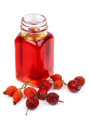
- Rose Hip Oil (Chile, Extra Virgin Organic Fresh): 10%
- Shea Butter (Ultra Soft): 5%
- Since this ingredient requires heat and many of the above ingredients should avoid heat, what should I do? Would using LipidSoft™ Film (Tridecyl Trimellitate) at 5% instead be more suitable? And would its properties be able to substitute?
Preservative:
- Mild Preserved Eco™ (Ethylhexylglycerin): 1%
- Since I'm using Witch Hazel at 30%, should this preservative amount be reduced to 0.5%?
- Mild Preserved Eco™ (Ethylhexylglycerin): 1%
Could you please advise if I need to add or remove any ingredients that might be redundant? Also, what is the correct mixing procedure (order of adding ingredients)?
Thank you.
Answer
Formula Review and Recommendations
Here is a review of your proposed night cream formula designed as an all-in-one solution for combination skin with concerns about wrinkles, dryness, oiliness, large pores, acne marks, and freckles.
Your formula includes a good range of active ingredients targeting these concerns. Let's go through each part and your specific questions.
Ingredient Analysis and Recommendations
Water Phase:
Witch Hazel (Alcohol Free) Plus Allantoin (30%) and Distilled Water (23%): Using Witch Hazel as part of the water phase is suitable. The version with Allantoin helps reduce potential irritation while providing astringent benefits for pores and oiliness. The total water phase is 53%, which is appropriate for a cream.
Satin Cream Maker™ (1%): You asked if 1% is suitable or if 1.5% is better. 1% is a good starting point for this emulsifier, especially with your oil phase percentage. If you desire a thicker cream texture, you can increase the concentration to 1.5% or even 2% as suggested by the product information.
Safe-B3™ (Vitamin B3, Niacinamide) (5%): This is an excellent choice at 5% to address multiple concerns: reducing wrinkles, improving skin tone and hyperpigmentation (freckles), strengthening the skin barrier to help with dryness/dehydration, reducing oiliness, and helping with acne. The Safe-B3 type is known for minimal flushing at this concentration.
GlucoBright™ (Acetyl Glucosamine) (4%): This ingredient works synergistically with Niacinamide (Safe-B3) to enhance brightening and reduce dark spots/freckles. It also helps stimulate the skin's own hyaluronic acid production for added hydration and wrinkle reduction, and can help reduce acne breakouts. 4% is a suitable concentration, especially in combination with Niacinamide.
Calcium Pantothenate (B5) (2%): This adds valuable moisturizing and anti-inflammatory benefits, helping to soothe the skin and improve hydration, contributing to the 'plump' skin goal.
Double Hyaluron Liquid (5%): A great addition for hydration, providing moisture to both the surface and deeper layers of the skin, which is important for your combination and dehydrated skin type.
Vitamin B6 (Pyridoxine Hydrochloride) (3%): This ingredient is effective for controlling oiliness and tightening pores, which is beneficial for your T-zone. It also has anti-inflammatory properties that can help with acne marks. Keep in mind that Vitamin B6 has a low pH and is sensitive to heat and light, which affects the mixing process and final formula pH. At 3%, it's at the higher end of the recommended range, so monitor your skin for any dryness or irritation, especially in the less oily areas.
Licorice Extract (Licochalcone A 1%) (1%): This helps reduce inflammation, redness (from acne marks), and oiliness. It complements the other ingredients targeting acne and irritation. 1% is within the recommended usage rate.
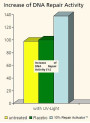
Repair Activator™ (Bifida Ferment Lysate) (10%): This active is excellent for anti-aging and helping the skin repair itself, directly addressing your wrinkle concerns.
Oil Phase:
Rose Hip Oil (Extra Virgin Organic Fresh) (10%): A nourishing oil that helps with skin repair, moisture, wrinkles, and fading scars/redness from acne. 10% is a good percentage for a night cream.
Shea Butter (Ultra Soft) (5%): You correctly identified that Shea Butter requires heat to melt, and several of your water-phase ingredients (Vitamin B6, Repair Activator, etc.) are heat-sensitive. Replacing Shea Butter with LipidSoft™ Film (Tridecyl Trimellitate) at 5% is a suitable alternative to avoid heating the water phase significantly. LipidSoft™ Film provides a nice feel and helps with the overall texture and film-forming property without requiring high heat. While its feel is different from Shea Butter, it is compatible with your heat-sensitive actives and contributes to the desired cream texture.
Preservative:
- Mild Preserved Eco™ (Ethylhexylglycerin) (1%): You asked if 1% is appropriate or if 0.5% is enough considering the Witch Hazel. While Witch Hazel has some properties, it is not a reliable broad-spectrum preservative. Using Mild Preserved Eco at 1% is recommended for adequate preservation of your formula, especially with a high water content and many active ingredients. Reducing it to 0.5% might compromise the microbial stability. 1% is within the recommended range (1.0-1.5%) for general cosmetic formulas.
Potential Redundancies and Considerations
Your formula is comprehensive, aiming to address many concerns in one product. There is some overlap in function (e.g., multiple ingredients for oil control/acne/inflammation and multiple for hydration/wrinkles). This can be beneficial for a multi-tasking product, but it's important to monitor your skin for any signs of over-treatment or irritation, especially given your combination skin type with both dry and oily areas. The concentrations you've chosen are generally within recommended ranges for individual ingredients, but the combined effect should be observed.
The final pH of your formula will be important for the stability and efficacy of ingredients like Vitamin B6, Safe-B3, GlucoBright, Licorice Extract, and Repair Activator. Aiming for a final pH between 4.0 and 6.0 would be beneficial for most of these actives. You may need to adjust the pH after mixing.
Recommended Mixing Procedure
Here is a suggested mixing procedure, taking into account the ingredient properties:
- Prepare Water Phase (A): In a beaker, combine Distilled Water, Witch Hazel (Alcohol Free) Plus Allantoin, Safe-B3, GlucoBright, Calcium Pantothenate, and Vitamin B6. Stir gently until all powders are fully dissolved. Note: Vitamin B6 has a low pH and is light-sensitive, so work quickly and minimize light exposure to this phase.
- Prepare Oil Phase (B): In a separate beaker, combine Rose Hip Oil and LipidSoft™ Film (or Shea Butter if you choose to use it). If using Shea Butter, gently warm this phase to approximately 50°C to melt the butter, then cool slightly. If using LipidSoft™ Film, simply mix at room temperature.
- Emulsification: Add Satin Cream Maker™ to the Water Phase (A) and stir briefly to disperse the powder. Then, slowly pour the Oil Phase (B) into the Water Phase (A) while mixing continuously with a stirrer. Continue mixing until a homogeneous cream texture is formed. Avoid high-speed mixing (above 2500 rpm) to maintain the stability of the emulsifier.
- Cooling and Final Additions: Allow the cream to cool down to below 40°C. Once cooled, add Repair Activator™ and Mild Preserved Eco™. Mix thoroughly until evenly distributed.
- pH Adjustment (Optional but Recommended): Check the final pH of the cream using a pH meter or pH strips. If needed, adjust the pH to be within the optimal range (ideally 4.0-6.0) using a suitable pH adjuster.
Remember to perform a stability test on your final product to ensure it remains stable over time.
Overall, your formula is well-designed to target multiple concerns. By replacing Shea Butter with LipidSoft Film and carefully managing the mixing process and final pH, you can create a comprehensive night cream.
Related Products Mentioned

Safe-B3™ (Vitamin B3, Niacinamide)
GlucoBright™ (Acetyl Glucosamine)
Shea Butter (Ultra Soft)


Satin Cream Maker™
Double Hyaluron Liquid
Vitamin B6 (Pyridoxine Hydrochloride)
Mild Preserved Eco™ (Preservative-Free)
LipidSoft™ Film (Tridecyl Trimellitate )
Calcium Pantothenate