Optimal Ratio and Usage of Sucrose Palmitate (HLB 16) in Emulsions
Asked by: pigletta
On: April 10, 2026
Product Type:
Cosmetics
Answered
Question
Hello,
I am inquiring about the optimal emulsifier-to-oil phase ratio for Sucrose Palmitate (HLB 16). Specifically:
- When formulating an emulsion, is it more effective as the primary emulsifier or as a co-emulsifier?
- Additionally, if used as the main emulsifier, does it require a specific co-emulsifier for stability?
- If so, which ingredient and percentage would you recommend?
Thank you for your professional guidance!
Answer
Sucrose Palmitate (HLB 16) is a product found in the MySkinRecipes catalog. It is a high-purity, sugar-based hydrophilic emulsifier.
Primary vs. Co-Emulsifier Role
While Sucrose Palmitate (HLB 16) can function as a primary emulsifier for Oil-in-Water (O/W) emulsions due to its high HLB value, it is most effective and stable when used in combination with a low HLB co-emulsifier. Using it as the sole emulsifier may result in a formula that is too fluid or prone to phase separation over time.
Recommended Co-Emulsifiers and Ratios
To achieve optimal stability and a professional texture, we recommend the following:
- Co-emulsifier Recommendation: Pair it with a low HLB (HLB 3-6) stabilizer, such as a fatty alcohol or a glyceryl-based co-emulsifier. These help build a liquid crystal structure that stabilizes the oil droplets.
- Usage Ratio: A common starting ratio is 1 part emulsifier to 5–10 parts oil phase. For example, if your oil phase is 15%, you might use 1.5% to 2% Sucrose Palmitate.
- Co-emulsifier Percentage: We recommend adding 1–3% of a fatty alcohol co-emulsifier to increase viscosity and strengthen the emulsion interface.
Mixing Guidance
- Usage Rate: 0.1–3.0%
- Method: Sucrose Palmitate should be dispersed in the oil phase. It requires high heat (typically 70–80°C) to fully disperse and activate before being combined with the water phase. High-speed mixing (homogenization) is recommended for a stable, fine emulsion.
Related Products Mentioned
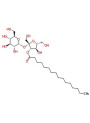
Sucrose Palmitate (HLB 16)
Cosmetics