Peel-Off Mask Formulation Guidelines using PVA
Question
Could you please provide a formulation or guidelines for creating a peel-off mask? I'm looking for a formula that uses Polyvinyl Alcohol (PVA) and need to know the typical usage rate and other necessary components like humectants and preservatives, as well as the general mixing procedure.
Answer
Peel-Off Mask Formulation Guidelines
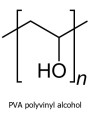
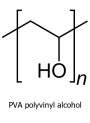
A peel-off mask primarily relies on a film-forming polymer that creates a layer on the skin which can be peeled off once dry. The most common ingredient for this purpose is Polyvinyl Alcohol (PVA).
Different types of PVA are available, varying in viscosity and hydrolysis levels, which affect the film's properties like hardness, flexibility, and water solubility. For creating a peel-off sheet in a face mask, medium viscosity PVA types are generally recommended.
Relevant PVA types for peel-off masks include:
- Polyvinyl alcohol (PVA 217) 20-26mpa.s. Partial Hydrolysis
- Polyvinyl alcohol (PVA 117) 22-30mpa.s. Fully Hydrolysis
The typical usage rate for PVA in a peel-off mask formulation is between 1% and 20%, depending on the desired film strength and texture.
In addition to the film-former (PVA), a peel-off mask formulation will also require:
- Water: As the primary solvent.
- Humectants: Such as Glycerin or Propylene Glycol, to prevent the mask from drying out too quickly and to provide hydration.
- Preservatives: To prevent microbial growth.
- Optional Ingredients: Active ingredients (e.g., for exfoliation, hydration, or soothing), colorants, and fragrances can be added to customize the mask.
General Formulation Structure (Conceptual):
- Water Phase: Dissolve PVA in warm to hot water while stirring continuously to avoid clumping. Add humectants and other water-soluble ingredients.
- Cooling Phase: Allow the mixture to cool.
- Add Remaining Ingredients: Incorporate preservatives, fragrances, colorants, and heat-sensitive active ingredients.
- Adjust Viscosity: If needed, adjust the viscosity.
Please note that developing a stable and effective formulation requires careful consideration of ingredient compatibility, precise percentages, and stability testing. The information provided here is a general guideline focusing on the key film-forming ingredient.
For specific product details on the recommended PVA types, you can refer to the product information for Polyvinyl alcohol (PVA 217) 20-26mpa.s. Partial Hydrolysis and Polyvinyl alcohol (PVA 117) 22-30mpa.s. Fully Hydrolysis.