Perfume Formulation: Ingredients, Fixatives, and Dosage Calculation per Spray
Question
Regarding perfume formulation, I have questions about the role of various ingredients and how to determine the correct dosage per spray.
1. What are the specific roles of Glycerin, Ethanol, and Water in a perfume formulation?
2. Could you suggest a formula structure for a perfume aimed at maximum longevity using ingredients like Pheromone (DHEAS), Scent Blend (e.g., Rose Blossom), LastFix, Glycerin, Water, and Ethyl Alcohol (Perfumer's Grade)?
3. How can I determine the amount (weight or volume) of liquid dispensed by one spray from my specific spray head? Also, how do I calculate the required percentage of an active ingredient (like DHEAS) in the formula to achieve a specific dose per spray, based on an example calculation like "add 0.20% DHEAS at 10% concentration" to get 20mcg per 0.1g spray?
Answer
Perfume Formulation Questions
Here are the answers to your questions regarding your perfume formulation:
Role of Glycerin, Ethanol, and Water
In a perfume formulation:
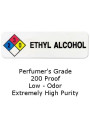
- Ethanol (Ethyl Alcohol) is the primary solvent for fragrance oils and other components. It helps disperse the scent and allows it to evaporate and project from the skin. High-purity perfumer's grade alcohol is preferred for minimal odor interference.
- Water is sometimes used as a diluent, but typically in smaller amounts compared to alcohol, especially in higher concentration perfumes.
- Glycerin acts as a humectant, attracting and retaining moisture. In perfume, it can potentially help to slightly slow down the evaporation of fragrance components, acting as a mild fixative and improving skin feel. However, as noted in the staff reply, dedicated fixatives like LastFix are generally more effective for extending fragrance longevity on the skin. If you are using a dedicated fixative, glycerin is optional but can be included for its humectant properties and texture.
These ingredients are included not just to add volume, but because they play specific roles in dissolving, dispersing, and influencing the performance and feel of the perfume.
Proposed Improved Formula for Maximum Longevity
To create a perfume with maximum effectiveness and longevity using your desired components, a high concentration of fragrance materials (scent blend, DHEAS, LastFix) and an effective fixative are key.
Based on your proposed ingredients and aiming for high performance (similar to an Extrait de Parfum concentration), here is a suggested formula structure. Please note that the maximum safe usage rate for DHEAS should be confirmed before finalizing the formula, as your proposed 1% is significantly higher than the concentration derived from the example calculation you provided (which was 0.02% pure DHEAS in the final product).
- Pheromone (DHEAS): 1% (Confirm safe usage rate; example calculation implies a much lower final concentration)
- Scent Blend (e.g., Rose Blossom): 15%
- LastFix: 20%
- Glycerin: 2% (Optional; primarily for skin feel/mild humectancy, LastFix is the main fixative)
- Water: 3%
- Ethyl Alcohol (99.9% Perfumer's Grade): 59%
- Total: 100%
This formula uses a high total concentration of fragrance components (1% + 15% + 20% = 36%) and includes a dedicated fixative (LastFix), which should contribute to long-lasting scent. The high percentage of perfumer's alcohol ensures proper dissolution and diffusion. Adjusting the proportions slightly may be necessary based on the specific properties of your ingredients and desired final product characteristics.
Understanding the DHEAS Calculation
The calculation provided explains how to determine the concentration of DHEAS needed in your perfume base to ensure that each spray delivers a specific amount (dose) of DHEAS.
The key factor you need to determine yourself is the amount (weight or volume) of liquid dispensed by one spray from the specific spray head you are using. This varies between different sprayers.
To find this value, you can:
- Weigh your empty bottle with the spray head attached.
- Spray the bottle a known number of times (e.g., 10 or 20 times).
- Weigh the bottle again.
- Calculate the weight difference (original weight - new weight). This is the total weight dispensed.
- Divide the total weight dispensed by the number of sprays to get the average weight per spray.
Explanation of the Example Calculation:
The example states: "20mcg (micrograms) is equivalent to using 0.25% 7-Keto DHEA Acetate at a quantity of 10mg (10 milligrams = 0.01 grams)." This part seems to be providing context about a different form or concentration (7-Keto DHEA Acetate) and a specific dose, which might be confusing when followed by the DHEAS calculation.
Let's focus on the DHEAS calculation example provided:
- Target: To have 25mcg of Pheromone (DHEAS) in one spray.
- Assumption: One spray equals 0.1 grams of liquid.
- Calculation shown: "add 0.20% DHEAS at 10% concentration". This means you add 0.20 parts of a 10% DHEAS concentrate to 99.80 parts of your perfume base (or 0.20g of concentrate per 100g total product, if considering the final percentage).
- The concentration of pure DHEAS in the final perfume base is calculated as: 0.20% (of the 10% concentrate) * 10% (concentration of the concentrate) = 0.02% pure DHEAS in the final perfume.
- If one spray is 0.1 grams, the amount of pure DHEAS in one spray is: 0.1 grams/spray * 0.02% = 0.1 * 0.0002 grams = 0.00002 grams = 0.02 milligrams = 20 micrograms (mcg).
So, the calculation shown (adding 0.20% of a 10% DHEAS concentrate) results in 20mcg of DHEAS per 0.1g spray. Note that this result (20mcg) differs slightly from the target mentioned in the example text (25mcg). To achieve 25mcg per 0.1g spray, the final concentration of pure DHEAS in the perfume would need to be 0.025%.
In summary, once you know the weight per spray of your specific sprayer, you can calculate the required percentage of your DHEAS ingredient in the total formula to achieve your desired dose per spray.
Related Products Mentioned
Glycerin (USP/Food Grade)