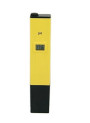
pH Meter Calibration Guide: Dissolving Buffer Powder, Water Type, and Precautions
Question
How do I calibrate a pH meter using buffer powder? Specifically:
- Do I need to dissolve the entire sachet of buffer powder, or can I use only part of it?
- What type of water should I use for dissolving the powder (tap water or distilled/DI water)?
- Should I use both pH 4 and 6.86 buffer solutions for calibration?
- What are the general steps for the calibration process?
- What precautions should I take to prevent water or solution from entering and damaging the device?
Answer
Hello, I understand that calibrating a pH meter for the first time can be confusing, and you're concerned about damaging the device.
Regarding your questions, please find the explanations and precautions below:
1. Dissolving the Calibration Substance (Buffer Powder):
- Dissolve the entire sachet: The buffer powder in the sachet is calculated to yield a buffer solution with the correct pH when dissolved in a specific volume of water (usually indicated on the sachet or in the manual, e.g., 250 ml). Using only part of the sachet will not result in the correct pH value.
- Single Use: The prepared buffer solution should ideally be used for that calibration session only. It's not recommended to store it for extended periods as the pH value may change upon exposure to air or contamination.
2. Water for Dissolving:
- Use only Distilled Water or Deionized (DI) Water: Tap water or regular drinking water contains minerals and other substances that will affect the pH of the buffer solution, leading to inaccurate calibration.
3. Choosing the Buffer Solution (pH 4 and 6.86):
- Use both values (for 2-point calibration): Most pH meters are calibrated using a 2-point method for better accuracy over a wider range. Generally, pH 6.86 ( or 7.0) buffer is used as the first point, and pH 4.01 buffer is used as the second point (if measuring in the acidic range) or pH 10.01 (if measuring in the alkaline range).
- Calibration Steps:
- Rinse the electrode with distilled water and gently pat it dry.
- Dip the electrode into the pH 6.86 (or 7.0) buffer solution. Stir gently. Wait for the reading to stabilize, then press the calibrate button according to your meter's manual (the meter will adjust to pH 6.86).
- Rinse the electrode with distilled water and dry it again.
- Dip the electrode into the pH 4.01 buffer solution. Stir gently. Wait for the reading to stabilize, then press the calibrate button according to your meter's manual (the meter will adjust to pH 4.01).
- Rinse the electrode with distilled water and dry it before storing.
4. Precaution Regarding Water Entering the Device:
- Very Important: Most pen-style pH meters have a non-waterproof upper section (with the screen and buttons). Be extremely careful not to let any water or solution enter this part.
- Usage: Only dip the electrode part into the solution.
- Cleaning/Storage: After use and calibration, rinse only the electrode with distilled water. Dry it completely before putting the protective cap back on and storing the device.
In summary, you need to dissolve the entire powder sachet in distilled/DI water according to the specified volume. Use both pH 6.86 and pH 4 solutions for 2-point calibration, starting with pH 6.86 followed by pH 4. Most importantly, be careful not to let water enter the upper part of the device.
I hope this information is helpful and makes your next calibration process smooth!
Related Products Mentioned