Physical Sunscreen Formulation Attempt and Separation Issue
Question
I attempted to make a high SPF physical sunscreen for strong sunlight and uneven skin tone by mixing Zinc Oxide, Titanium Dioxide, and Dimethicone into a pre-made lotion base (IVY Natural Hand @ Body Lotion).
The formulation separated. What caused this separation?
Answer
Advice on Your Physical Sunscreen Formulation Attempt
Hello Khun Jo,
Thank you for sharing your experience and the results of your attempt to make a physical sunscreen formulation. I understand completely that when facing strong sunlight, having a highly effective sunscreen is crucial, and I admire your willingness to experiment and learn from the results. The fact that the sunscreen formula you tried separated is exactly as Khun C7 pointed out. The main reason is mixing relatively high amounts of powdered Zinc Oxide and Titanium Dioxide, as well as Dimethicone (a silicone oil), with a pre-made lotion base (IVY Natural Hand @ Body Lotion), which is already an emulsion with its own structure. Adding such large amounts of powders and oils/silicones tends to disrupt the balance of the existing emulsion, causing the structure to break down and leading to separation.
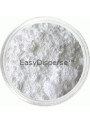
Zinc Oxide and Titanium Dioxide are excellent physical sunscreen agents that work by reflecting and scattering UV radiation, providing effective sun protection as you need. Using them at high concentrations does help achieve higher SPF and PA values. However, the challenge with these ingredients is getting them to disperse well in the cream base without clumping, feeling too heavy or sticky, or causing excessive whiteness. Even though you mentioned that you are not overly concerned about whiteness or stickiness, choosing grades of Zinc Oxide and Titanium Dioxide that have been surface-treated (such as "Easy Disperse" grades or those coated with substances like Dimethicone or Triethoxycaprylylsilane) will significantly help the powders disperse more easily in oil or silicone components and result in a more stable cream with a better texture.
Dimethicone is a silicone oil commonly used in cosmetic formulations to improve spreadability, provide a smooth feel, and leave a soft finish on the skin. In your formula, using 40 grams of Dimethicone per 100 grams of cream base is a very high amount, especially when added to a typical Oil-in-Water (O/W) emulsion base like a lotion, which is primarily water-based. Adding such a large quantity of oil/silicone directly without appropriate emulsifiers to support it makes separation much more likely.
Your plan to study and experiment with basic sunscreen formulas provided by the Staff team is an excellent approach. These formulas are typically designed specifically with emulsion systems and other ingredients, such as dispersing agents, that are suitable for incorporating high amounts of Zinc Oxide and Titanium Dioxide. This will help you achieve a stable cream with a good texture and the desired sun protection performance. Starting with a basic formula will give you a better understanding of the correct principles and techniques for making physical sunscreens before you adapt or modify them later.
I wish you the best of luck with your sunscreen formulation experiments! If you have any further questions as you study or experiment, please feel free to ask. I'm always happy to provide guidance.