Precipitation when mixing Zinc Ricinoleate and Aluminum Zirconium Tetrachlorohydrex GLY: Anionic-Cationic Incompatibility
Asked by: Anonymous
On: September 29, 2025
Product Type:
Cosmetics
Answered
Question
I am observing precipitation when mixing Zinc Ricinoleate (30% Solution) with Aluminum Zirconium Tetrachlorohydrex GLY after both are dissolved in water.
1. Why does this precipitation occur?
2. Are there any methods or techniques to successfully blend these two ingredients together in a formulation?
Answer
The precipitation you are observing is a classic case of anionic-cationic incompatibility.
Why Precipitation Occurs
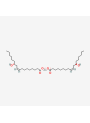
- Zinc Ricinoleate (30% Solution): This product (like Zinc Ricinoleate A30, ID 10570) is typically an anionic compound, meaning it carries a negative charge in solution. It is often stabilized by anionic or amphoteric surfactants.
- Aluminum Zirconium Tetrachlorohydrex GLY: This is a highly effective antiperspirant active ingredient. In an aqueous solution, it is a highly cationic (positively charged) polymeric complex.
- The Reaction: When a strong anionic ingredient is mixed directly with a strong cationic ingredient, they react instantly to form an insoluble complex or salt (known as a coacervate). This complex falls out of solution, resulting in the white precipitate you see.
How to Mix These Two Ingredients
It is extremely difficult to mix high concentrations of strong anionic and strong cationic materials in a simple water-based system without precipitation. However, if you must use both, here are the recommended approaches:
The Best Solution: Use a Non-Ionic Odor Absorber.
- The most reliable way to solve this is to replace Zinc Ricinoleate with a non-ionic (no charge) odor-absorbing ingredient. This eliminates the charge incompatibility entirely.
If Zinc Ricinoleate is Mandatory: Use Heavy Non-Ionic Shielding.
- You must use a high concentration of a powerful non-ionic surfactant or stabilizer to fully encapsulate or shield the Zinc Ricinoleate before it comes into contact with the Aluminum Zirconium Tetrachlorohydrex GLY.
- Procedure:
- Dissolve the Zinc Ricinoleate solution into a high concentration of a non-ionic emulsifier (e.g., a high HLB non-ionic surfactant or a non-ionic polymer).
- Prepare the Aluminum Zirconium Tetrachlorohydrex GLY solution separately.
- Slowly add the AZG solution to the shielded Zinc Ricinoleate mixture while stirring vigorously.
- Note: This method requires careful formulation and testing and may not completely prevent all precipitation, especially if the final product is a clear solution. It is more feasible in an emulsion (cream or lotion) system where the components can be separated into different phases.