Preservatives for Organic Cosmetics
Question
I would like to inquire about the use of Preservatives in Organic Cosmetics.
Do you have any recommendations?
Alternatively, can Benzyl alcohol be used? I checked the list of permitted Preservatives for organic products and saw Benzyl alcohol, Benzoic acid, Dehydroacetic acid, and Sorbic Acid listed.
Thank you.
Answer
Preservatives for Organic Cosmetics
When formulating organic cosmetics, selecting appropriate preservatives is crucial to ensure product safety and stability while adhering to organic standards. Several preservatives are permitted for use in organic formulations.
Suitable Preservatives for Organic Cosmetics
Based on common organic certification standards and product information, the following types of preservatives are often permitted:
- Benzyl Alcohol: This is a naturally occurring alcohol found in many plants. It is often used in combination with other preservatives.
- Benzoic Acid: Found naturally in many plants, this organic acid is effective against fungi and bacteria, particularly at lower pH levels.
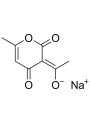
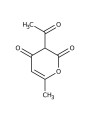
- Dehydroacetic Acid: This is another organic acid often permitted in natural and organic cosmetics, effective against fungi and yeasts.
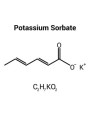
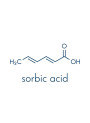
- Sorbic Acid: A naturally occurring organic acid, Sorbic Acid is primarily effective against mold and yeast and is often used in combination with other preservatives.
Combinations of these ingredients are frequently used to achieve broad-spectrum preservation. Products like NaturePreserve™ LB2 (containing Dehydroacetic Acid, Benzoic Acid, and Benzyl Alcohol) and Global Guard™ 221 (containing Dehydroacetic Acid and Benzyl Alcohol) are examples of blends designed for natural or organic-compatible formulations.
Other relevant options include Dehydroacetic Acid (99% Powder, Natural Preservative), Sorbic Acid (Powder), Sodium Benzoate, Sodium Dehydroacetate, and Zinc-Ben (which contains Sodium Benzoate).
Regarding Phenoxyethanol SA (eq. Optiphen Plus), while it contains Sorbic Acid and is free from parabens and formaldehyde donors, Phenoxyethanol itself may not be permitted under all strict organic certification standards. However, Preserve-BSB™ (eq. Optiphen BSB-W) is described as ideal for a variety of natural personal care products and contains Benzyl Alcohol, Sodium Benzoate, and Potassium Sorbate.
Can Benzyl Alcohol be used?
Yes, Benzyl Alcohol is generally accepted in many organic and natural cosmetic standards when used as a preservative or component of a preservative blend. As seen in products like NaturePreserve™ LB2, Global Guard™ 221, and Preserve-BSB™, it is a common ingredient in preservative systems designed for such formulations.
Important Considerations
- pH Range: Ensure the preservative is effective within the pH range of your specific cosmetic formulation.
- Solubility: Check if the preservative is soluble in the water or oil phase of your product.
- Usage Rate: Adhere to the recommended usage rates for safety and efficacy.
- Challenge Testing: It is crucial to perform challenge testing on your final formulation to confirm the preservative system is effective against a broad range of microorganisms under real-world conditions.
- Certification Standards: Always verify that the chosen preservative is permitted by the specific organic certification standard you are aiming for (e.g., ECOCERT, COSMOS, USDA Organic), as standards can vary.
Updated Review: May 2026
This section was added after reviewing the original answer against current product availability and formulation knowledge at the stated point in time.
Update 2026-05-24: The main guidance remains valid: for natural/organic-positioned cosmetics, Benzyl Alcohol can be used, but it is usually better as part of a preservative system rather than as the only preservative. Current catalog options still include natural-positioned blends such as Preserve-BSB™ and NaturePreserve™ LB2, as well as related acid/salt preservatives such as Sorbic Acid, Potassium Sorbate, Sodium Dehydroacetate, and Zinc-Ben. Global Guard™ 221, Global Guard™ K712, Global Guard™ ECT, and Phenoxyethanol SA are also relevant preservative options, but check whether each one matches the specific natural/organic standard you intend to claim.
For strict organic certification, do not rely only on the ingredient name or catalog category. Confirm the accepted preservative list, allowed maximum level, pH range, and documentation required by your target standard/market. Acid preservatives such as benzoate/sorbate/dehydroacetate systems work best in acidic formulas, so final pH adjustment and challenge testing remain necessary.
Related Products Mentioned

Phenoxyethanol SA (eq. Optiphen Plus)
Sorbic Acid (Powder)
Sodium Dehydroacetate
Global Guard™ 221 (pH 2-7, Natural)
Preserve-BSB™ (eq. Optiphen BSB-W)
NaturePreserve™ LB2
Global Guard™ ECT

Global Guard™ K712