Pressed Powder Formulation for Coverage and Oil Control, and Pressing Process
Question
I would like a formulation for pressed powder that provides good coverage and oil control.
Additionally, how can I press the powder into a compact?
Thank you in advance.
Answer
Pressed Powder Formulation for Good Coverage and Oil Control
Creating a pressed powder with good coverage and oil control involves selecting the right combination of ingredients. Here are some key components commonly used:
Ingredients for Coverage
- Titanium Dioxide: Provides excellent coverage and contributes to UV protection. Look for types specifically designed for makeup with high coverage properties.
- Zinc Oxide: Offers coverage and also has oil-absorbing and soothing properties.
- Talc: A common base powder that provides slip and can contribute to coverage depending on particle size and treatment.
- Mica: Adds slip and can provide a smooth feel. Certain types can also contribute to coverage.
- Kaolin: A clay mineral that helps with coverage and oil absorption.
Ingredients for Oil Control
- Kaolin: Highly effective at absorbing excess oil.
- Silica: Can absorb oil and provide a mattifying effect. Different types offer varying levels of oil absorption and skin-blurring properties.
Ingredients for Pressing (Binding)
To press powder into a compact, binders are necessary to hold the powder together. Common binders include:
- Magnesium Stearate: A widely used binder in pressed powders that also improves adhesion and slip.
- Calcium Stearate: Another stearate that functions as a binder and anti-caking agent.
Notes on Pressing Powder
Pressing powder into a compact typically involves mixing the powder ingredients with a liquid binder (often an oil or silicone-based liquid) and then pressing the mixture under high pressure into the pan. The exact process and the amount of binder needed will depend on the specific ingredients used and the desired texture and hardness of the final product. Achieving a well-pressed powder requires careful formulation and proper equipment; it is not simply about putting loose powder into a compact.
By carefully selecting and balancing these types of ingredients, you can formulate a pressed powder that offers good coverage and helps control shine.
Updated Review: May 2026
This section was added after reviewing the original answer against current product availability and formulation knowledge at the stated point in time.
Update as of 2026-05-31
For a pressed/compact powder focused on high coverage and oil control, current catalog options make the recommendation more specific:
- For coverage in pressed powder, consider Titanium Dioxide 400nm WaterProof™ (Super Coverage), Kaolin (400nm High Whiteness), or Kaolin (China Clay, 300nm). These are more directly suited to make-up coverage than using zinc oxide as the main coverage powder.
- For base powders and better skin adhesion/water resistance, coated powders such as Talc Powder (5 Micron, Methicone Coated), Talc Powder (5 Micron, Silane Coated), and coated mica grades can be useful. Treated powders generally press, spread, and adhere better than non-treated powders.
- For pressing/binding, Magnesium Stearate or Calcium Stearate remain appropriate; the current catalog range is typically 1–10%, with Magnesium Stearate commonly around 5–7%.
- For flow, anti-caking, and oil-control/matte feel, use silica carefully: Anti-Caking Silica is typically used at low levels, while UltraBlur™ (Skin Blurring Silica) is mainly for blurring/slip and is not the strongest oil absorber.
- Do not market a pressed powder as sunscreen or claim SPF only because it contains titanium dioxide or zinc oxide; sunscreen/UV claims require the correct sunscreen-grade dispersion, finished-formula testing, and compliance with local regulations.
- If using talc, note the current catalog warning: avoid use in the female genital area. For face compact powder use, select cosmetic-grade talc and follow supplier/regulatory requirements.
Related Products Mentioned
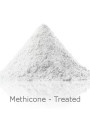
Talc Powder (5 Micron, Methicone Coated)
Magnesium Stearate
Zinc Oxide (Micronized)
Talc Powder (5 Micron, Silane Coated)
Anti-Caking Silica
Titanium Dioxide Nanosil
Calcium Stearate
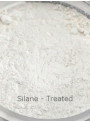
Mica Powder (9 Micron, Silane Coated)
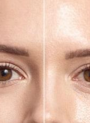
UltraBlur™ (Skin Blurring Silica)
Kaolin (400nm High Whiteness)