Preventing Yellowing and Oxidation in Vitamin C Cream
Question
Preventing Oxidation and Yellowing in Vitamin C Cream
I am developing a cream containing Vitamin C and need advice on which ingredients to add to prevent the product from oxidizing and turning yellow.
To provide the most accurate recommendation, please consider the following formulation details:
- What specific form of Vitamin C is being used (e.g., L-Ascorbic Acid or derivatives)?
- What is the concentration of Vitamin C in the formula?
- What are the main components of the cream base formulation?
- What is the current pH of the formula?
- Are there any specific constraints, such as the need for natural or vegan raw materials?
Answer
The yellowing of a Vitamin C cream is a classic sign of oxidation, where the active ingredient (Vitamin C) degrades. To prevent this, you need to employ a combination of stabilizing ingredients and formulation techniques.
1. Stabilizing Ingredients (Antioxidant Synergy)
The most effective way to stabilize Vitamin C, especially L-Ascorbic Acid (L-AA), is to use it in combination with other powerful antioxidants:
- Ferulic Acid (ID 131): This is a potent antioxidant that works synergistically with Vitamin C and E, significantly boosting their stability and efficacy. It is highly recommended for L-AA formulas.
- Vitamin E (Tocopherol) (ID 135): Vitamin E is a lipid-soluble antioxidant that helps protect the formula from free radical damage, slowing down the oxidation of Vitamin C.
2. Choosing the Right Vitamin C Form
The stability of your cream heavily depends on the form of Vitamin C you use:
| Vitamin C Form | Stability & Oxidation Risk | Best Use Case | Relevant Product IDs |
|---|---|---|---|
| L-Ascorbic Acid (L-AA) | Very Low Stability. Highly prone to oxidation, especially in water. Requires low pH (3.0-3.5) and stabilizers (Ferulic Acid + Vitamin E). | High-potency serums where maximum biological activity is desired, despite stability challenges. | 941, 134, 133 |
| Sodium Ascorbyl Phosphate (SAP) | High Stability. Water-soluble derivative that is very stable and less pH-dependent (optimal pH 6.0-7.0). | Water-based creams and lotions where stability and ease of formulation are priorities. | 8334 |
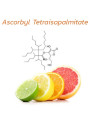
| Ascorbyl Tetraisopalmitate (ATIP) (Perfect-C™) | Highest Stability. Oil-soluble derivative that is extremely stable and does not require a low pH. | Anhydrous or oil-based creams/serums for maximum stability and skin penetration. | 499 |
3. Formulation Environment and Techniques
- Chelating Agents: Add a chelating agent (e.g., Disodium EDTA or a natural alternative) to bind trace metal ions (like iron or copper) that catalyze the oxidation process.
- pH Control (Crucial for L-AA): If using L-AA, the pH must be kept low (3.0-3.5) to maintain its non-ionized form, which is necessary for skin absorption and stability. A higher pH will cause rapid degradation.
- Oxygen Exclusion: Use airless pump bottles or opaque packaging to minimize exposure to light and oxygen.
- Anhydrous Formulas: The most stable L-AA formulas are often anhydrous (water-free), such as silicone-based or oil-based suspensions, as water is the primary catalyst for L-AA degradation.
To give you the most precise recommendation, please provide the details you mentioned:
- Form of Vitamin C: (e.g., L-Ascorbic Acid, SAP, ATIP)
- Concentration: (e.g., 10%, 15%)
- Cream Base: (e.g., Water-in-oil emulsion, oil-in-water emulsion, anhydrous base)
- pH of the Formula: (If it's a water-based formula)
- Constraints: (e.g., Must be natural/vegan)
Once we have this information, we can pinpoint the exact stabilizers and adjustments needed.
Related Products Mentioned
Pure-Ferulic Acid™
Vitamin E (dl-alpha tocopherol)