Principles of Formulating Creams with Hyaluronic Acid
Question
I would like to know the details or principles of developing a cream formulation containing Hyaluronic Acid (HA), specifically regarding the principles of incorporating various ingredients and how each ingredient functions. This information is for my knowledge in formulating my own cream.
Answer
Principles of Formulating Creams with Hyaluronic Acid
Hyaluronic Acid (HA) is a popular ingredient in creams and skincare products due to its excellent moisture-retaining properties. The key principles for incorporating HA into cream formulations are as follows:
How Hyaluronic Acid Works
Hyaluronic Acid is a hydrophilic substance that functions best in the water phase of a formulation. Therefore, it is typically added to the water portion before mixing with the oil phase to create a cream.
Types of Hyaluronic Acid and Their Functions
Hyaluronic Acid comes in various molecular sizes, each with different properties and functions:
- Small Molecule: Can penetrate deeper into the skin, providing hydration from within. It does not significantly contribute to gel formation or film-forming on the surface.
- Standard Molecule and Large Molecule: Cannot penetrate deep into the skin but form a thin film on the outer layer, acting as a barrier to prevent water loss. This makes the skin appear plump, hydrated, and smoother. Large molecules create a better gel texture than standard molecules.
- Specialized Hyaluronic Acid Types:
- Hyaluronic Acid Elastomer (Hyacross Gel): A cross-polymer form with a thick gel texture, highly effective at retaining moisture for extended periods and excellent at forming a protective film on the skin.
- 4D Hyaluronic Acid: A combination of multiple HA molecular sizes (small, medium, large, and cationic) to provide comprehensive hydration across all skin layers. It creates a 3D network that helps retain water from both external and internal sources.
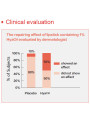
- HyaOil™ (Oil-Dispersed Hyaluronic Acid): HA dispersed in oil, suitable for oil-based formulations like lipsticks and lip balms, providing hydration and conditioning to the lips.
Incorporation into Formulas
- Powdered Hyaluronic Acid types (e.g., Standard Molecule, Small Molecule, Large Molecule) must be dissolved in water first. This can be done by shaking and refrigerating or by using a high-speed blender.
- Liquid or gel forms of Hyaluronic Acid (e.g., 4D Hyaluronic Acid, Hyaluronic Acid Elastomer, Hyaluronic Acid Gel Base) can be added directly to the water phase.
- The optimal pH range for most Hyaluronic Acid types is between 3.0-9.0 and the temperature should not exceed 70 degrees Celsius during processing.
Other Ingredients in HA Cream Formulas
In addition to HA, which is a humectant (water-attracting agent), a good cream formula should include other ingredients to enhance performance:
- Emollients: Such as various oils and esters, help soften and smooth the skin's surface and reduce water loss.
- Occlusives: Such as Petrolatum, Mineral Oil, and Silicones, create a protective film on the skin to prevent water evaporation.
- Emulsifiers: Help to blend the water and oil phases into a stable cream texture.
- Preservatives: Crucial for water-based formulas (e.g., Phenoxyethanol) to prevent microbial growth, which can degrade Hyaluronic Acid and cause a loss of viscosity.
Recommended Usage Rates
General usage rates for HA in cosmetics are typically 0.1-0.5%. Higher concentrations (0.3-0.5%) may be used for very dry skin, while lower concentrations (0.05-0.1%) might be sufficient for normal or slightly dehydrated skin. Specialized forms like 4D Hyaluronic Acid may have higher recommended usage rates (e.g., 2-20%) depending on the specific product type and desired concentration.
Understanding the properties of each type of Hyaluronic Acid and how they interact with other ingredients will help you develop a cream formula tailored to specific skin needs.
Related Products Mentioned

4D Hyaluronic Acid
HyaOil™ (Oil-Dispersed Hyaluronic Acid)