Proper Procedure for Incorporating Carbomer into Cream
Asked by: paraquatyouedok.55555555
On: April 24, 2026
Product Type:
Cosmetics
Answered
Question
Can Carbomer be used to adjust the viscosity of a cream by adding it to the water phase, heating it, mixing it with oil to form an emulsion, and then adding TEA in the final step?
Answer
Yes, the process you described is a standard and effective way to incorporate Carbomer into a cream or lotion formulation. Adding Triethanolamine (TEA) in the final step is often preferred for several reasons.
Recommended Process
- Disperse Carbomer: Sprinkle the Carbomer (such as Carbomer 940 (EasyDisperse™) or Carbomer U10) into the water phase. Allow it to hydrate and disperse completely. Using "EasyDisperse" grades significantly speeds up this process.
- Heating: You can heat the water phase containing the dispersed (but not yet neutralized) Carbomer. Carbomer is heat-stable and its viscosity will not change significantly during heating because it hasn't been neutralized yet.
- Emulsification: Mix the heated water phase with the heated oil phase. Since the Carbomer has not been neutralized, the water phase remains thin, making it much easier to mix and create a uniform emulsion.
- Neutralization (Final Step): Once the emulsion is formed and has cooled slightly (usually below 60°C, though it can be done while warm), add Triethanolamine 99% gradually while stirring. As the pH rises to approximately 6.0–7.0, the Carbomer will swell, instantly increasing the viscosity and stabilizing the cream.
Advantages of This Method
- Easier Mixing: It is much easier to emulsify two thin liquids than to try and stir oil into a thick, pre-formed gel.
- Stability: Neutralizing at the end helps "lock" the emulsion in place as the viscosity increases.
- Air Bubbles: Adding TEA at the end and stirring slowly helps minimize the entrapment of air bubbles compared to trying to emulsify into a high-viscosity gel.
Important Considerations
- pH Sensitivity: Carbomer requires a pH of 6-7 to reach maximum thickness. If your formula contains active ingredients that require a low pH (acidic), Carbomer may lose its viscosity.
- Electrolyte Sensitivity: Carbomer is sensitive to salts/electrolytes. If your formula contains high amounts of minerals or salts, the gel may break.
For more options on gelling agents, you can browse the Cosmetics > Base / Emulsifier > Thickener / Gel-Maker > Water Gel > Carbomer category.
Related Products Mentioned
Triethanolamine 99%
Cosmetics
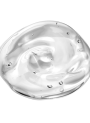
Carbomer 940 (EasyDisperse™, France)
Cosmetics