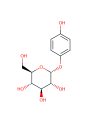
Properties and Usage of Alpha Arbutin and Deoxy Arbutin
Question
Could you please provide information regarding the use of Alpha Arbutin and Deoxy Arbutin?
Specifically, I would like to know:
- Can Alpha Arbutin be mixed with acids, and what is the required pH range for the final product?
- For Deoxy Arbutin:
- What is the recommended usage rate?
- How should it be mixed into a formulation (e.g., phase, temperature)?
- What is the optimal pH range for its stability?
- What are the potential side effects, particularly regarding skin irritation?
- Is it more effective for whitening than Alpha Arbutin?
Answer
Alpha Arbutin and Deoxy Arbutin Information
Regarding your questions about Alpha Arbutin and Deoxy Arbutin:
Alpha Arbutin and Acids
Alpha Arbutin can indeed be mixed with acidic ingredients, such as fruit acids or Vitamin C. The key factor is the pH of the final formulation. Alpha Arbutin is stable and effective in formulations with a pH between 3.5 and 6.5. It is important to ensure the final product pH falls within this range. Mixing Alpha Arbutin into formulations with a pH higher than 8 should be avoided, as this can cause it to break down into hydroquinone.
Deoxy Arbutin (D-Arbutin)
Here is information regarding Deoxy Arbutin:
- Usage Rate: The recommended usage rate is 0.5-2%. For general skin whitening, a rate of 0.5% is often recommended.
- Mixing Method: Deoxy Arbutin is soluble in oil and alcohol. It should be mixed into the oil phase of a formulation. When heating to help it dissolve (around 50-60°C), avoid exceeding 60°C and minimize heating time to maintain quality.
- Optimal pH: The optimal pH range for the stability of Deoxy Arbutin in a formulation is 5.0-5.8.
- Side Effects: While some studies suggest it may be less irritating than hydroquinone, experiments have confirmed that Deoxy Arbutin can irritate the skin significantly. It is recommended to start with a low concentration, especially for sensitive or irritated skin. Using concentrations of 1-2% has been found to potentially cause skin irritation.
It's also worth noting that independent research has not yet definitively confirmed that Deoxy Arbutin is more effective for whitening than Alpha Arbutin, although internal trials may show better results for some users.
Related Products Mentioned
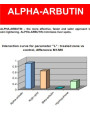
Alpha Arbutin (Switzerland)
Deoxyarbutin (D-Arbutin)