Question about EN product
Asked by: boogers.herbals_0a
On: April 18, 2026
Product Type:
Cosmetics
Answered
Question
Talc methicone 20.3%
glossy talc 15.9%
Pigment FoundationPro 12.7%
Lysine Mica 6.4%
MicroSilica Spheres 3.2%
Polymethylsilsequioxane 2 microns 1.9%
Nylon-12 1.3%
Magnesium Myristate 1.9%
Squalane 8.6%
Jojoba Oil 8.6%
Cupuacu Butter 3.5%
Synthetic Wax 2.0%
candelilla wax 1.0%
Carnauba Wax 1.0%
Polyglyceryl-4 Oleate 2.5%
Polyglyceryl-6 Distearate 2.0%
skinlipid 1.0%
PEG - 7 Glyceryl Cocoate 1.5%
Phospholipids 1.0%
Vitamin E 0.9%
Phenonip 0.9%
Cholesterol 2.0%
Answer
The challenge in creating a powder-to-emulsion foundation lies in overcoming the hydrophobic nature of the powder base and the rigidity of the wax phase. Your current formula is struggling to wet and emulsify because the water cannot access the emulsifiers quickly enough during application.
Analysis of the Current Formula
- Hydrophobicity: The high concentration of Talc (Methicone Coated) (20.3%) is a significant barrier. Methicone treatments are designed to be strongly water-repellent, which prevents the "instant" wetting required for this concept.
- Wax Rigidity: The combination of butters and waxes (Cupuacu, Synthetic Wax, Candelilla, and Carnauba) at ~7.5% creates a rigid structure that "seals" the particles. This traps the emulsifiers inside the oil phase, making them inaccessible to water.
- Emulsifier Choice: The emulsifiers you tested (Polyglyceryl-4 Oleate and Polyglyceryl-6 Distearate) are either too lipophilic (low HLB) or too waxy to facilitate rapid self-emulsification upon contact with water.
Recommended Adjustments
To achieve a "water-break" or instant emulsion effect, consider the following changes:
- Reduce Hydrophobic Fillers: Lower the Talc (Methicone Coated) to approximately 8–10% and replace the difference with Talc (Non-Coated) or other hydrophilic fillers. This allows water to penetrate the powder bed more easily.
- Lower Wax Content: Reduce the total butter and wax content to 2–4%. This makes the oil phase more mobile, allowing the emulsifiers to migrate to the water interface faster.
- Use High-HLB Surfactants: For rapid emulsification, you need surfactants with an HLB ≥ 12. These should be present in a "free" or accessible form rather than being fully melted into the wax.
Suggested Emulsifiers and Wetting Aids
- Sodium Stearoyl Glutamate: A high-HLB (approx. 15) anionic emulsifier that is excellent for creating fine O/W emulsions. It is often used in "cold-process" or rapid-emulsifying systems.
- Sucrose Stearate (HLB 16): Sucrose esters are highly effective at facilitating rapid wetting and emulsification. They provide a light, non-greasy skin feel.
- Wetting Agents: Consider adding a small amount of a liquid surfactant like an alkyl polyglucoside (e.g., Coco-Glucoside) to act as a rapid wetting aid.
Formulation Tip: Improving Accessibility
Instead of melting all emulsifiers into the oil phase, try loading a portion of your high-HLB surfactant onto a carrier like porous silica. By dry-blending this "loaded" silica into the powder phase, the surfactant remains on the surface of the particles, where it can immediately interact with water during application.
Relevant References
Sources supporting the key technical claims in this answer
In coated-pigment foundation systems, improved emulsion fineness and stability have been reported when a surfactant with HLB ≥ 12 is present in free form.
Related Products Mentioned
Vitamin E (Tocopheryl Acetate)
Cosmetics
Jojoba Oil (Golden - Deodorized)
Cosmetics
Squalane (Olive)
Cosmetics
Coco Glucoside
Cosmetics
Coco Wash™ (PEG-7 Glyceryl Cocoate)
Cosmetics
Carnauba Wax (Flake, Melting 80C)
Cosmetics
Candelilla Wax (Refined, Melting 70C)
Cosmetics
Talc Powder (5 Micron, Methicone Coated)
Cosmetics
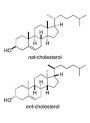
Cholesterol (95%, NF, Fine Powder)
Cosmetics
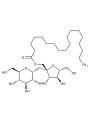
Sucrose Stearate (HLB 16)
Cosmetics
Glossy Wax (Light, Non-Greasiness)
Cosmetics
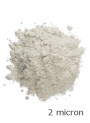
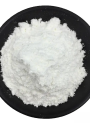
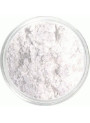
Magnesium Myristate (For Make-up)
Cosmetics
Polyglyceryl-6 Distearate
Cosmetics
Polyglyceryl-4 Oleate
Cosmetics
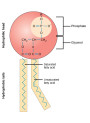
Talc Powder (8 Micron, Gloss)
Cosmetics
SkinLipid™
Cosmetics

Para-Preserve (eq. Phenonip P4)
Cosmetics
Titanium Dioxide FoundationPro™
Cosmetics
Iron Oxides Red (FoundationPro™)
Cosmetics
Iron Oxides Yellow (FoundationPro™)
Cosmetics
Iron Oxides Black (FoundationPro™)
Cosmetics